Overview
Two of Southern Vietnam’s most remarkable sites in one day — the wildly colourful Great Holy See of Caoàism in Tay Ninh, and the 200-kilometre wartime tunnel network buried under the jungle at Cu Chi.
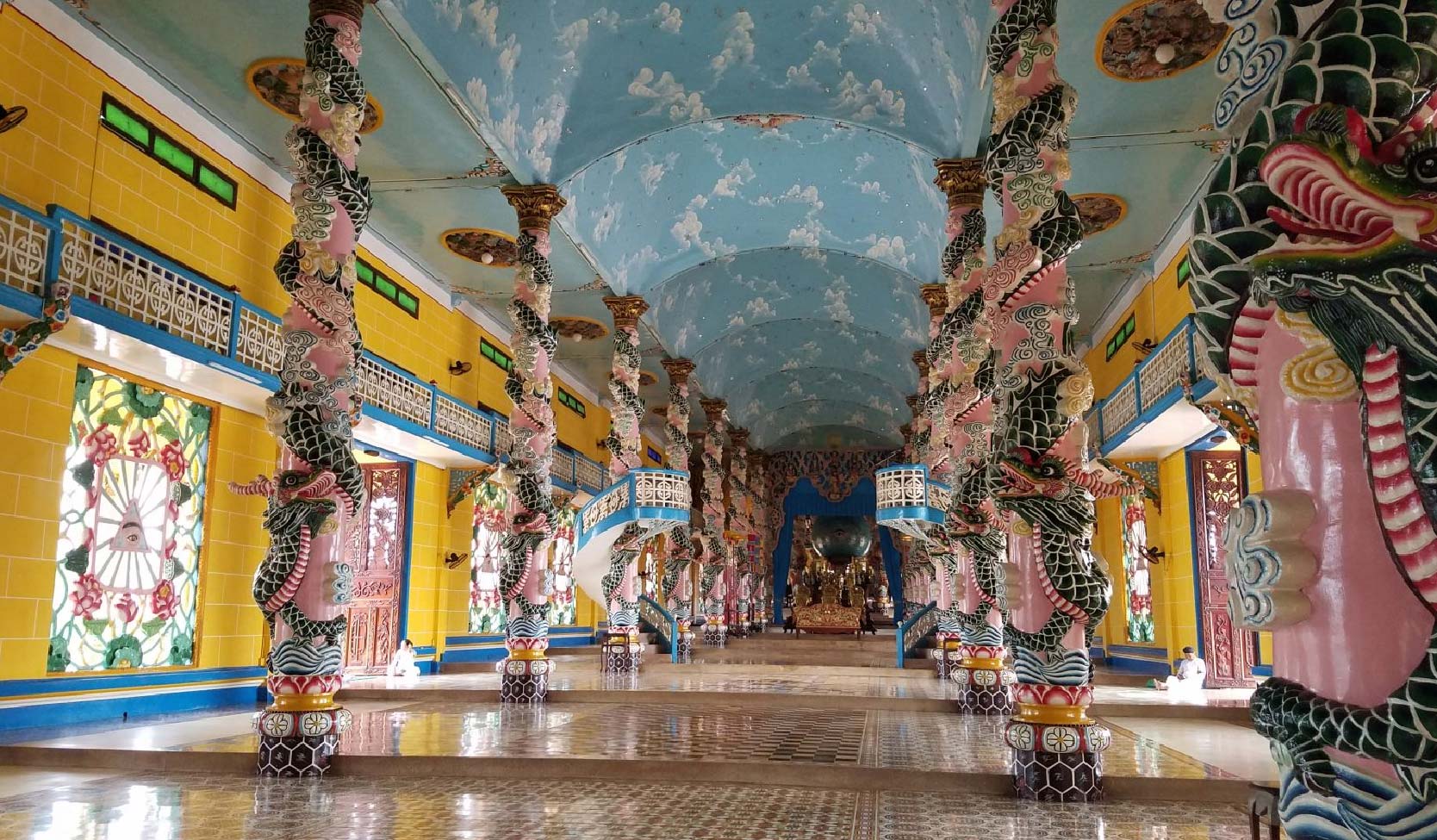
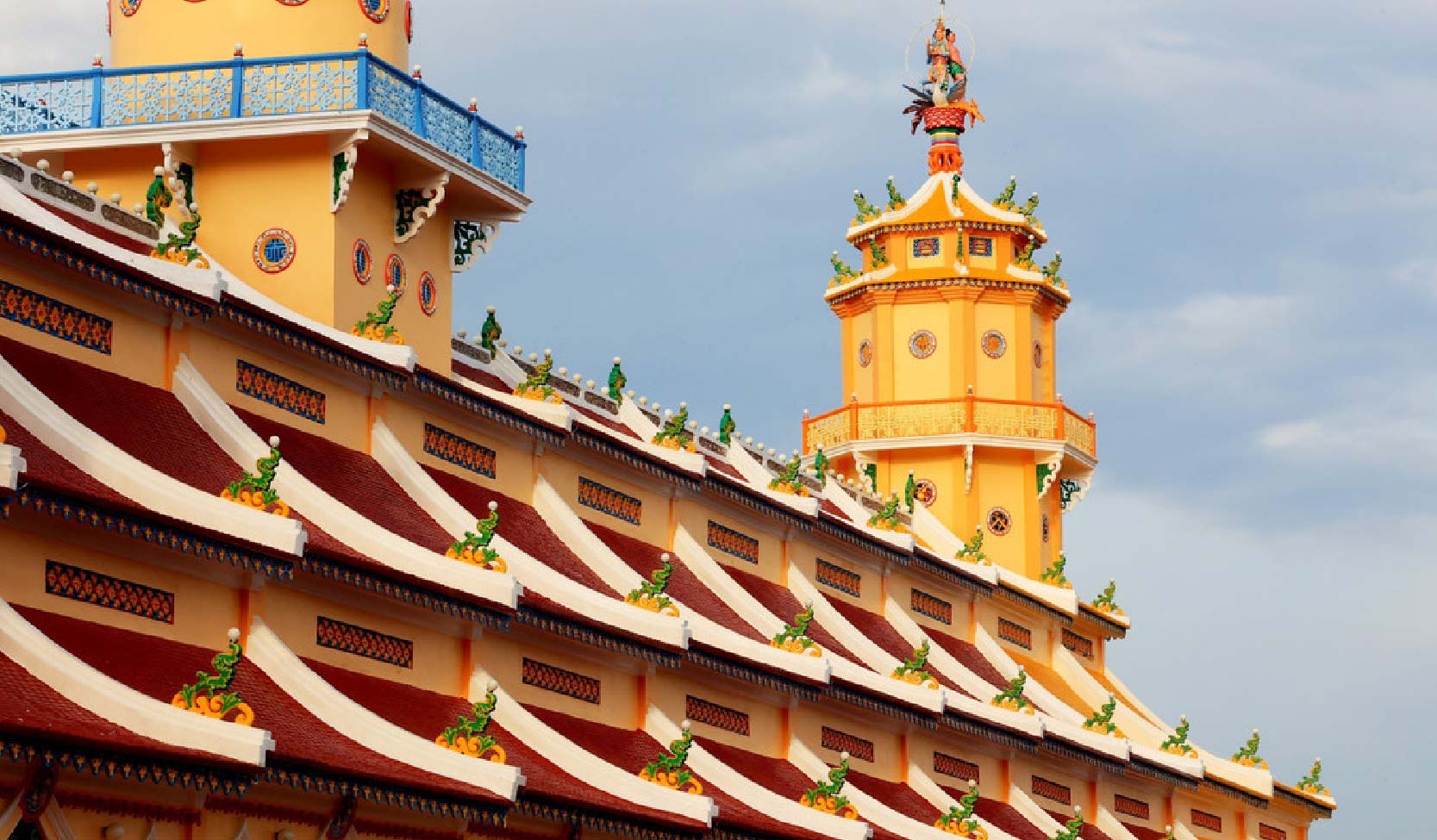
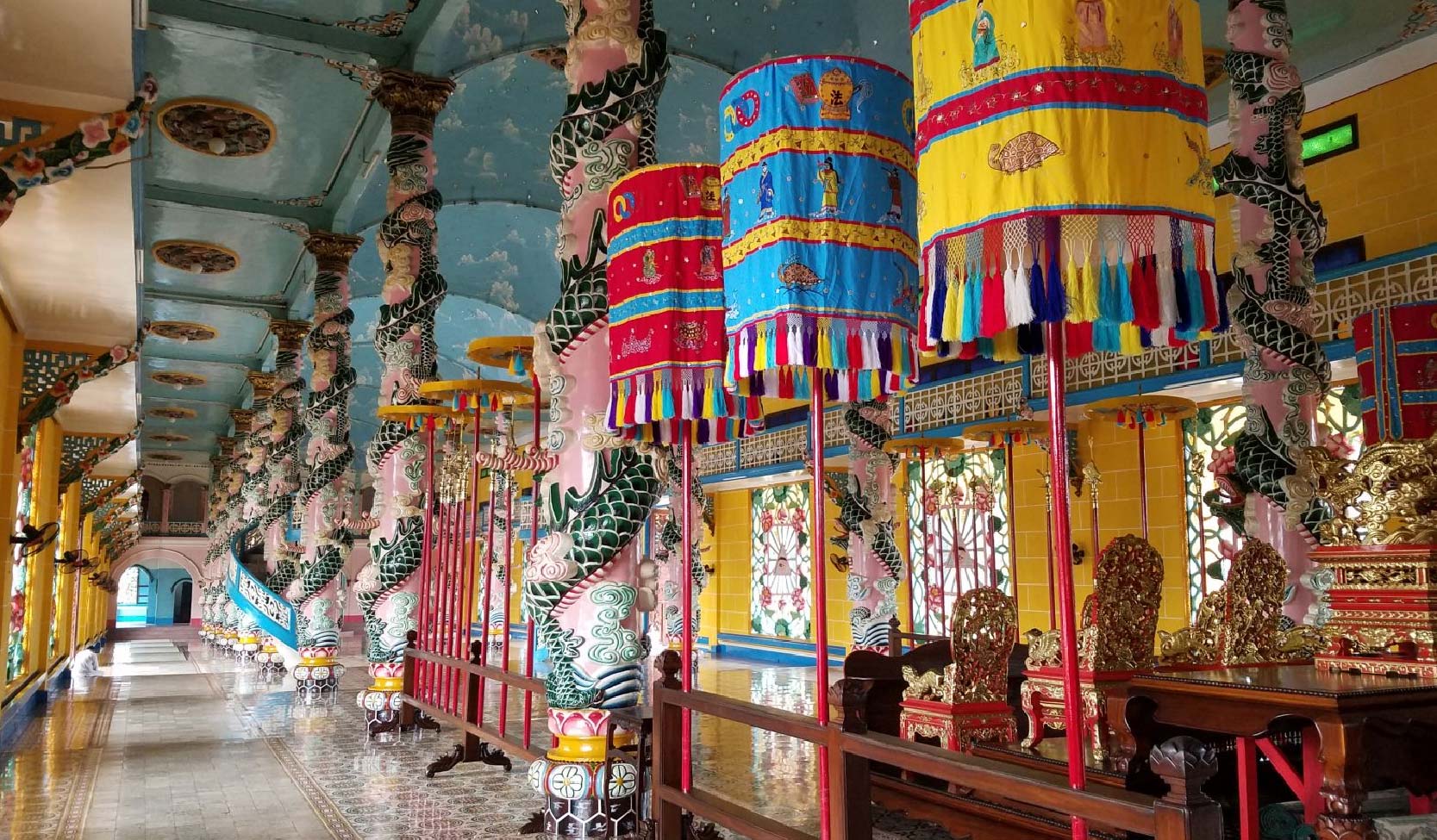
This full-day private tour from Ho Chi Minh City covers two destinations that could not be more different from each other — and together they give a more complete picture of Vietnam than either one does alone. The morning goes to Tay Ninh Province, 95 kilometres northwest of Ho Chi Minh City, to visit the Tay Ninh Holy See: the central temple of Caođàism, a Vietnamese religious movement founded in 1926 that synthesises elements of Buddhism, Taoism, Confucianism, Christianity, and Islam into a single cosmology. The building that houses the Great Holy See is one of the most visually extravagant structures in Southeast Asia — a baroque-meets-Buddhist facade covered in pastel dragons, lotus motifs, and the All-Seeing Divine Eye. The noon ceremony, held four times daily, brings several hundred white-robed followers into the main hall for a service that is part liturgy, part collective meditation, and entirely unlike anything else in Vietnam.
After lunch at a local restaurant in Tay Ninh, the tour continues southeast to the Cu Chi Tunnels at Ben Duoc — the larger and less-crowded of the two public access sections of the wartime network. The afternoon is spent underground and in the jungle: watching the documentary, following the guide through the tunnel entrance demonstrations and booby trap displays, crawling an optional section of the original (widened) tunnel system, and finishing with a tasting of cassava and hot tea. The vehicle returns to Ho Chi Minh City in the early evening.
The private format means the vehicle, guide, and schedule are exclusively for your group. The pace at each site — how long to stay at the ceremony, how many times to walk the tunnel path, whether to do the shooting range — is entirely up to the group.
Why TNK Travel for this tour
– The noon ceremony is the centrepiece: the Caođài Temple receives visitors throughout the day, but the noon ceremony (12:00 PM sharp) is the reason to be there. TNK’s departure time from Ho Chi Minh City is set to arrive at the temple in time to observe the full ceremony from the upper gallery before it ends. On a private tour, the guide adjusts pace to ensure the group does not miss it.
– Ben Duoc — the quieter tunnel section: Ben Duoc is further from Ho Chi Minh City than Ben Dinh and receives fewer visitors. The experience at the site is less crowded, the jungle paths are wider, and the guide has more room to explain each section without competing with adjacent groups.
– Private vehicle and guide throughout: no shared van, no combined group at either site. The guide accompanies your group from hotel pickup to drop-off and adjusts the programme based on the group’s interests and pace.
– Trusted operator since 2000: TNK Travel is ranked #3 on TripAdvisor with over 24,000 verified reviews.
Tour highlights
– Cao Dai Great Holy See — the most colourful temple in Vietnam: built in 1926, the central temple of Caođàism is a baroque-Buddhist-dragon extravaganza in pink, yellow, and blue. No photograph fully prepares a first-time visitor for the interior.
– The noon ceremony — hundreds of followers in white and coloured robes: four times daily, Caođài followers fill the main hall for a collective ceremony. The noon service is the largest and most accessible for visitors. Observers watch from the upper gallery.
– Cao Dai religion explained — Vietnam’s own faith: founded in Tay Ninh in 1926, Caođàism claims over four million followers in Vietnam. The guide explains the theology, the symbolism, and the historical context that shaped this distinctly Vietnamese spiritual movement.
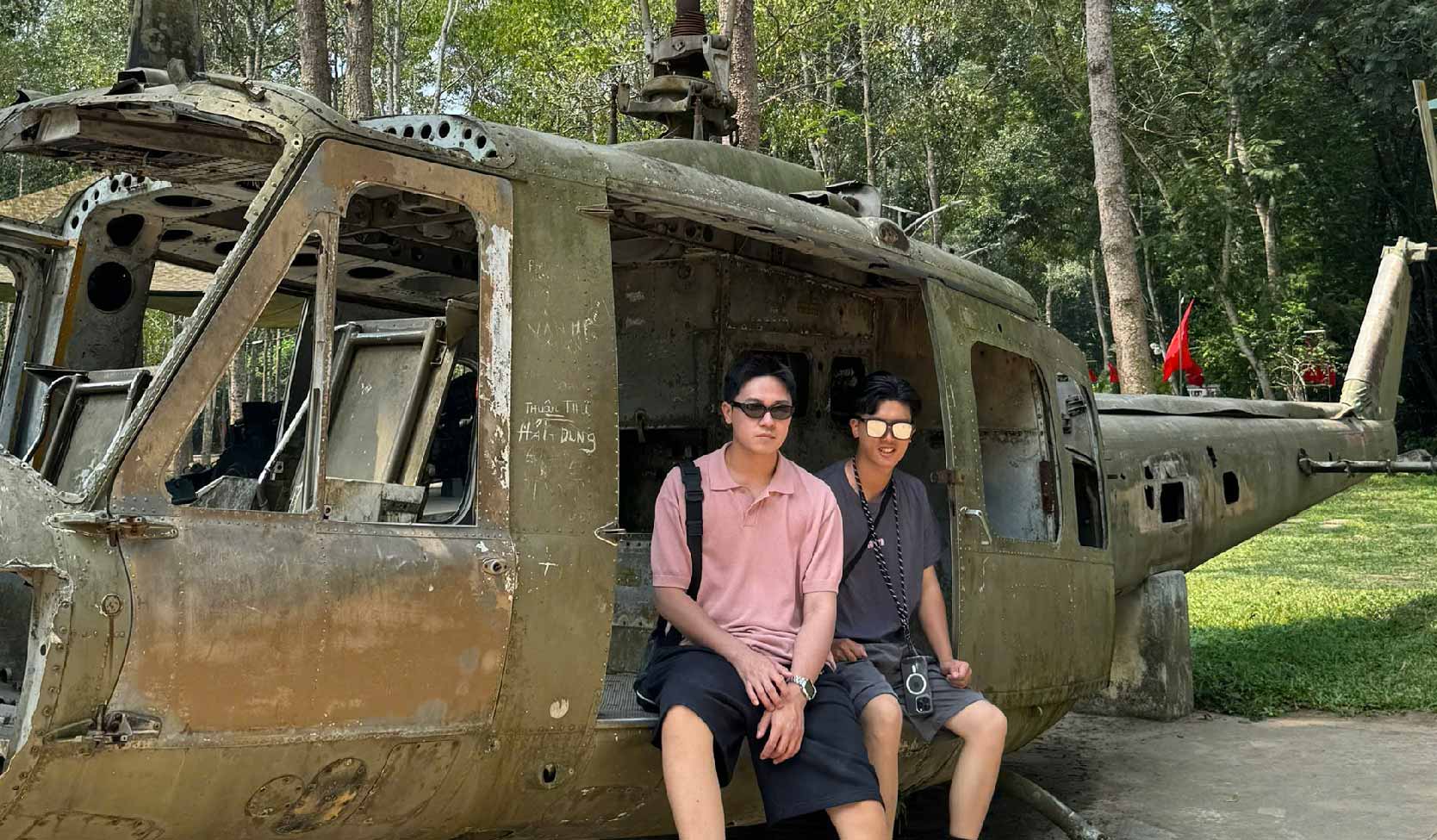
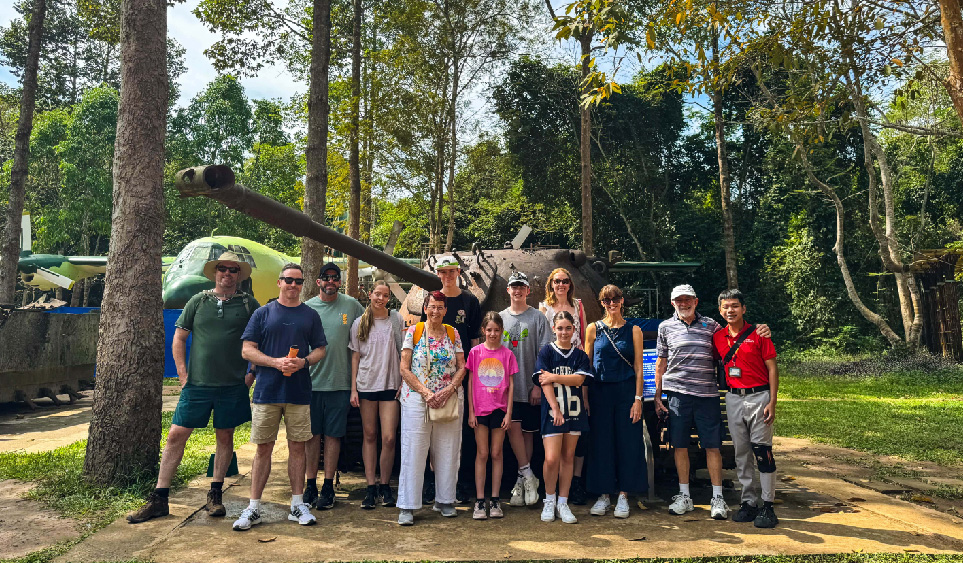
– Cu Chi Tunnels — the wartime underground network: 200+ kilometres of hand-dug tunnels sheltering fighters, medics, and civilians through decades of conflict. The site visit covers tunnel entrances, booby trap displays, bomb craters, and the optional crawl section.
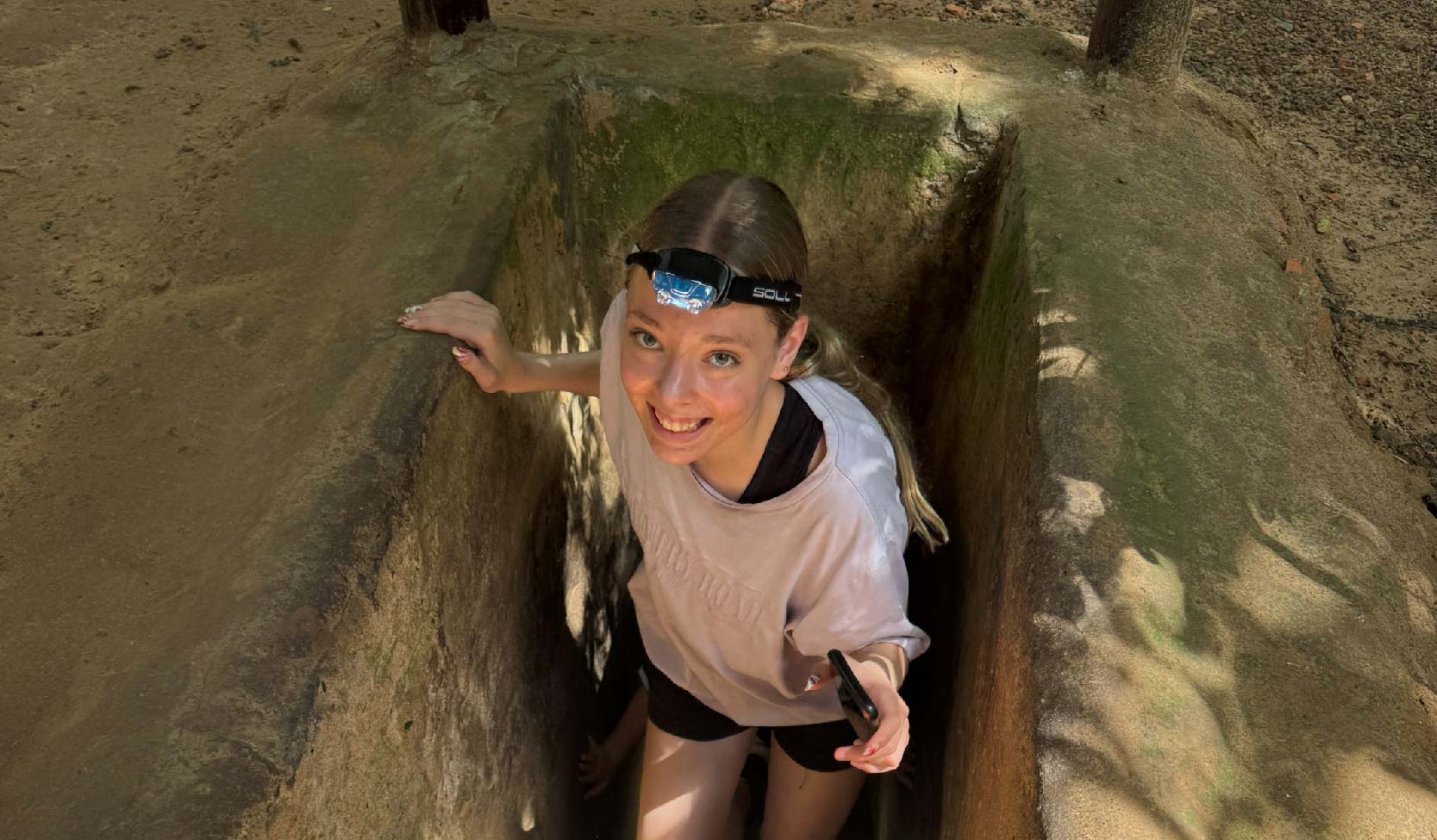
– Optional tunnel crawl: a widened 100-metre section of the original tunnel system. Narrow, dark, warm, and optional. The guide provides full context for guests who prefer to observe from above.
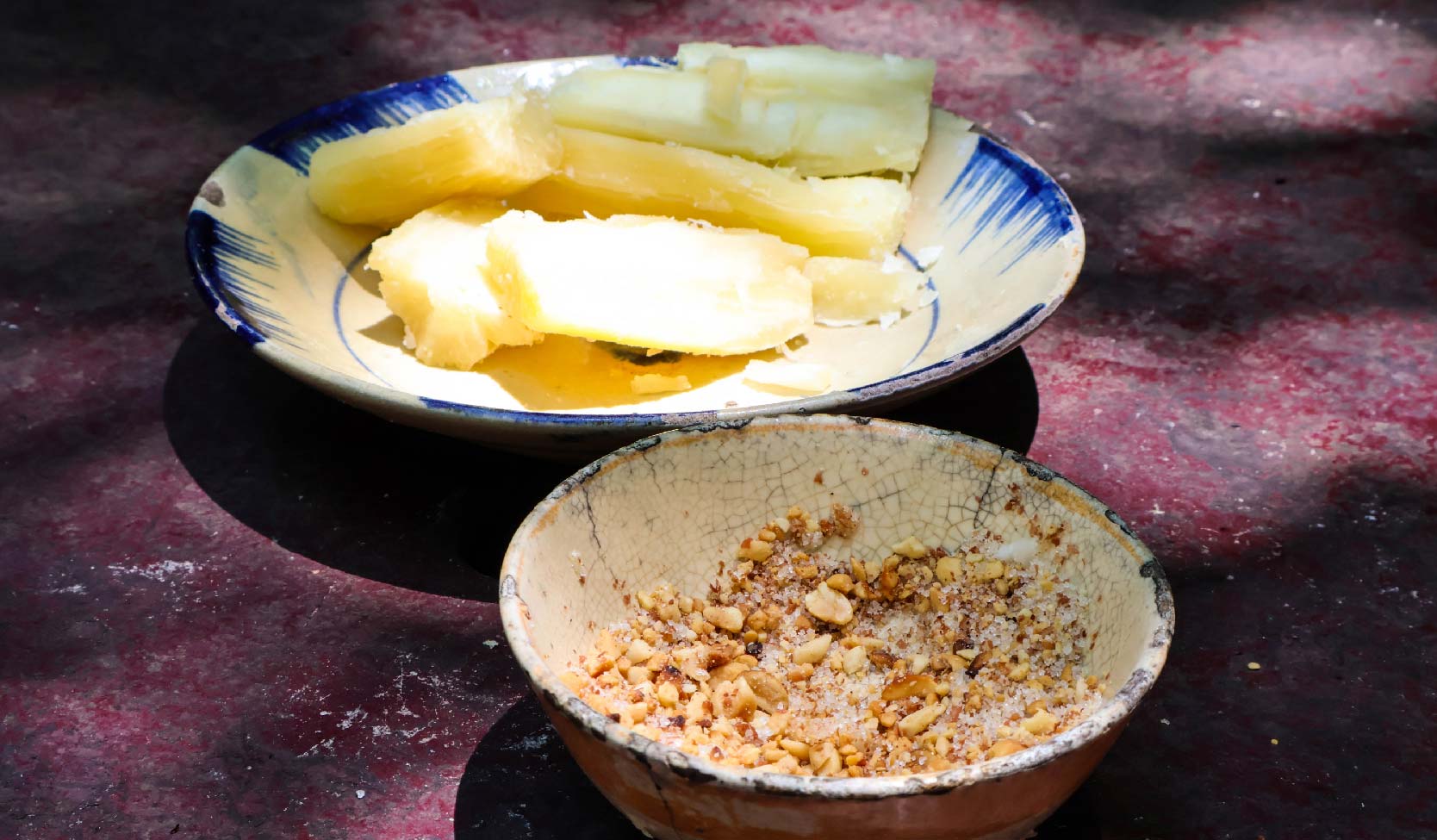
– Cassava tasting — the wartime staple: the tour ends with cassava and hot tea, the actual diet of the people who lived underground. Simple, honest, and more memorable than it sounds.
Important information
Meeting point & departure
– Hotel pickup in Ho Chi Minh City, District 1 and District 3. Pickup between 7:30 and 8:00 AM — exact time confirmed by WhatsApp or email 24 hours before departure.
– Please wait in your hotel lobby. The guide will collect you directly. For hotels outside the standard pickup zone, the meeting point is TNK Travel, 112 Trần Hưng Đạo Street, District 1 — 7:45 AM.
– The Tay Ninh Holy See is approximately 95 kilometres from Ho Chi Minh City (around 2 hours by road). Cu Chi is approximately 70 kilometres from Ho Chi Minh City (around 1.5 hours from Tay Ninh). Return to Ho Chi Minh City: approximately 6:00–7:00 PM.
The Cao Dai noon ceremony — visitor guidelines
– The ceremony begins at 12:00 PM precisely and runs for approximately 45 minutes. Visitors observe from the upper gallery balcony that runs along both sides of the nave — you are above the ceremony, not inside it.
– Silence is required during the ceremony. Photography from the gallery is permitted without flash.
– Modest dress is required to enter the temple grounds: shoulders and knees covered. Shoes are removed before entering the main building. The guide will advise at the entrance.
– Do not descend to the main hall floor during the ceremony — this space is for followers only.
Cu Chi Tunnels — physical requirements
– The tunnel crawl is optional. Guests with claustrophobia, back problems, or limited mobility can observe from the exit and receive the full guide explanation above ground.
– The site involves walking 1.5–2 kilometres on jungle paths with uneven ground and tree roots. Closed-toe shoes are strongly recommended — sandals are not suitable.
– Not recommended for guests with serious mobility limitations, severe claustrophobia, or recent back or joint injuries. Pregnant guests should consult their doctor before booking.
What to wear and bring
– Cao Dai Temple: modest clothing — shoulders and knees covered. A sarong or light scarf can be tied around the waist if needed. The guide can advise.
– Cu Chi Tunnels: closed-toe shoes with grip for jungle paths. Long trousers are practical (insects, undergrowth). Light, breathable fabrics for the heat.
– Both sites: hat and sunscreen for outdoor sections, insect repellent, a camera, and Vietnamese dong or USD for optional shooting range at Cu Chi and any personal purchases.
Weather
– The tour operates year-round. Both sites involve significant outdoor time — a light rain jacket is useful in the wet season (May–October).
– The Cu Chi tunnel sections are underground and unaffected by surface weather. The Caođài Temple ceremony takes place indoors.
– If TNK Travel cancels due to severe weather, guests receive a full refund or the option to reschedule.
Related tours
– Cu Chi Tunnels half day tour (CC): small group morning or afternoon tour — Cu Chi only, 6 hours from Ho Chi Minh City
– Ho Chi Minh City & Cu Chi Tunnels full day (PGT-CTCC): Saigon city highlights in the morning (Reunification Palace, Notre Dame Cathedral, War Remnants Museum) + Cu Chi in the afternoon
– Ba Den Mountain day tour (TN-BD): private full-day tour to the highest peak in Southern Vietnam — Guinness-record cable car, Ba Den Pagoda, buffet lunch
– Cu Chi Tunnels & Mekong Delta full day (CMK): Cu Chi in the morning + Mekong Delta river cruise and sampan in the afternoon
– Mekong Delta day tour — My Tho & Ben Tre (MK1): full-day group tour from Ho Chi
Itinerary
Price & Bookings
Price & bookings
All rates are per person in USD. Private tour — vehicle and guide exclusively for your group. Lunch included. Per-person price decreases with group size.
| Tour type | 2–3 pax | Holiday 2–3 pax |
| Private tour | 100$ | 110$ |
Public holidays — holiday pricing applies
If your departure date falls on or within any of the periods below, the holiday price applies automatically at booking.
| Holiday | Dates |
| New Year’s Day | 1 January 2027 |
| Lunar New Year (Tết Nguyên Đán) | 15 February – 3 March 2026 |
| Hung Kings’ Festival | 26 April 2026 |
| Reunification Day & International Labour Day | 30 April – 1 May 2026 |
| Vietnam National Day | 1 – 2 September 2026 |
Children’s pricing
| Age | Rate | Notes |
| Under 4 years | Free | Shares seat with parents. |
| 4–10 years | 75% of adult rate | Standard children’s rate. |
| 11 years and above | Adult rate | Full adult rate applies. |
Children aged 4–10 pay 75% of the applicable adult rate. Children under 4 travel free and share a seat with their parents.
What’s included
- Private air-conditioned vehicle for hotel pickup and drop-off in Ho Chi Minh City
- Professional English-speaking guide for the full day
- Entrance fees — Tay Ninh Holy See (Caođài Temple) and Cu Chi Tunnels Historical Site (Ben Duoc)
- Noon ceremony observation at the Caođài Great Holy See
- Guided exploration of Cu Chi Tunnels including documentary, tunnel entrances, booby trap displays, and optional crawl section
- Cassava and hot tea tasting at Cu Chi
- Lunch at a local restaurant in Tay Ninh
- 1 bottle of mineral water per person
- All taxes and service charges
What’s not included
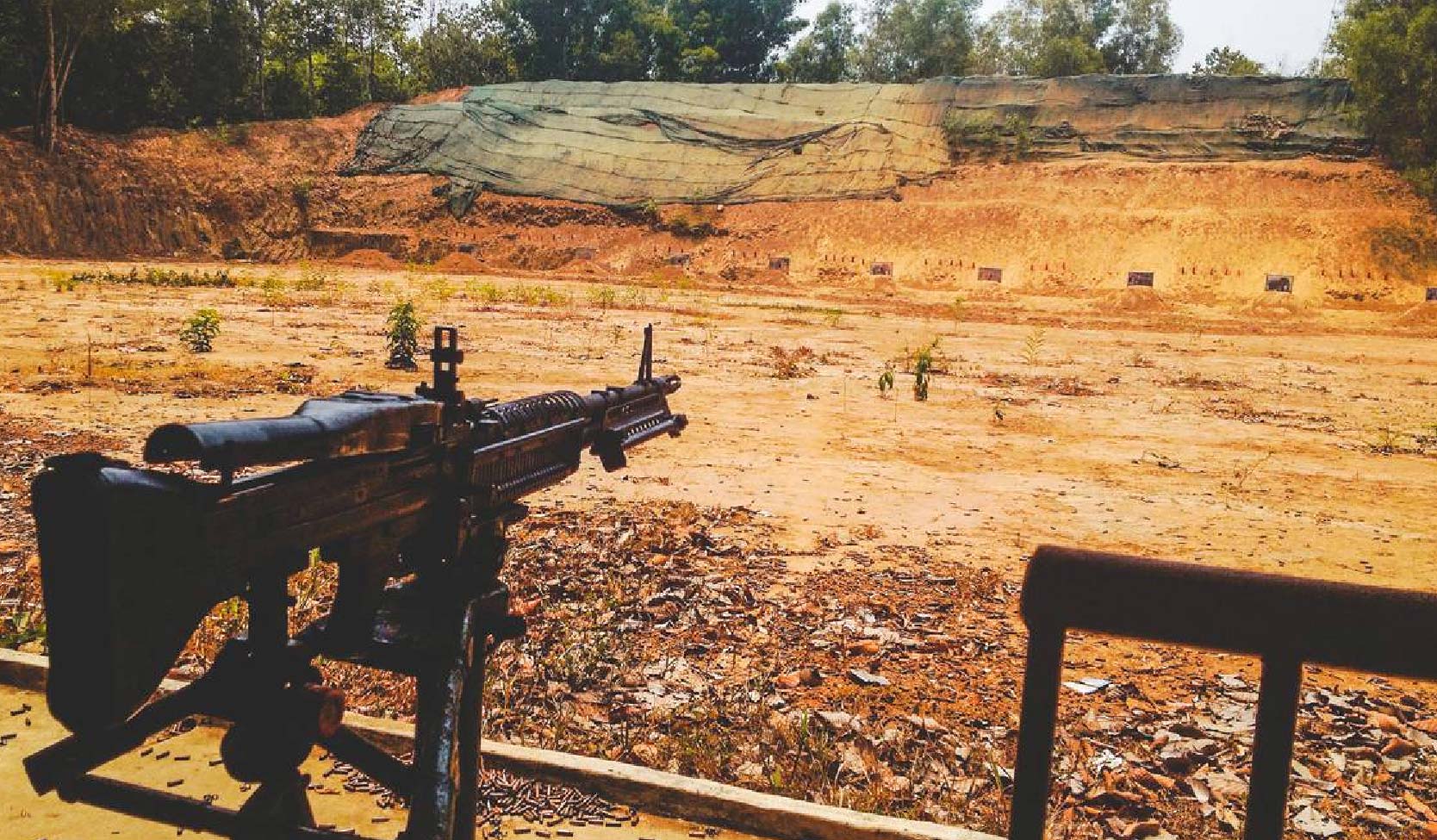
- Optional shooting range at Cu Chi (approx. $1–2 USD per bullet, minimum 10 bullets — payable on site)
- Travel insurance (recommended)
- Additional food and beverages beyond included lunch and cassava tasting
- Personal purchases and souvenirs
- Tips for guide and driver (optional, appreciated)
Why TNK Travel
TNK Travel is a Vietnam-based inbound tour operator licensed since 2000. We run daily departures from Ho Chi Minh City and have taken over 1,000,000 travellers on tours across Vietnam, Cambodia, and Laos.
- Ranked #3 on TripAdvisor among Ho Chi Minh City tour operators
- 24,000+ verified reviews across TripAdvisor, Viator, and Klook
- Viator Top-Rated Operator badge
- 94% of travellers recommend our tours
- Licensed operator: International Tour Operator Licence No. 79-102/2010/TCDL-GP LHQT
Frequently asked questions
What is Caođàism?
Caođàism is a Vietnamese religion founded in Tay Ninh in 1926 by Ngô Văn Chiêu, a civil servant who claimed to have received divine messages through séance. The religion teaches that God (the Jade Emperor) revealed himself three times in history: first through the traditions of the East (Buddhism, Taoism, Confucianism), second through the traditions of the West (Christianity and Islam), and third through Caođàism itself, which synthesises all previous revelations into a single framework. The faith has over four million followers in Vietnam, primarily in the southern provinces. Its principal symbol is the Divine Eye (Thiên Nhãn) — a single eye inside a triangle, representing God’s omniscience.
Who are the three ‘saints’ painted on the wall of the Holy See?
The mural above the side entrance of the Great Holy See depicts three figures signing a covenant: Sun Yat-sen (the Chinese revolutionary leader), the Vietnamese poet Nguyễn Bỉnh Khiêm, and Victor Hugo (the French author of Les Misérables). In Caođài theology, these three represent humanity’s capacity for moral, political, and creative achievement as expressions of the divine — the Third Amnesty of God, in which God communicates through human figures rather than a single prophet. The inclusion of Victor Hugo reflects both the French colonial context in which the religion emerged and the Caođài belief that divine inspiration is not limited by culture or nationality.
Can I attend the ceremony even if I am not religious?
Yes. The noon ceremony at the Tay Ninh Holy See is open to all visitors regardless of religion or belief. Visitors observe from the upper gallery, not from the main floor. The ceremony is not interactive for observers — you watch, photograph respectfully, and listen to the guide’s explanation. Many visitors who describe themselves as non-religious find the ceremony one of the most visually and emotionally engaging experiences of their time in Vietnam. The requirement is respectful behaviour: silence during the ceremony, modest dress, and no flash photography.
Why does the tour go to Ben Duoc rather than Ben Dinh?
The Cu Chi Tunnels Historical Site has two public access sections: Ben Dinh, closer to Ho Chi Minh City and more visited; and Ben Duoc, further northwest and less crowded. Ben Duoc has a larger site area, more intact above-ground features (including the full range of booby trap displays and a wider jungle path network), and typically fewer visitors per session. The combination of this tour — coming from Tay Ninh rather than directly from Ho Chi Minh City — naturally arrives at Ben Duoc, which is on the correct side of Cu Chi District for the route.
Will we definitely see the noon ceremony?
The noon ceremony takes place at 12:00 PM every day without exception, including public holidays. TNK’s departure time from Ho Chi Minh City is set to arrive at the temple by approximately 9:45 AM, giving the group over two hours on site before the ceremony begins. The private format means the guide can manage the temple visit to ensure the group is in position on the upper gallery before noon. Weather, traffic, or other delays would be communicated and managed by the guide on the day.
Is the tour suitable for children?
Yes, with some considerations. The Caođài Temple is visually engaging for children of all ages — the colours, the dragons, and the ceremony are immediately striking. At Cu Chi, the documentary contains wartime footage that may not be appropriate for very young children — parents can step outside during the film if needed. The tunnel crawl is optional and most children who want to try it find it exciting rather than frightening. The jungle path walking is light and flat. Children under 4 travel free; children 4–10 pay 75% of the adult rate.
What is bánh tráng phơi sương and why is it a Tay Ninh specialty?
Bánh tráng phơi sương is a rice paper variety unique to Tay Ninh. Unlike standard dried rice paper, which is dried quickly under direct sun, Tay Ninh’s version is left overnight to absorb the morning dew (‘phơi sương’ means ‘dew-dried’). The slow drying process produces a rice paper that is softer, more pliable, and slightly chewy compared to the crisp commercial variety. It is typically eaten rolled with dried shrimp, herbs, and a fermented shrimp paste dipping sauce. It is considered one of the defining specialties of Tay Ninh Province and is widely available in the market and restaurants near the Holy See.
Book your Cao Dai Temple & Cu Chi Tunnels private tour
Private full-day tour from Ho Chi Minh City. Hotel pickup and drop-off included. Noon ceremony at the Great Holy See, lunch in Tay Ninh, and guided exploration of the Cu Chi tunnel network. Your group only — no shared departures.
- Online: tnktravel.com — booking form on this page
- WhatsApp: +84 938 195 445
- Email: booking@tnktravel.com
- Walk in: 90 Bui Vien Street, District 1, Ho Chi Minh City
International Tour Operator Licence No: 79-102/2010/TCDL-GP LHQT
Reservations
Reviews
There is no review for this tour. Be the first to review this tour !!
Share your thoughts with other customers.
Share your thoughts with other customers.
Related Tours