
You don’t need to be fluent in Vietnamese to travel through Vietnam with confidence — but knowing a handful of the right phrases changes everything. It signals respect to locals, opens doors to better service and warmer conversations, and helps you navigate everyday situations like ordering food, bargaining at a market, or asking for directions without relying entirely on translation apps.
Vietnamese is a tonal language, which can feel intimidating at first. The same syllable can mean five different things depending on pitch and inflection. The good news: locals are used to foreigners mispronouncing tones, and most people will appreciate the effort regardless of accuracy. This guide breaks down the most useful phrases by situation, with simple pronunciation guidance so you can start using them right away.
Why learning a few Vietnamese phrases matters
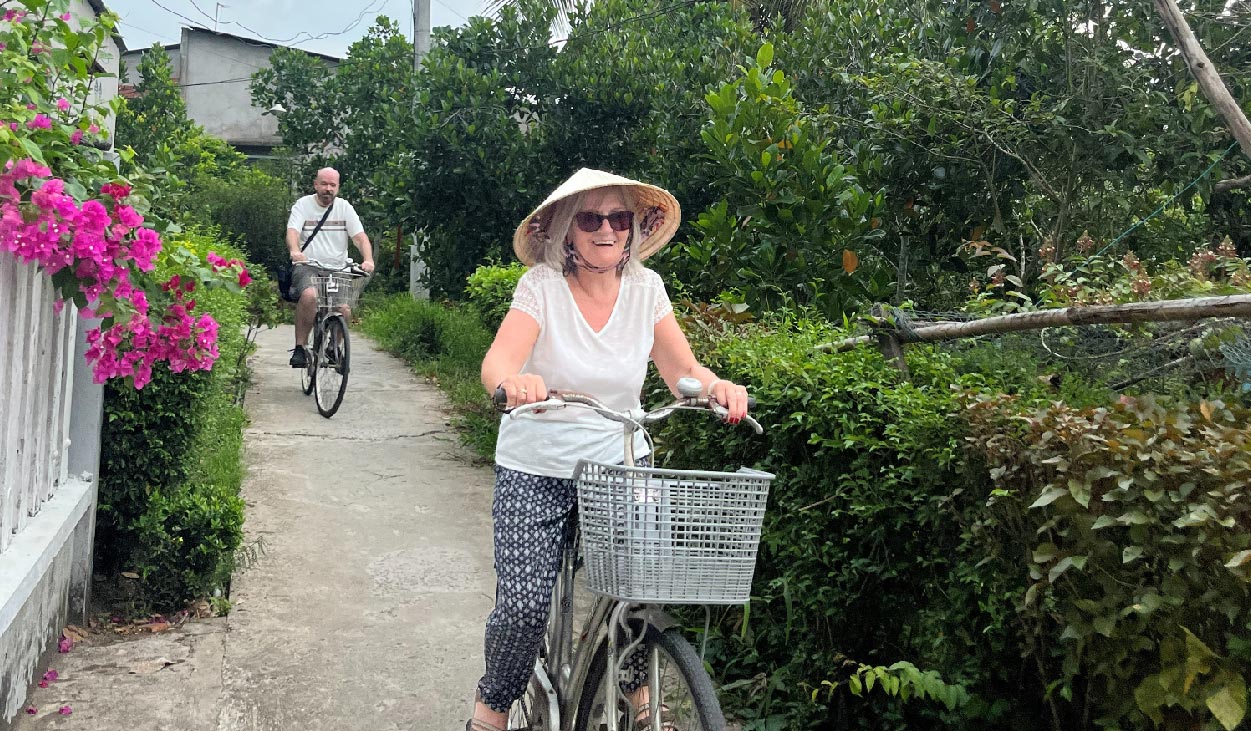
English is widely spoken in major tourist hubs like Ha Noi’s Old Quarter, Hoi An, and Ho Chi Minh City, especially in hotels, tour offices, and restaurants catering to international visitors. But once you step outside these areas — into a local market, a family-run eatery, or a rural village on a Sa Pa trek — English becomes far less common.
A few well-placed Vietnamese phrases help you:
- Build rapport with vendors, drivers, and homestay hosts
- Get better prices when bargaining
- Order food more accurately and avoid mix-ups
- Handle emergencies or logistics when no one nearby speaks English
- Show cultural respect, which is consistently appreciated in Vietnamese hospitality culture
A quick note on tones and pronunciation
Vietnamese has six tones in the northern dialect (five in some southern varieties), marked by accents above or below vowels. For the purposes of travel, don’t worry about mastering them perfectly. Focus on:
- Speaking slowly and clearly
- Keeping your intonation as flat and neutral as possible if unsure
- Pairing words with gestures or pointing when needed
- Carrying a translation app as backup, not a replacement
Locals generally understand context, so even an imperfect tone paired with a smile and a menu you’re pointing at will get you where you need to go.
Greetings and basic courtesy
These are the phrases you’ll use constantly, from checking into your hotel to greeting your tour guide each morning.
| English | Vietnamese | Rough pronunciation |
|---|---|---|
| Hello | Xin chào | sin chow |
| Thank you | Cảm ơn | gahm uhn |
| You’re welcome | Không có gì | kohng gaw zee |
| Sorry / Excuse me | Xin lỗi | sin loy |
| Yes | Vâng / Dạ (polite) | vuhng / yah |
| No | Không | kohng |
| Goodbye | Tạm biệt | tahm byeht |
Tip: Adding “ạ” at the end of a sentence, or using “Dạ” instead of “Vâng,” softens your tone and signals politeness — especially useful when speaking with older people.
Ordering food and dining out
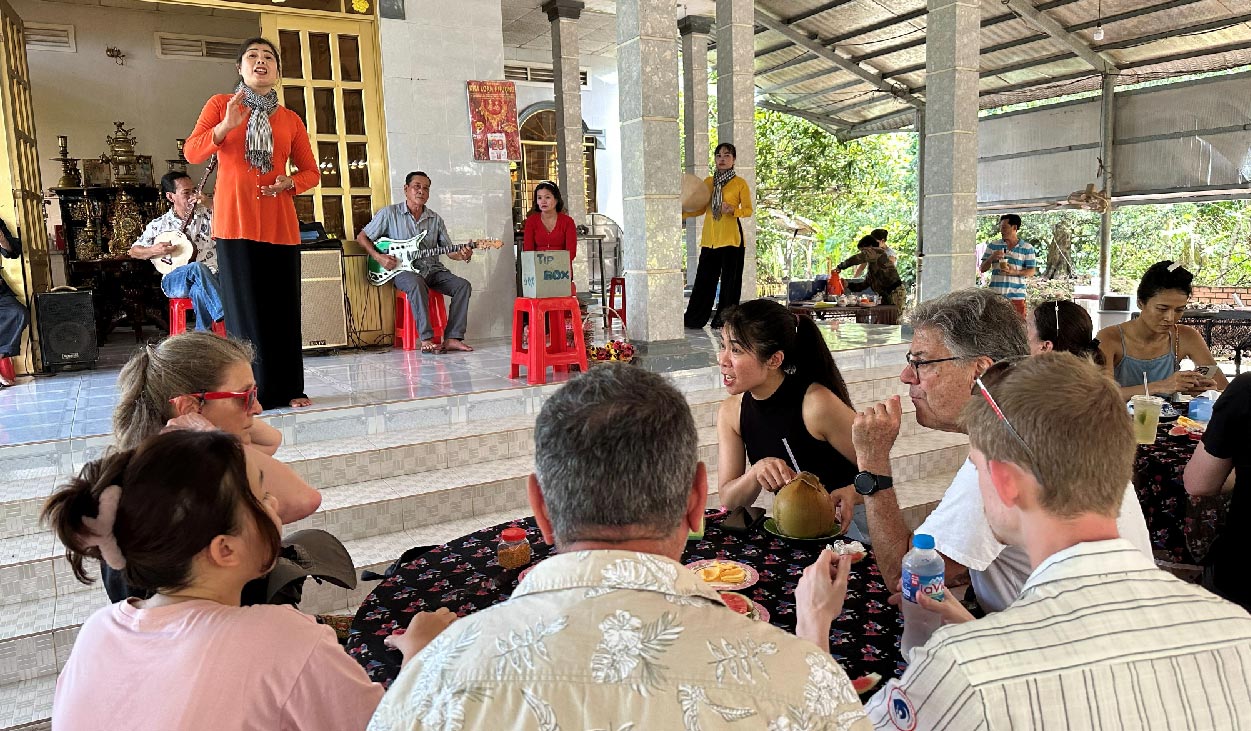
Vietnam’s street food culture is one of the biggest draws for travelers, and a few key phrases make ordering smoother, especially at local stalls with no English menu.
| English | Vietnamese | Rough pronunciation |
|---|---|---|
| I would like… | Cho tôi… | chaw toy |
| Menu, please | Cho tôi xem thực đơn | chaw toy sem tuk duhn |
| Not spicy | Không cay | kohng kai |
| Delicious | Ngon | ngawn |
| The bill, please | Tính tiền | tin tyen |
| Water | Nước | nuhk |
| No ice | Không đá | kohng dah |
Tip: “Không cay” (not spicy) is worth memorizing if you’re sensitive to heat — many Vietnamese dishes, especially in central Vietnam around Hue, are served spicier than expected.
Shopping and bargaining

Bargaining is a normal and expected part of shopping at markets like Ben Thanh in Ho Chi Minh City or Dong Xuan in Ha Noi (fixed-price stores and malls are the exception). A friendly tone goes a long way.
| English | Vietnamese | Rough pronunciation |
|---|---|---|
| How much? | Bao nhiêu tiền? | bow nyew tyen |
| Too expensive | Đắt quá | dat kwah |
| Can you lower the price? | Giảm giá được không? | zahm zah duhk kohng |
| I’ll take it | Tôi lấy cái này | toy lay kai nay |
| Just looking | Tôi chỉ xem thôi | toy chee sem toy |
Tip: Bargain with a smile, not confrontation. A common approach is to offer roughly 50–60% of the initial asking price and negotiate from there, adjusting based on the item and location.
Transport and directions
Whether you’re grabbing a taxi in Da Nang, hopping on a Grab bike in Ha Noi, or trying to find your homestay in Ninh Binh, these phrases help you get where you’re going.
| English | Vietnamese | Rough pronunciation |
|---|---|---|
| Where is…? | … ở đâu? | uh dow |
| Airport | Sân bay | suhn bye |
| Turn left / right | Rẽ trái / Rẽ phải | reh chai / reh fai |
| Straight ahead | Đi thẳng | dee tahng |
| Stop here, please | Dừng ở đây | zung uh day |
| How far is it? | Bao xa? | bow sah |

Tip: Ride-hailing apps like Grab remove most of the language barrier for transport, but knowing “Dừng ở đây” (stop here) is handy for taxis without a fixed app-based route.
Numbers you’ll use daily
Numbers come up constantly — for prices, room numbers, phone numbers, and quantities.
| Number | Vietnamese |
|---|---|
| 1 | Một |
| 2 | Hai |
| 3 | Ba |
| 4 | Bốn |
| 5 | Năm |
| 10 | Mười |
| 100 | Một trăm |
| 1,000 | Một nghìn |
Tip: Prices in Vietnam are often quoted in thousands of Vietnamese dong, so “một trăm nghìn” (one hundred thousand) is a phrase you’ll hear regularly at markets and street stalls.
Emergency and practical phrases
Hopefully you won’t need these often, but they’re worth knowing.
| English | Vietnamese | Rough pronunciation |
|---|---|---|
| Help! | Cứu tôi với! | kuu toy vuhy |
| I need a doctor | Tôi cần bác sĩ | toy kuhn bahk see |
| Where is the hospital? | Bệnh viện ở đâu? | benh vyen uh dow |
| I don’t understand | Tôi không hiểu | toy kohng hyew |
| Do you speak English? | Bạn có nói tiếng Anh không? | ban gaw noy tyeng ahn kohng |
| I’m lost | Tôi bị lạc | toy bee lahk |
FAQ

Do I need to learn Vietnamese to travel in Vietnam? No. English is widely understood in tourist areas, hotels, and most tour services. Learning a handful of phrases is optional but improves your experience, especially outside major cities.
Is Vietnamese hard to pronounce for English speakers? The tonal system takes practice, but travelers don’t need perfect pronunciation. Context, gestures, and a translation app usually bridge the gap.
What’s the most useful phrase to know? “Cảm ơn” (thank you) and “Xin lỗi” (excuse me/sorry) are the two most versatile phrases — they work in nearly every interaction and are always appreciated.
Are northern and southern Vietnamese pronunciation different? Yes. Ha Noi (northern) and Ho Chi Minh City (southern) accents differ noticeably in tone and some vocabulary. The phrases above use standard northern pronunciation, which is widely understood nationwide.
Should I use a translation app instead? Apps are a great backup, especially for longer conversations, but they can be slow or unreliable without data access. Memorizing a few core phrases is faster for everyday interactions.
Ready to put these phrases to use?

The best way to practice is in the field — chatting with a street vendor in Hoi An, bargaining at a market in Ha Noi, or thanking your guide after a day exploring Ha Long Bay. Explore TNK Travel’s tours across Vietnam and experience these interactions firsthand, with local guides on hand to help whenever the phrasebook runs out.





