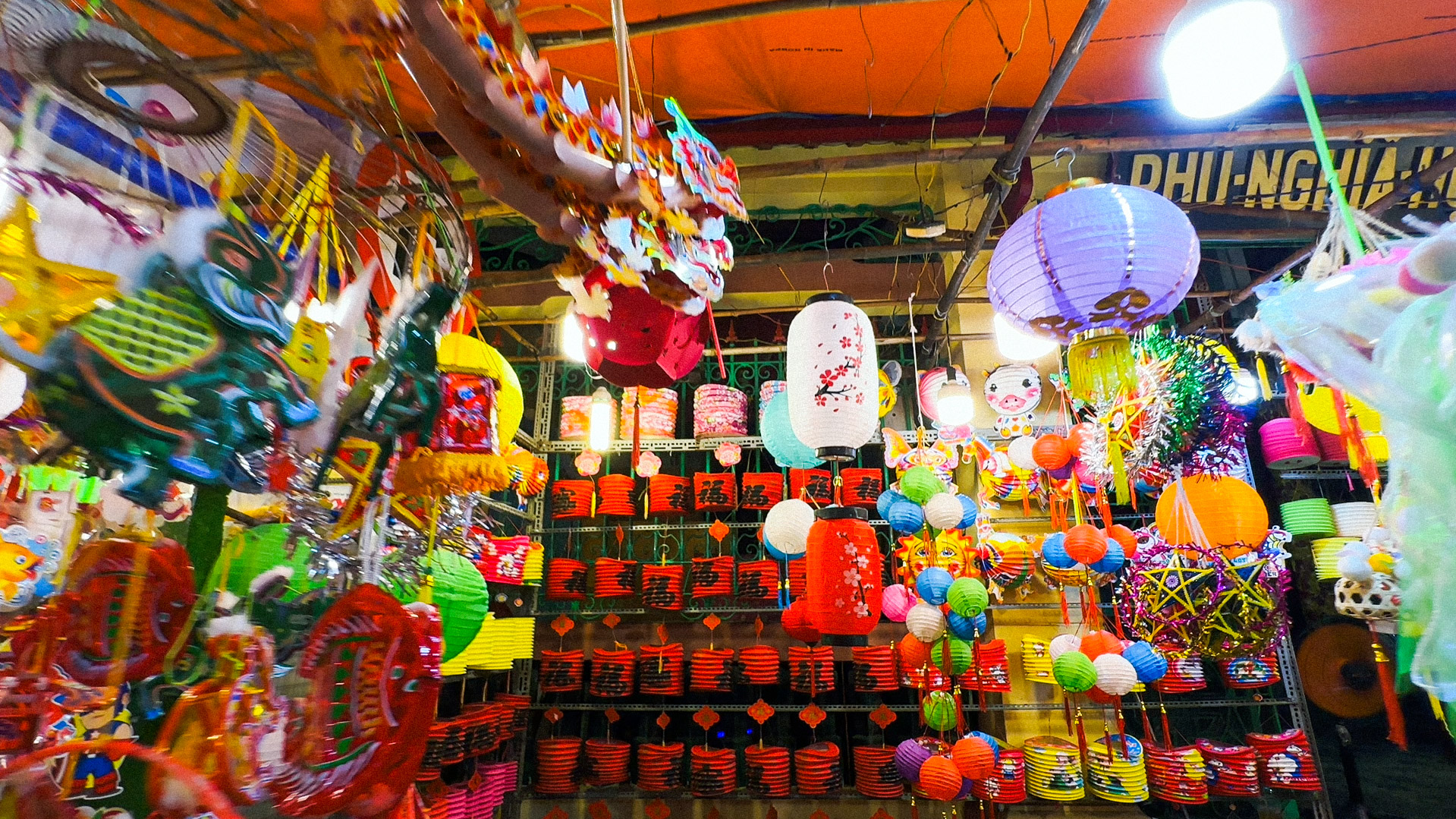
Every year, on the 15th day of the 8th lunar month, Vietnamese families gather under the fullest, brightest moon of the year to share mooncakes, light lanterns, and watch children parade through the streets in animal masks. It’s one of the most photogenic nights on the Vietnamese calendar — but behind the lanterns and lion dances is a folk story that’s been told to Vietnamese children for generations, one that explains almost every visual symbol of the festival.
At the center of it are two figures: Chú Cuội, the man said to live on the moon, and Chị Hằng (also called Hằng Nga), the Moon Goddess. Understanding their story is the fastest way to understand why Trung Thu looks the way it does.
The legend of Chú Cuội and the magic banyan tree
The most widely told version of the story begins with Chú Cuội, a woodcutter who discovered a magical banyan tree that could heal any illness, and used it to save a dying person’s life.
The tree came with one condition: it had to be watered only with clean, pure water, or it would fly away. One day, while Cuội was away, his wife didn’t know about the rule and watered the tree with dirty water. Instantly, the tree lifted out of the ground and began floating toward the sky. Cuội ran to grab hold of it, but it was too late to let go — the tree carried him all the way up to the moon, where he has remained ever since.
If you look closely at the full moon on Trung Thu night, the story goes, you can still make out his silhouette — a man sitting beneath the tree’s branches, looking down at Earth.
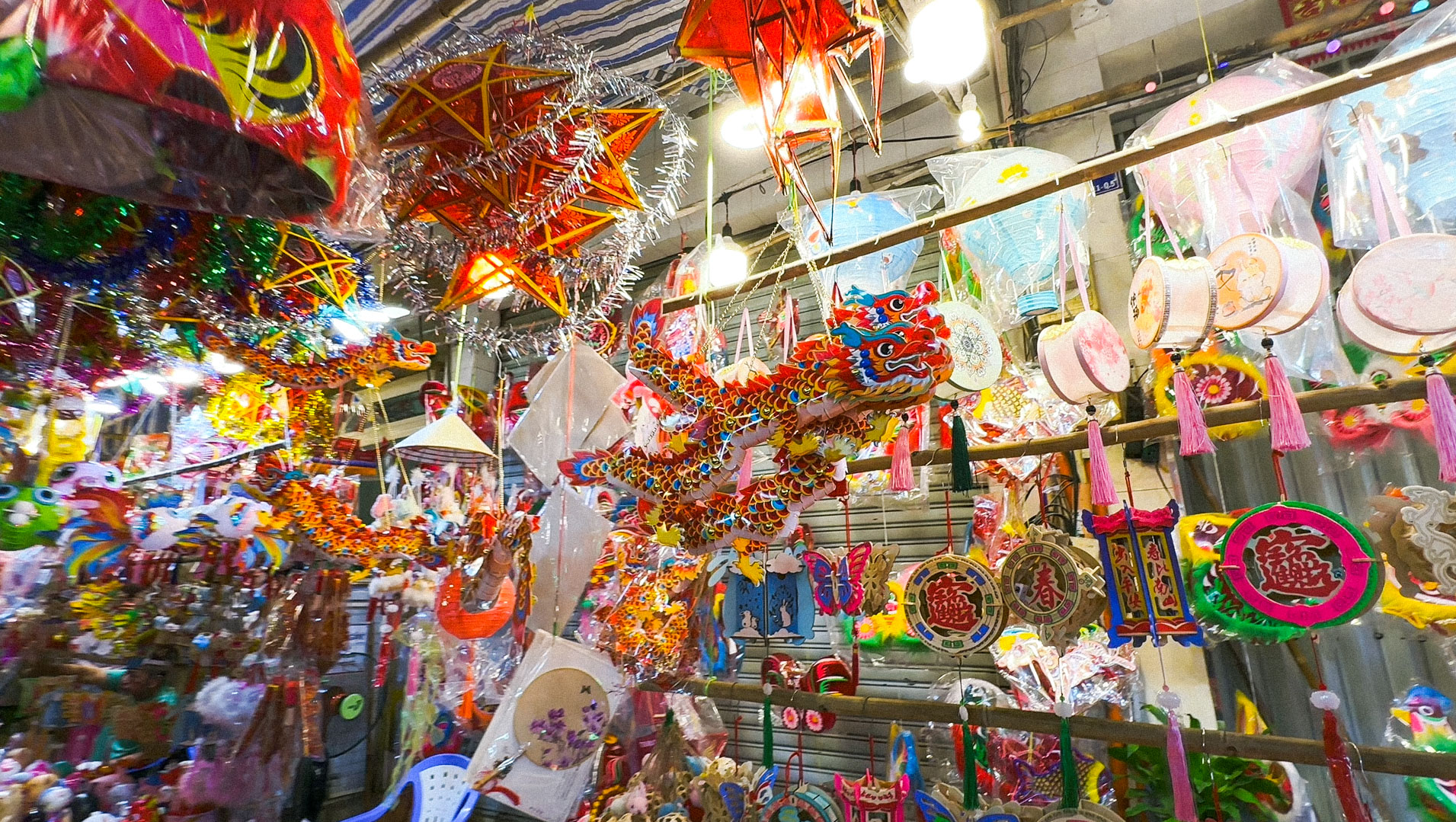
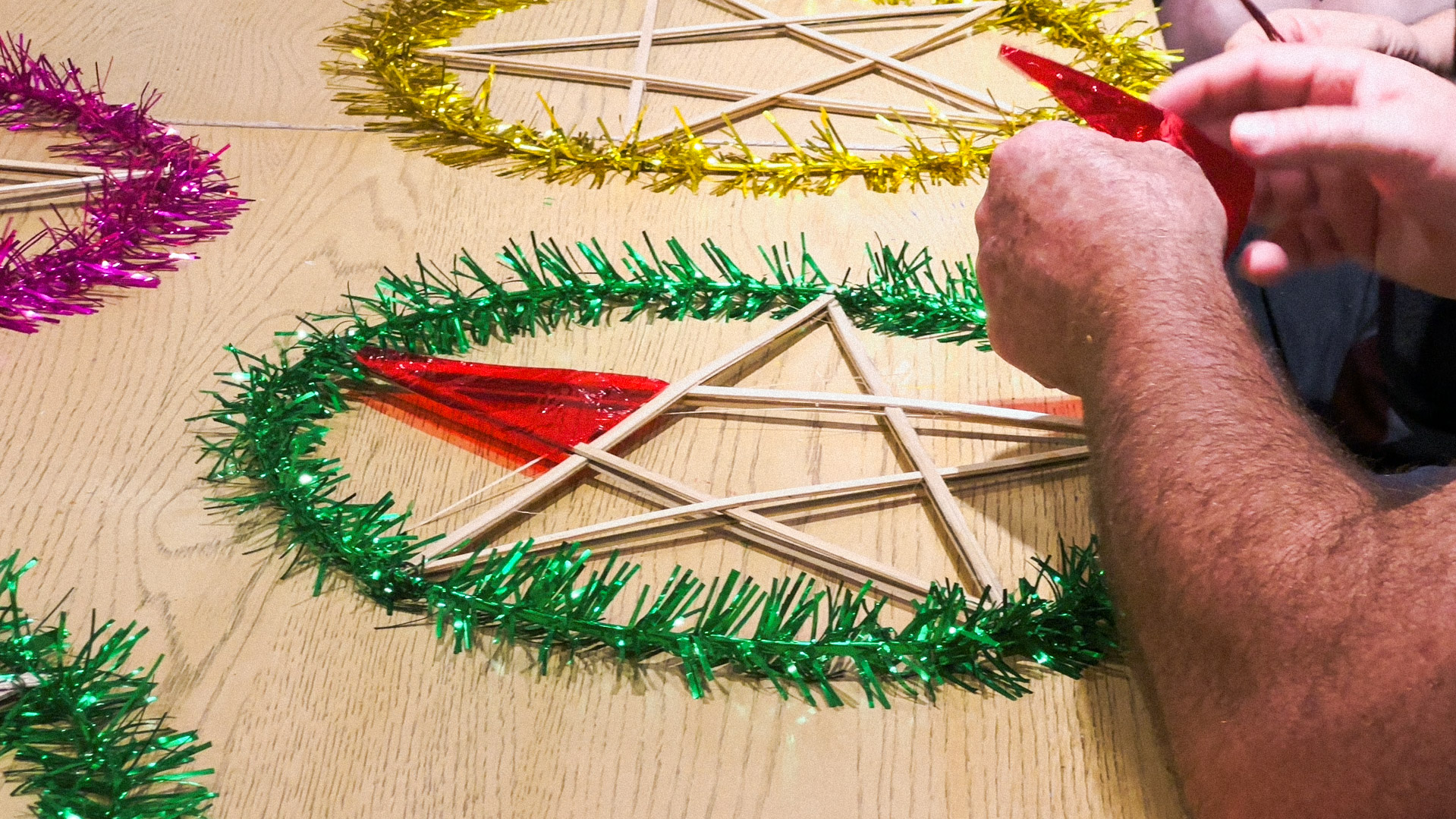
This is also the origin of the festival’s most recognizable tradition: children carry lanterns through the streets on Trung Thu night specifically to help light Cuội’s way back home. Star-shaped lanterns are the most common design, though animal and fish-shaped lanterns are just as popular in the parades.
The legend of Chị Hằng, the Moon Goddess
Alongside Chú Cuội’s story is the legend of Chị Hằng — also known as Hằng Nga — a moon deity whose story shares roots with China’s Chang’e legend but has taken on its own distinctly Vietnamese shape over time.
In one popular telling, Hằng Nga was a fairy who loved children so much that she would sneak down from the heavens to play with them on Earth, despite it being forbidden. When the Jade Emperor announced a cake-baking contest to be held on the 15th day of the 8th lunar month, Hằng Nga came down to Earth to find the best recipe she could enter. On her search, she crossed paths with Chú Cuội, who suggested she simply combine all her ingredients together and bake them as one. The resulting cake had a fragrant golden crust that delighted the children who tried it, and it won her the contest — becoming known from then on as the “mooncake.”
Soon after, Chú Cuội was pulled up to the moon by his banyan tree, leaving him homesick and sorrowful. Moved by his sadness, Hằng Nga pleaded with the Jade Emperor to let him return to Earth once a year, during the 8th lunar month, to reunite with his family — and she asked to descend with him, bringing mooncakes for children to enjoy.
That single night of reunion, the story goes, is Trung Thu itself.
Why the two stories coexist
If the connection between Chú Cuội’s banyan tree and Hằng Nga’s mooncake contest feels a little loosely stitched together, that’s because Trung Thu’s folklore isn’t one single, fixed tale — it’s a layered tradition. Vietnam’s Mid-Autumn Festival originated in China and is celebrated across much of Asia, but the Vietnamese version has developed its own distinct traditions and characters over centuries. Chú Cuội’s banyan tree story is considered uniquely Vietnamese, while Hằng Nga’s legend is shared between Vietnamese and Chinese cultures, evolving alongside China’s Chang’e story rather than descending directly from it.
Rather than compete, the two legends were woven together in the retelling — which is why you’ll often hear them told as one story, especially to children, even though each has its own separate origin.
The harvest roots of the festival
Beneath the folklore, Trung Thu has a more practical origin. The festival was originally a celebration of the rice harvest, historically the most important season for a rural household’s wellbeing. A clearer, more beautiful moon was taken as a sign of a better harvest to come — giving families even more reason to celebrate. That agricultural root is part of why Trung Thu remains one of Vietnam’s most family-centered holidays, even as it has grown into a major event for lanterns, lion dances, and street festivals in the country’s cities.
How the legend still shapes the festival today
Almost everything you’ll see during Trung Thu traces back to this folklore:
- Lanterns — carried to help guide Chú Cuội home, now made in star, fish, and animal shapes and sold by the thousands on streets like Hàng Mã in Ha Noi in the weeks before the festival
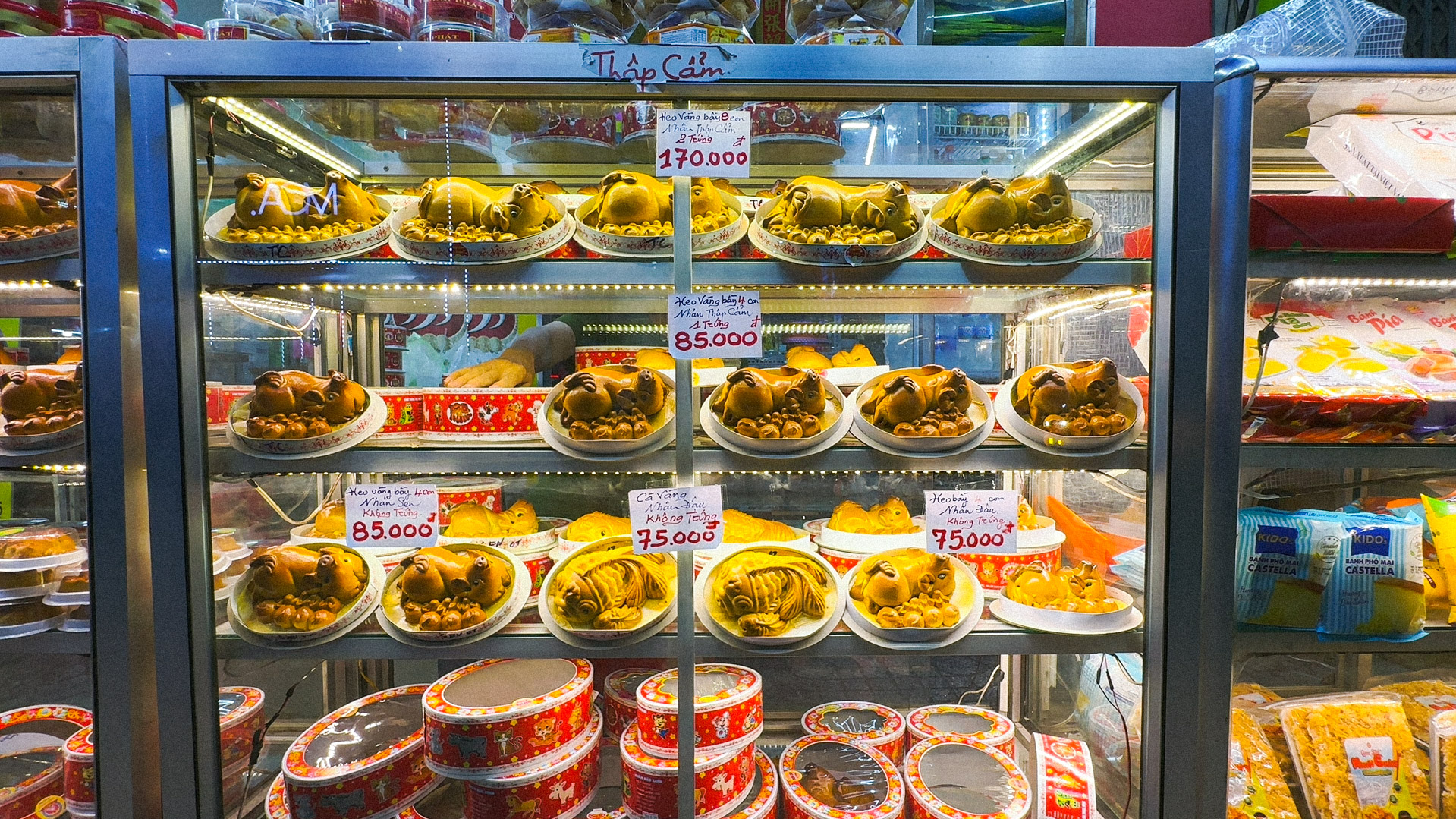
- Mooncakes — tied to Hằng Nga’s cake, offered on family altars and shared after a meal, typically in two forms: bánh dẻo (round, symbolizing the moon) and bánh nướng (square, symbolizing the earth)
- Children’s parades and lion dances — a public, festive expression of the same reunion the legend describes
- Storytelling itself — parents retelling the legend to children each year is as much a part of the tradition as the lanterns and cakes
Where to experience the legend in person
If you’re traveling in Vietnam around Trung Thu, a few places bring the folklore to life more vividly than others:
- Hàng Mã Street, Ha Noi — transforms into a sea of lanterns, masks, and toys in the weeks before the festival
- Hoi An’s Ancient Town — already known for its monthly lantern festival, Hoi An’s Trung Thu celebrations layer the Mid-Autumn tradition on top of its usual lantern-lit atmosphere
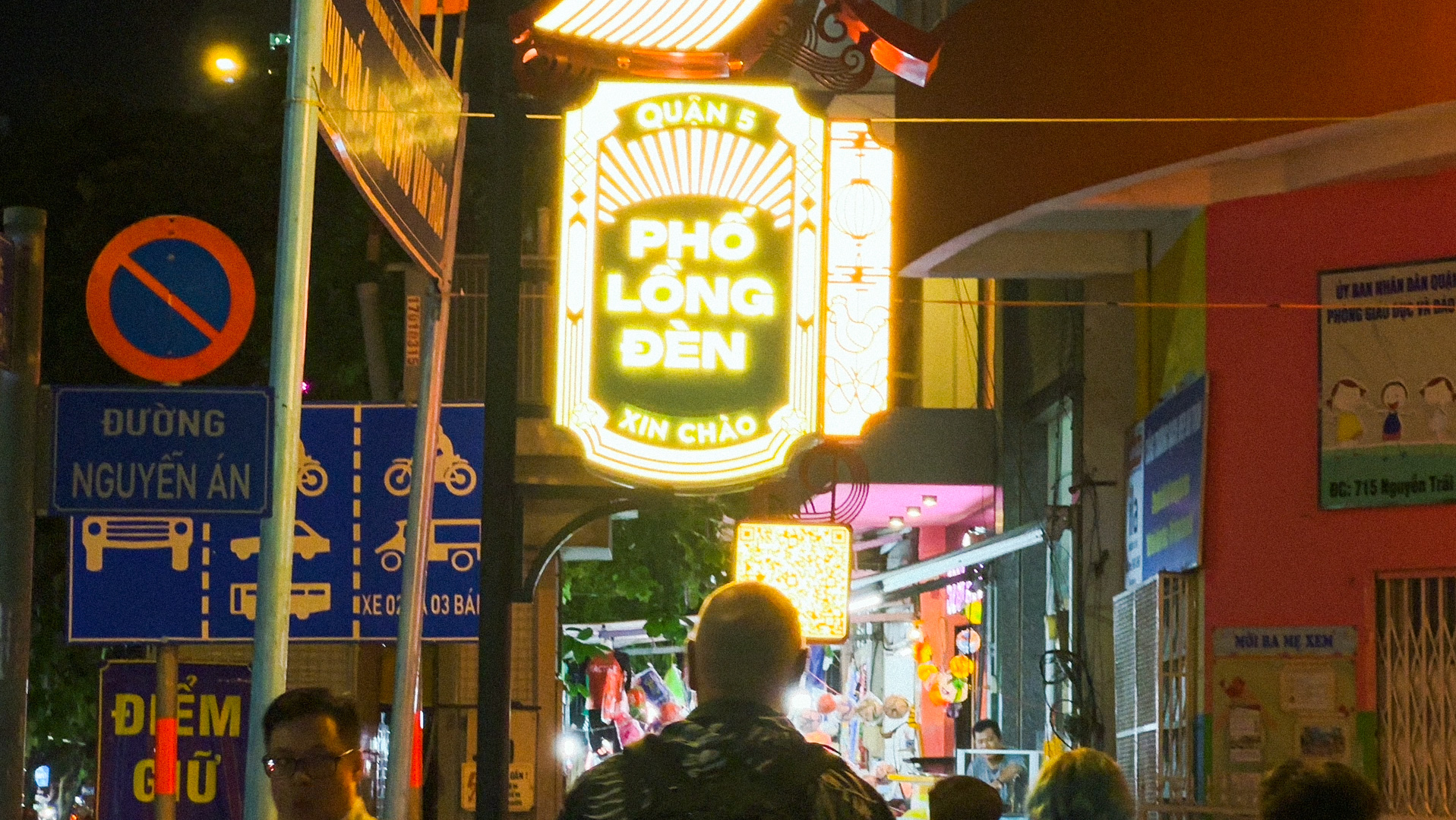
- Ho Chi Minh City’s District 5 — home to a large Chinese-Vietnamese community and some of the city’s most elaborate Trung Thu decorations and lion dance performances
Frequently asked questions
Is Chú Cuội the same as Hằng Nga? No — they’re two separate figures whose stories became intertwined over time. Chú Cuội is the man carried to the moon by a magic banyan tree, while Hằng Nga (Chị Hằng) is the Moon Goddess associated with the mooncake legend and the festival’s reunion theme.
Is the Vietnamese Trung Thu legend the same as the Chinese Mid-Autumn Festival legend? They share common roots — Hằng Nga’s story in particular parallels China’s Chang’e legend — but Vietnam’s version, especially the Chú Cuội banyan tree story, developed its own distinct characters and details over time.
Why do children carry lanterns during Trung Thu? According to the legend, lanterns are lit to help guide Chú Cuội back to Earth from the moon, which is why lantern parades remain the festival’s central children’s activity.
What do the two types of mooncakes symbolize? The round mooncake (bánh dẻo) represents the moon, while the square mooncake (bánh nướng) represents the earth — together reflecting the festival’s themes of harmony and family reunion.
When is Trung Thu celebrated? It falls on the 15th day of the 8th lunar month, when the moon is at its fullest. Because it follows the lunar calendar, the exact date shifts each year on the Western calendar, typically landing in September or early October.
Experience Trung Thu with TNK Travel
If your trip to Vietnam overlaps with Trung Thu, it’s worth building time into your itinerary to see it in person — from Ha Noi’s lantern-filled Old Quarter to Hoi An’s glowing riverside. Explore our Vietnam autumn travel guides or get in touch with our travel consultants to time your trip around the festival.