
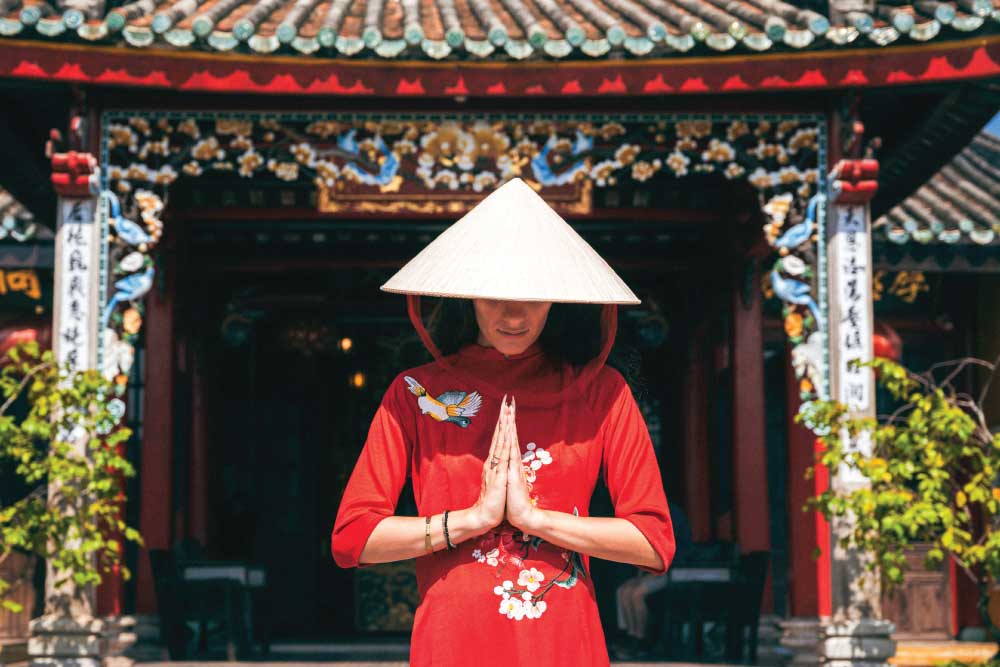
More than Vietnam’s traditional costume, áo dài is a symbol of identity, grace, and quiet resilience that has evolved alongside the country’s history. Elegant yet practical, modest yet expressive, the ao dai reflects how Vietnamese culture values balance rather than extremes.
For travelers, the ao dai is often one of the first visual impressions of Vietnam. You see it in schoolyards, at weddings, during Tet, and in historic towns. What many people do not realize is that the ao dai is not frozen in the past. It continues to change, adapt, and remain relevant in modern Vietnamese life.
Understanding the ao dai means understanding Vietnam itself.
What is the ao dai?
The ao dai is a long, fitted tunic worn over loose trousers. It is typically made from silk, chiffon, or other flowing fabrics and features a high collar, long sleeves, and side slits that allow movement.
Traditionally, the ao dai is worn by women, but there is also a male version used in ceremonial contexts. The design emphasizes elegance and posture rather than exposure, creating a look that is both refined and understated.
Unlike many traditional costumes that are worn only on special occasions, the ao dai has remained part of daily life in Vietnam, particularly in schools, offices, and cultural events.
The origins of the ao dai
The ao dai did not appear in its current form overnight. It evolved over centuries, shaped by political change, foreign influence, and social values.
Early Vietnamese clothing was heavily influenced by Chinese styles due to long periods of cultural exchange and governance. Loose robes and layered garments were common, especially among the elite.
In the 18th century, during the Nguyen Lords’ rule in central Vietnam, clothing reforms encouraged a more distinct Vietnamese identity. Garments became longer, more structured, and tailored, laying the foundation for what would later become the ao dai.
These early forms were more conservative and less fitted than today’s designs, but they introduced key elements such as long panels and high collars.
How the ao dai evolved in the 20th century
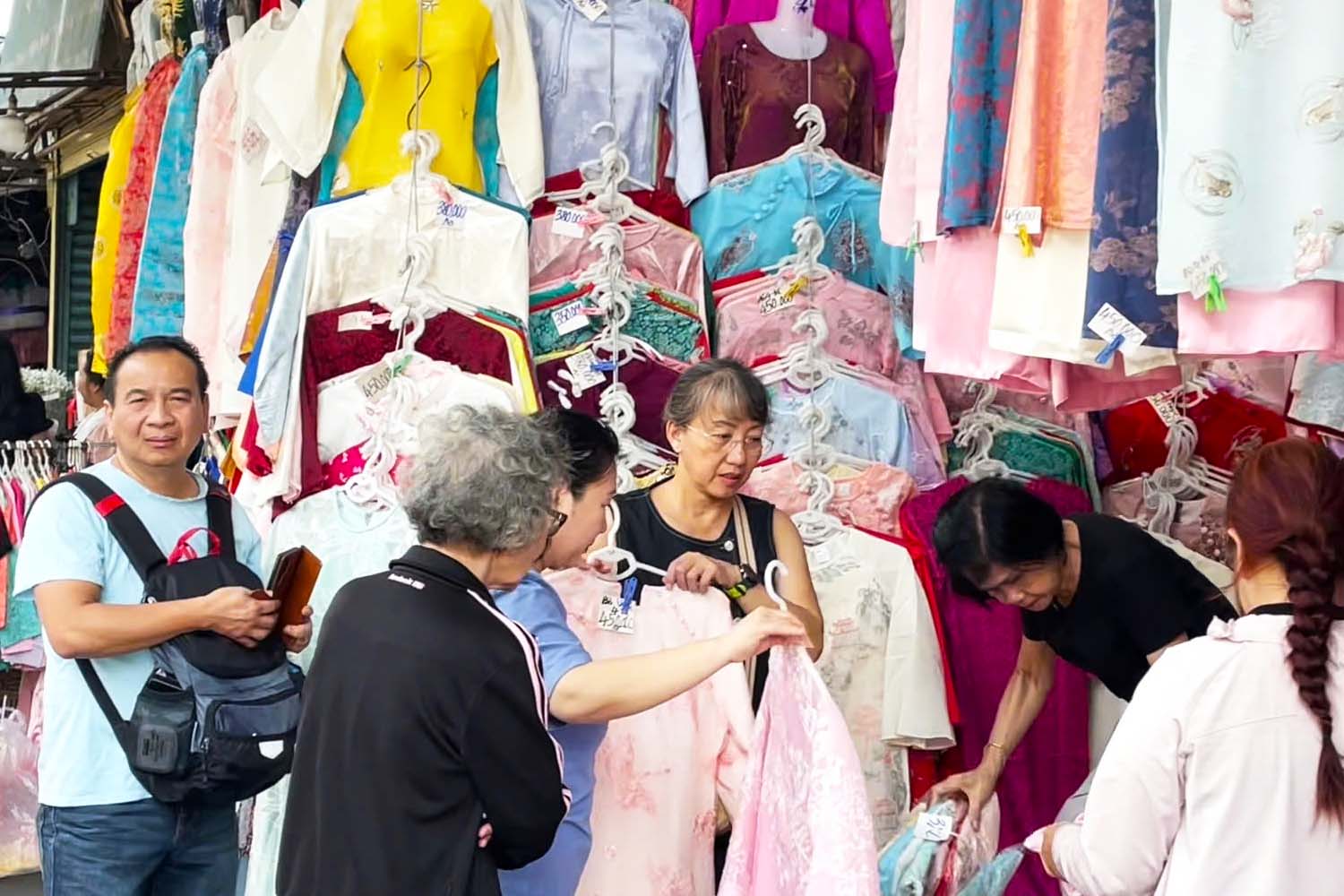
The modern ao dai took shape in the early 20th century, during a time of intense cultural change.
French colonial influence introduced Western tailoring techniques, including fitted silhouettes and darts that followed the natural lines of the body. Vietnamese designers began experimenting with these techniques, blending them with traditional aesthetics.
The result was a more streamlined, elegant ao dai that emphasized grace and movement. This version became popular among urban women and intellectuals, symbolizing modernity while retaining cultural roots.
By the mid-20th century, the ao dai had become a national symbol, worn at formal events, schools, and important celebrations.
The ao dai as a symbol of femininity and identity
The ao dai is often associated with femininity, but not in an overt or dramatic way. Instead, it represents subtle strength, composure, and dignity.
The design encourages upright posture and measured movement. Walking in an ao dai requires awareness and calm, reinforcing values of grace and self-control.
For many Vietnamese women, wearing the ao dai is not about standing out, but about belonging. It connects generations, linking mothers and daughters through shared tradition.
This emotional connection is one reason the ao dai has endured while other traditional garments have faded.
Ao dai in everyday life
One of the most distinctive aspects of the ao dai is how naturally it fits into everyday life.
In many cities, female high school students wear white ao dai as their uniform. This daily presence keeps the garment alive, familiar, and evolving rather than ceremonial and distant.
Teachers, receptionists, and office workers may also wear ao dai on special days or formal occasions. Airlines, hotels, and tourism businesses often use ao dai as part of their visual identity.
For travelers, this means the ao dai is not just something seen in museums or performances. It is part of the living landscape of Vietnam.
Ao dai and Vietnamese seasons
The ao dai adapts well to Vietnam’s climate.
Light fabrics allow airflow in hot weather, while layered or thicker materials are used during cooler months in the north. Colors and patterns often change with the seasons, reflecting nature, festivals, and moods.
During Tet, ao dai designs become especially vibrant. Floral patterns, red and gold tones, and silk fabrics dominate, symbolizing luck, renewal, and celebration.
This seasonal adaptability helps explain why the ao dai remains practical as well as symbolic.
Ao dai for men: a quieter tradition
While less commonly seen, the male ao dai has an important place in Vietnamese culture.
Men traditionally wear ao dai during weddings, ancestral ceremonies, and formal events. These designs are usually paired with a khăn đóng, a traditional headpiece.
Male ao dai are typically looser, with darker or more muted colors, emphasizing dignity and formality rather than elegance.
Though not part of daily wear, the male ao dai remains an important cultural marker, especially during Tet and family rituals.
Ao dai in weddings and ceremonies
Weddings are one of the most important contexts in which the ao dai appears.
Brides often wear specially designed ao dai before changing into Western-style gowns. These bridal ao dai are richly decorated, symbolizing happiness, prosperity, and respect for tradition.
Family members may also wear ao dai during engagement ceremonies and ancestral rites, reinforcing the garment’s role in marking significant life moments.
For travelers attending Vietnamese weddings, the ao dai offers a window into how tradition and modern life coexist.
Ao dai in art, photography, and tourism
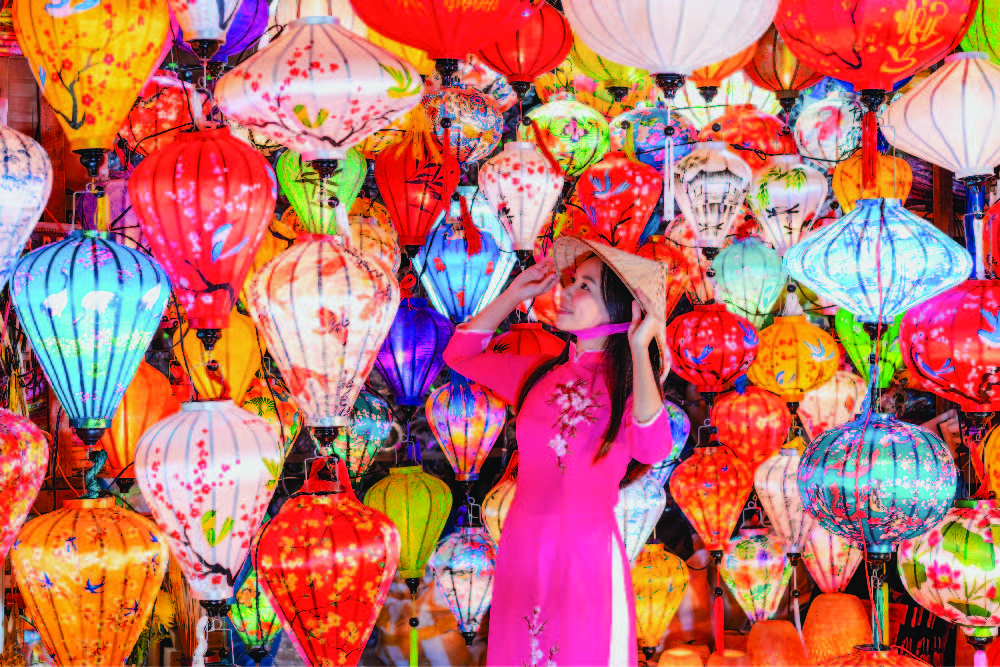
The ao dai has become a powerful visual symbol in Vietnamese art and tourism.
Photographs of women in ao dai against backdrops of lotus ponds, old streets, or riverside towns are widely used to represent Vietnam’s elegance and cultural depth.
While some images are staged, many reflect real practices, especially during festivals, school events, and formal gatherings.
For visitors, seeing ao dai in context rather than performance helps avoid reducing it to a costume and instead appreciate it as living culture.
Why the ao dai has survived while others disappeared
Many traditional garments around the world have become museum pieces. The ao dai has not.
Its survival comes from adaptability. Designers continue to reinterpret it. Wearers find new contexts for it. Society allows it to change without losing meaning.
The ao dai is not preserved by strict rules, but by relevance.
This flexibility allows it to remain recognizable while responding to changing aesthetics, roles, and lifestyles.
What the ao dai represents to Vietnamese people today
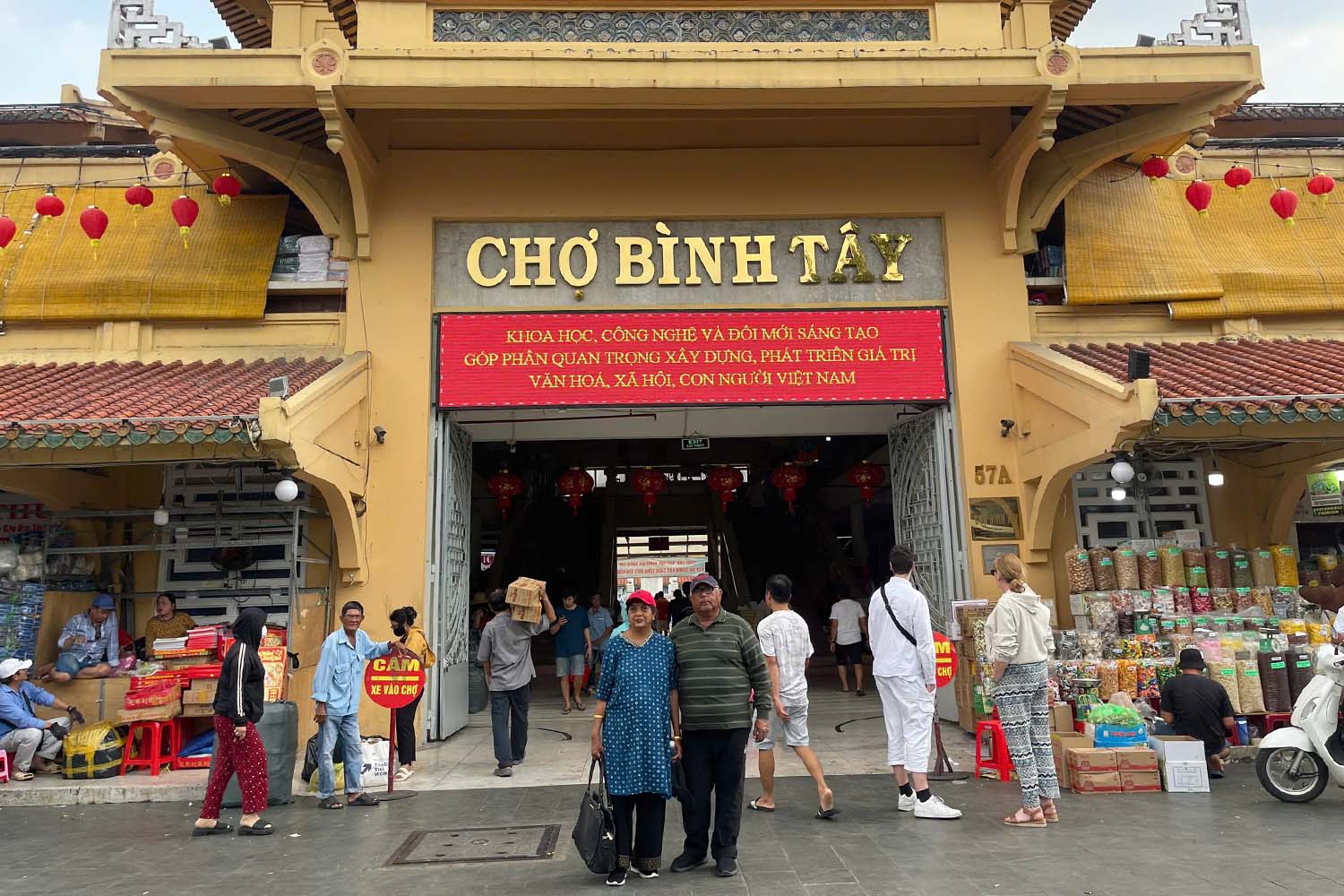
To many Vietnamese, the ao dai represents continuity.
It connects rural and urban life, past and present, tradition and modernity. It carries emotional weight without being rigid.
Wearing an ao dai is often described as feeling “right” rather than dramatic. It is about harmony rather than display.
This quiet confidence is central to why the ao dai continues to resonate.
Modern ao dai and how it has changed today
The ao dai has never stayed still. While its core shape remains recognizable, modern versions reflect changes in fashion, lifestyle, and social roles.
Today’s ao dai comes in a wide range of fabrics, from traditional silk to lightweight synthetics designed for daily wear. Designers experiment with textures, transparency, embroidery, and prints while keeping the familiar long tunic and flowing trousers.
Some modern ao dai feature softer collars, shorter hems, or asymmetrical cuts. Others blend elements of Western dresses with traditional lines. These changes make the ao dai more comfortable and versatile, especially for younger wearers.
What matters is not whether the ao dai looks exactly like it did decades ago, but that it continues to feel relevant.
Regional differences in ao dai styles
Although the ao dai is worn nationwide, subtle regional differences exist.
In northern Vietnam, ao dai designs often feel more conservative. Colors tend to be softer, patterns more restrained, and fabrics slightly thicker, especially during cooler months. White ao dai worn by students are most commonly associated with the north.
In central Vietnam, especially around Hue, ao dai styles reflect royal heritage. Designs are often more formal, with rich colors, traditional motifs, and heavier fabrics used for ceremonies and festivals.
In southern Vietnam, ao dai tends to be more playful and expressive. Bright colors, floral patterns, and lighter fabrics are common, particularly during Tet and weddings. Ao dai in the south often reflects the region’s warmer climate and relaxed atmosphere.
These differences are subtle but noticeable to those who spend time observing.
When travelers are most likely to see ao dai
Visitors often wonder when they will actually see people wearing ao dai during their trip.
Tet is the most obvious time. During Lunar New Year, ao dai appears everywhere, from flower streets and temples to family visits and public celebrations. Bright colors and festive designs dominate.
School days are another reliable opportunity. In many cities, female students wear white ao dai as uniforms. Seeing groups of students cycling or walking to school is one of the most authentic everyday encounters with the ao dai.
Weddings, cultural festivals, graduations, and formal events are also common occasions. In tourist areas, ao dai may be worn by staff in hotels, museums, or airlines as part of a professional uniform.
Outside of these contexts, ao dai is not everyday streetwear, and travelers should not expect to see it constantly.
Ao dai and photography: what travelers should know
The ao dai is often photographed, but there is an important difference between appreciation and intrusion.
Many Vietnamese people are comfortable being photographed during public events, especially festivals. However, it is always respectful to ask before taking close-up photos, particularly of individuals.
If you see students or families wearing ao dai, avoid treating them as photo props. A polite smile or simple request goes a long way.
For travelers who want ao dai photos, some studios and tailors offer rental services, allowing visitors to wear ao dai and take photos in appropriate settings. This is generally more respectful than photographing strangers.
Understanding these boundaries helps preserve the ao dai as a lived tradition rather than a tourist attraction.
Can travelers wear ao dai?
Yes, travelers can wear ao dai, and many do. However, context matters.
Wearing ao dai for photos, cultural events, or formal occasions is generally welcomed, especially when done respectfully. Choosing modest designs and wearing the garment properly shows appreciation rather than imitation.
What matters most is intention. Wearing ao dai as a costume or novelty can feel inappropriate, while wearing it as a gesture of respect is usually appreciated.
If you are unsure, asking a local or staff member for guidance is always a good approach.
Ao dai in fashion and global influence
In recent years, ao dai has gained international attention through fashion shows, cultural exhibitions, and diaspora communities.
Vietnamese designers present ao dai-inspired collections abroad, adapting the silhouette for global audiences while maintaining cultural identity. These designs often appear in fashion weeks, weddings, and cultural events outside Vietnam.
This global visibility has helped reinforce the ao dai as a symbol of Vietnamese culture rather than a relic of the past.
At the same time, most Vietnamese still view the ao dai as something deeply personal and local, not a trend to be consumed.
Why the ao dai still matters in modern Vietnam
The ao dai matters because it evolves without losing meaning.
It does not resist change, nor does it abandon tradition. It adapts quietly, reflecting shifts in gender roles, fashion, and identity while remaining unmistakably Vietnamese.
In a rapidly changing society, the ao dai provides continuity. It offers a sense of belonging without demanding uniformity.
This balance is rare, and it explains why the ao dai continues to be worn, redesigned, and valued across generations.
Common misconceptions about the ao dai
One common misconception is that ao dai is worn daily by most Vietnamese women. In reality, it is worn in specific contexts rather than as everyday clothing.
Another misconception is that ao dai is purely traditional and unchanging. In fact, its survival depends on constant reinterpretation.
Some travelers also assume ao dai is only for women. While female ao dai is more visible, male ao dai remains culturally important in ceremonies and formal events.
Understanding these nuances leads to deeper appreciation.
Ao dai as living culture, not a costume
The most important thing to understand about the ao dai is that it is living culture.
It is not preserved behind glass or limited to performances. It moves through streets, schools, weddings, and family gatherings.
When travelers see ao dai in Vietnam, they are not witnessing a reenactment of the past. They are seeing tradition continuing in real time.
This is what makes the ao dai meaningful, not just beautiful.
Final thoughts on the ao dai
For travelers, learning about the ao dai adds depth to the Vietnam experience. It turns a familiar image into a meaningful symbol.
The ao dai is not just something to look at. It is something to understand.
And once understood, it becomes impossible to see Vietnam in the same way again.