Overview
South of Ho Chi Minh City, the highways thin out, the horizon flattens, and the land slowly turns to water. This is the Mekong Delta — the place where the Mekong River, after a 4,000-kilometre journey across Asia, splinters into nine arms and pours into the sea. Vietnamese call it Cửu Long, the Nine Dragons. Locals call it the rice bowl of the country, because nearly half of Vietnam’s rice grows in this maze of brown rivers, green paddies, and fruit orchards.
It’s also one of the most misunderstood places to visit in Vietnam. Most people give it a single rushed day trip from Saigon and leave thinking it’s a tourist conveyor belt — coconut candy demo, a quick canoe paddle, lunch, home. Do it that way and they’re not wrong. But give the delta two or three days, get off the main loop, and it becomes one of the most quietly rewarding regions in the country.
Here’s an honest look at the best things to do in the Mekong Delta, what each one is actually like in 2026, and how to do it well.
First, get your bearings
The delta isn’t one destination — it’s a spread of provinces, each with a different character. The ones worth knowing:
- My Tho and Ben Tre — the closest, around 1.5 to 2 hours from Ho Chi Minh City. This is where the classic day trips go. Easy, green, and busy with other tourists.
- Can Tho — the delta’s biggest city, about 3.5 to 4 hours south, and the gateway to the region’s most famous floating market. The natural base for an overnight trip.
- Chau Doc (An Giang) — far west near the Cambodian border, around 6 hours out, with mountains, stilt villages, and the gorgeous Tra Su forest. Best if you have time, or if you’re crossing to Phnom Penh.
You reach the delta by road from Saigon — book a tour, a private car, or take a comfortable sleeper-style bus from the Western Bus Station. There’s no need to overthink it. The deeper you go, the fewer crowds you’ll meet, so if you can only pick one base, Can Tho gives you the best mix of access and atmosphere.
1. Get out on the water — by cruise or by day boat
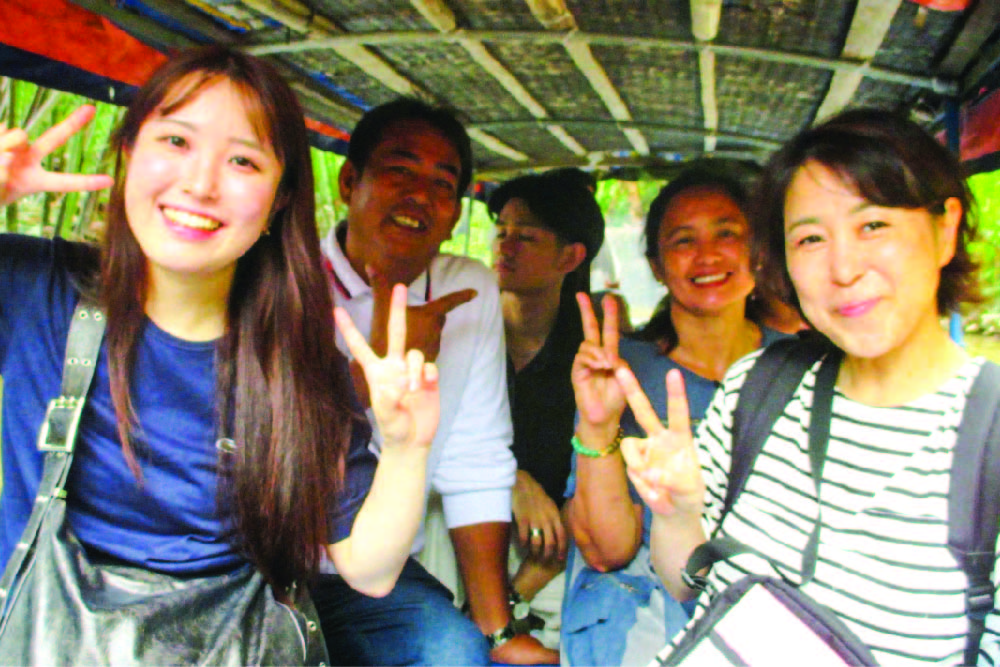
Everything in the delta happens on or beside the river, so the first thing to do is simply get out on it. You’ve got two very different ways to do that.
A multi-day Mekong river cruise is the slow, comfortable option. Boats glide between provinces over two or three days, stopping at villages, workshops, and markets, with meals and cabins on board. Mid-range vessels touring the Vietnamese delta run roughly $250 to $300 per person; the luxury ships that continue across the border to Phnom Penh and Siem Reap climb well past $1,000. It’s a genuinely lovely way to watch delta life drift past, and you wake up somewhere new each morning.
The cheaper, more flexible option is a day boat or a small-group land-and-river tour, typically around $90 to $200 for one to three days. You spend the day hopping between islands and channels and sleep on land. If your budget is tight or your time is short, this gets you 80% of the experience for a fraction of the cost.
The thing the brochures undersell: the best moments on the water aren’t the scheduled stops. They’re the in-between stretches — a woman rowing home with a boatload of pomelos, kids waving from a stilt house, the smell of someone’s lunch drifting off a kitchen barge. Sit back and let those happen.
2. Wake up before dawn for a floating market — but know what to expect
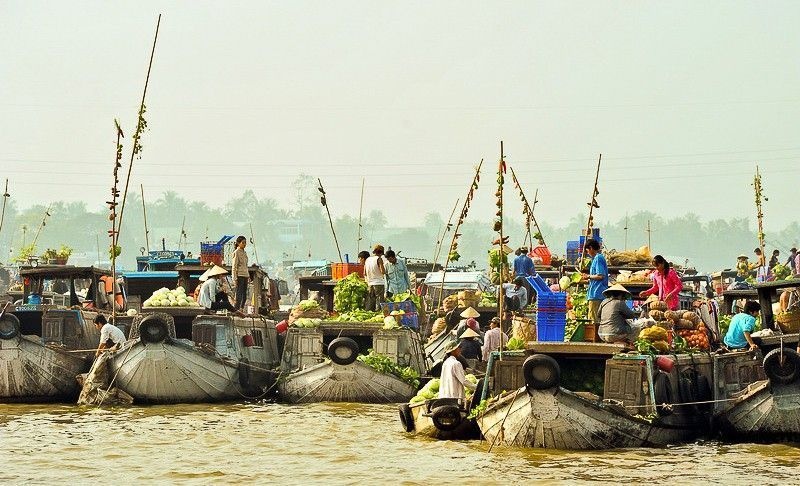
The floating market is the delta’s signature image, and Cai Rang, just outside Can Tho on the Hau River, is the last big one still operating. You reach it only by boat, usually setting off from Ninh Kieu Wharf around 5am so you arrive while it’s still half-dark and busiest, roughly 5:30 to 6:30.
Be honest with yourself before you go, though, because the postcard you’ve seen is out of date. Cai Rang today is mostly a wholesale market — big wooden vessels piled with a single crop, watermelons or pineapples or sacks of rice, trading in bulk, each one advertising its goods on a tall bamboo pole. Mixed in are the tourist boats in orange life jackets and a handful of vendors selling noodles and coffee off sampans. The intimate scene of small farmers trading fruit boat-to-boat has largely faded, here and across the region, as roads and trucks replaced the rivers. The other markets the old guides list — Nga Bay, Nga Nam, Cai Be — have dwindled even further; don’t build a trip around them.
So why still go? Because watching tonnes of produce change hands on the water at sunrise is a real, working spectacle, not a staged one, and because a bowl of hu tieu noodles cooked on a rocking boat for about 25,000 VND (a dollar) is one of the better breakfasts you’ll have in Vietnam. Go for the river life and the morning light, not for a fantasy that no longer exists, and you’ll come away glad you set the alarm.
3. Stay overnight in a homestay
If you do one thing in the delta, make it this. A night in a local homestay is the difference between seeing the Mekong and actually spending time in it — and it’s almost absurdly affordable, from a few dollars for a basic bed to around $40 for something more comfortable.
The homestays worth seeking out sit on the quiet islands and along the smaller canals, ringed by orchards, run by families who cook what they grow. The day has a rhythm to it: cycle the lanes in the morning, drift in a hammock through the heavy midday heat, watch the sun drop over the river with a glass of fresh juice, then sit down to a home-cooked dinner — elephant-ear fish, caramelised clay-pot pork, vegetables from the garden — and talk late with your hosts. It’s a two-way exchange, and the families are as curious about you as you are about them.
The catch is that quality varies enormously, and the cheapest listing isn’t always the real thing. Around Ben Tre, Vinh Long, and the islands near Can Tho you’ll find some of the most genuine hosts. Booking through a reputable homestay tour takes the guesswork out and usually bundles in the cycling, boat trips, and meals.
4. Cycle the back lanes between the paddies
The delta is flat as a table, which makes it perfect cycling country — no climbs, just narrow paved lanes threading between rice fields, vegetable plots, and fruit gardens, with a monkey bridge or two to test your nerve. Most homestays rent bikes for around $4 a day, and Can Tho has been rolling out public bikes in the city.
Go early, when the air is still cool and the light is soft. You’ll pass farmers heading to the fields, kids cycling to school, and roadside stalls where you can stop for an iced coffee or a bowl of noodles whenever you like. This isn’t the dramatic, mountain-backed riding of Ninh Binh or the north — it’s the opposite, and that’s the point. The delta’s gift is slowness. An hour on a bike here resets your whole nervous system before you rejoin the road.
5. Eat your way through the delta
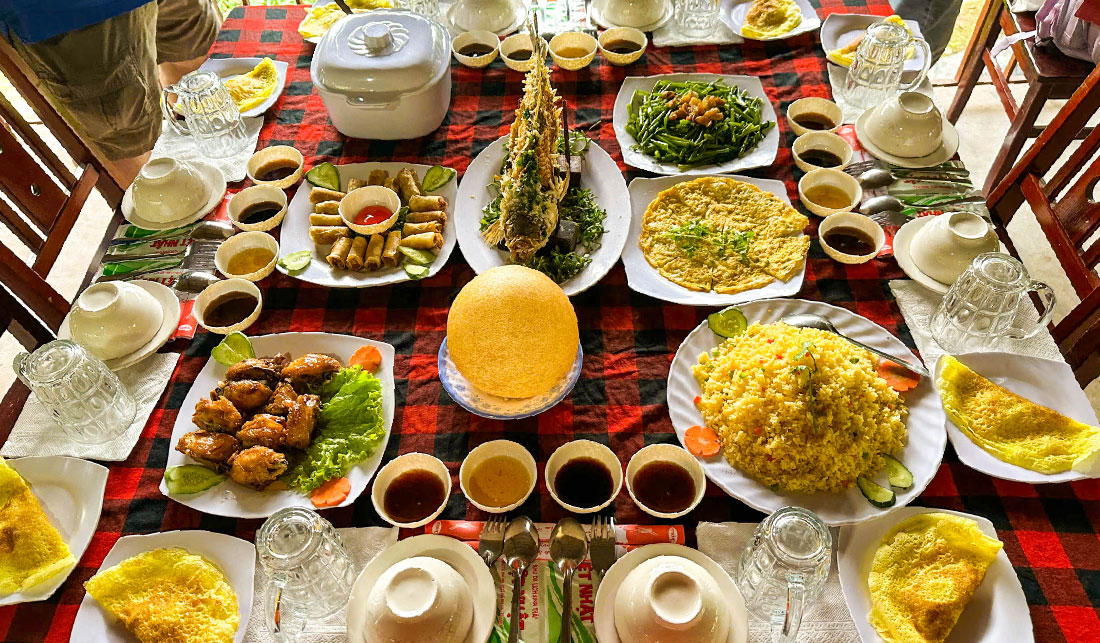
Mekong food isn’t fancy, and that’s exactly why it’s so good. This is the most fertile corner of Vietnam, so the cooking leans on whatever is freshest that morning — river fish, prawns, herbs, and an astonishing range of fruit and even flowers (the delta is one of the few places you’ll be served bông điên điển, sesbania blossoms, in a sour soup or hotpot).
Dishes to hunt down:
- Hu tieu — the southern noodle soup, clear and sweet-savoury, often eaten for breakfast
- Banh xeo — a crackling turmeric-yellow rice pancake folded over pork, prawns, and bean sprouts, wrapped in herbs
- Ca tai tuong chien xu — whole “elephant-ear” fish fried crisp and rolled into rice paper at the table
- Bun rieu — a tomato-and-crab noodle soup, tangy and comforting
- Pia cake — a rich durian-and-mung-bean pastry from Soc Trang, a Khmer-Vietnamese specialty
- Coconut worms (đuông dừa) — for the genuinely brave, served live or fried
Most dishes cost between $1 and $5. Eat where the locals eat — the busy stall, the family restaurant, the boat vendor — rather than the tour-bus lunch hall, and the food alone justifies the trip.
6. Graze your way through a fruit orchard
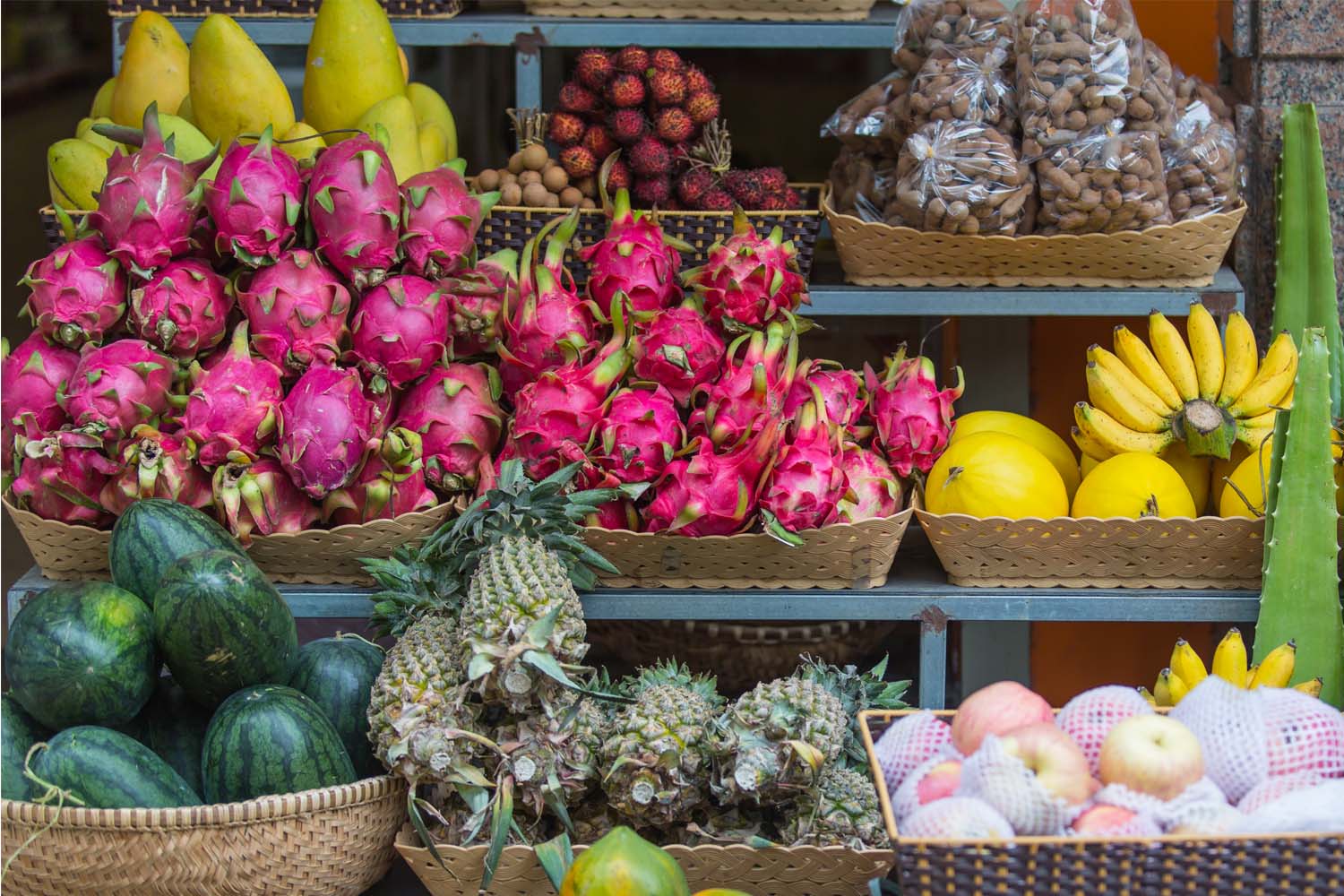
The delta grows much of Vietnam’s fruit, and the best way to enjoy it is at the source, in a miệt vườn orchard where you pay a small set fee (often around $3, sometimes free with a tour) and eat as much as you can pick. Fruit straight off the tree tastes nothing like fruit that’s been boated to a market and stacked in the heat for two days.
Each area is known for something: Cai Mon in Ben Tre for durian, Vinh Kim in Tien Giang for milk fruit (star apple), Cai Be for citrus, Vinh Long for pomelo. Depending on the season you might be eating rambutan, mangosteen, longan, jackfruit, or dragon fruit, usually under a shaded pavilion with a pot of tea, sometimes with live đờn ca tài tử — the delta’s UNESCO-listed folk music. It’s relaxed, cheap, and a low-impact form of agro-tourism that actually supports the families farming the land.
7. Drift through the mangroves on a sampan
A sampan is the small wooden rowboat you’ve seen in every delta photo, paddled — usually by a woman in a conical hat — down channels too narrow for engines. If a cruise is the delta’s grand tour, the sampan is its quiet heart.
The classic version threads through water-coconut palms on the islets around My Tho and Ben Tre, the leaves arching overhead into a green tunnel. But the most beautiful sampan ride in the delta is at the Tra Su Cajuput Forest in An Giang, where you glide across water carpeted in vivid green duckweed beneath flooded melaleuca trees, herons and storks lifting off as you pass. It’s most spectacular in the floating-water season from roughly September to November. A small sampan runs only a few dollars, and the silence — no motor, just the dip of the oar — is the whole experience.
8. Slow down at the delta’s landmarks
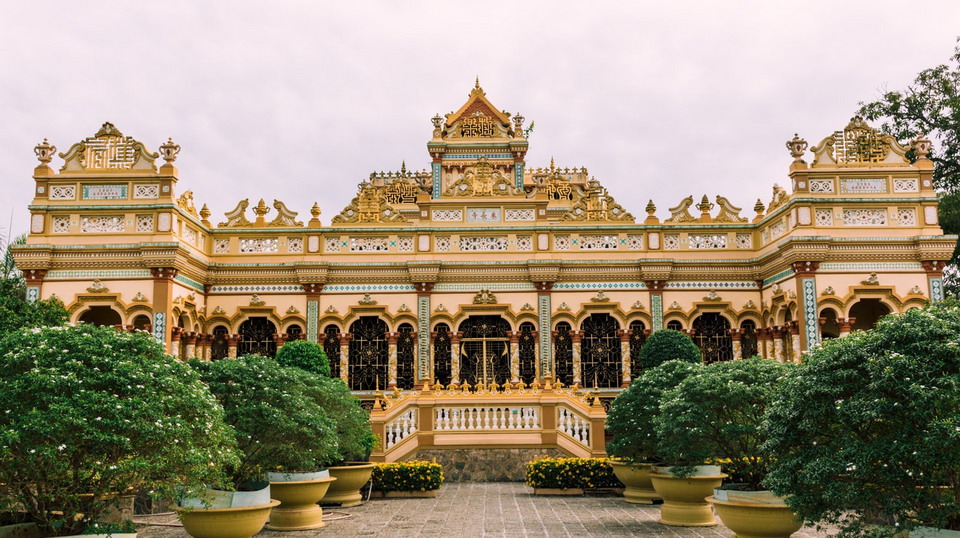
After a few days on the water, it’s worth dedicating an afternoon to the region’s cultural sights, many of which reflect its mixed Vietnamese, Khmer, and Chinese heritage:
- Tra Su Cajuput Forest and Tram Chim National Park — birdlife and flooded forest, best at dawn or dusk
- Khmer pagodas like the Bat Pagoda and Xiem Can Pagoda near Soc Trang and Bac Lieu, with their gilded, sweeping rooflines
- Ba Chua Xu Temple at Sam Mountain in Chau Doc, one of the south’s most important pilgrimage sites
- The House of the Prince of Bac Lieu, a French-colonial mansion wrapped in local legend
- Tan Lap floating village and Cape Ca Mau, the southernmost tip of Vietnam
You don’t need to see them all. Pick one or two that fit your route and let them add some history and shade to a trip that’s otherwise spent outdoors.
9. Cross the border by river to Cambodia
Here’s something the day-trippers miss entirely: the Mekong is a highway, and you can ride it straight out of the country. Boats run from Chau Doc up to Phnom Penh, turning the delta from a dead-end excursion into the first leg of a bigger Indochina journey. It’s a slow, scenic, low-stress border crossing — far nicer than a bus — and it’s one of the best reasons to push west to Chau Doc rather than turning back at Can Tho.
When is the best time to visit the Mekong Delta?
The delta is warm year-round and splits into two seasons. The dry season (December to April) brings the most reliable weather and the easiest travel — this is peak season, and a good all-rounder. The wet season (May to November) is hotter and wetter, but the rain usually falls in short afternoon bursts, the landscape turns its lushest green, and it doubles as fruit season, so the orchards are at their best. The floating-water months (roughly September to November), when the river is high, are the most beautiful time for the flooded forests like Tra Su. There’s no truly bad time; just pack light rain gear in the wet months.
How many days do you need?
A single day trip from Ho Chi Minh City to My Tho or Ben Tre will show you the delta exists, but it’s rushed and the most touristy slice of it. Two to three days, with a night in a homestay and a base in Can Tho, is the sweet spot — enough to slow down, catch a sunrise market, and reach the quieter channels. If you have a week or you’re continuing to Cambodia, push out to Chau Doc and the far west.
The bottom line
The Mekong Delta rewards the traveler who isn’t in a hurry. Skip the box-ticking day trip if you can, give it a couple of nights, eat at the busy stalls, sleep in a family’s home, and spend a morning doing nothing but watching the river work. The big sights here are smaller than the postcards — the floating markets especially are a shadow of their old selves — but the texture of daily life on the water is as rich as anywhere in Vietnam. That’s the thing you’ll remember.
Itinerary
Price & Bookings
Reservations
Reviews
Share your thoughts with other customers.