
Ask any Vietnam travel veteran which season they’d pick if they could only visit once, and autumn comes up more than any other answer. Running roughly from September through November, autumn marks the moment Vietnam’s punishing summer humidity finally breaks, replaced by cool mornings, clear skies, and some of the most photogenic landscapes in Southeast Asia. It’s the season of golden rice terraces, blooming buckwheat fields, lantern-lit old towns, and a noticeably calmer travel experience than the peak winter months.
If you’re weighing when to book your Vietnam trip after summer ends, here’s a practical, destination-by-destination look at what autumn actually delivers — and how to make the most of it.
Why autumn stands out among Vietnam’s four seasons
Vietnam’s climate varies dramatically by region, which is part of why “the best time to visit” depends heavily on where you’re going. Autumn is the season when that variation works most in travelers’ favor.
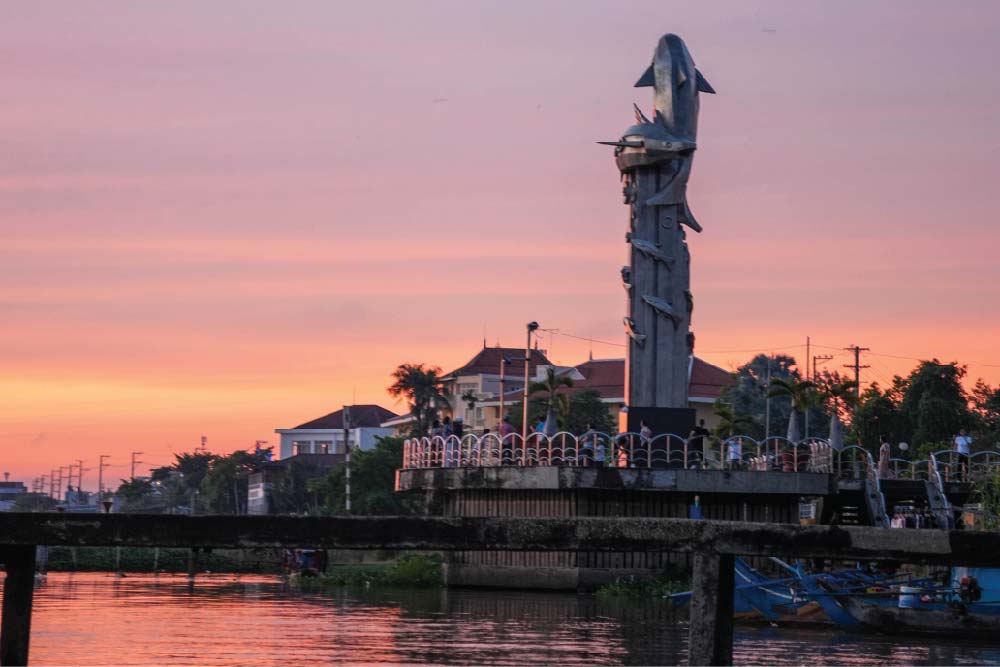
In the north, temperatures ease down to a comfortable range in the mid-20s Celsius as the searing summer heat fades into misty mornings and cooler evenings — arguably the most dramatic seasonal shift anywhere in the country. Central Vietnam sees a milder version of the transition, with occasional rain easing the summer heat, though this region also carries the country’s main typhoon risk in September and October. The south doesn’t experience a true autumn in the temperate sense, but locals still treat September to November as its own seasonal chapter, as the rainy season tapers and the heaviest heat of the year lifts.
The common thread across all three regions: this is the most balanced stretch of the year for temperature, humidity, and overall travel comfort.
Where to go: autumn’s standout destinations
Ha Noi
Ha Noi in autumn is the version of the capital that appears on postcards. Golden light, the scent of milk flowers drifting through the Old Quarter, and a noticeably softer pace make it the city’s most romantic stretch of the year. It’s an ideal time for unhurried walks around Hoan Kiem Lake, a cycle around West Lake, and lingering visits to the Temple of Literature and St. Joseph’s Cathedral without fighting summer heat or winter chill.
Autumn also happens to line up with Ha Noi’s best seasonal food. This is prime season for young green sticky rice (com), a Ha Noi autumn specialty, alongside the city’s famous egg coffee and old-school ice cream shops — all best enjoyed at a sidewalk table in the cool evening air.
Ha Giang
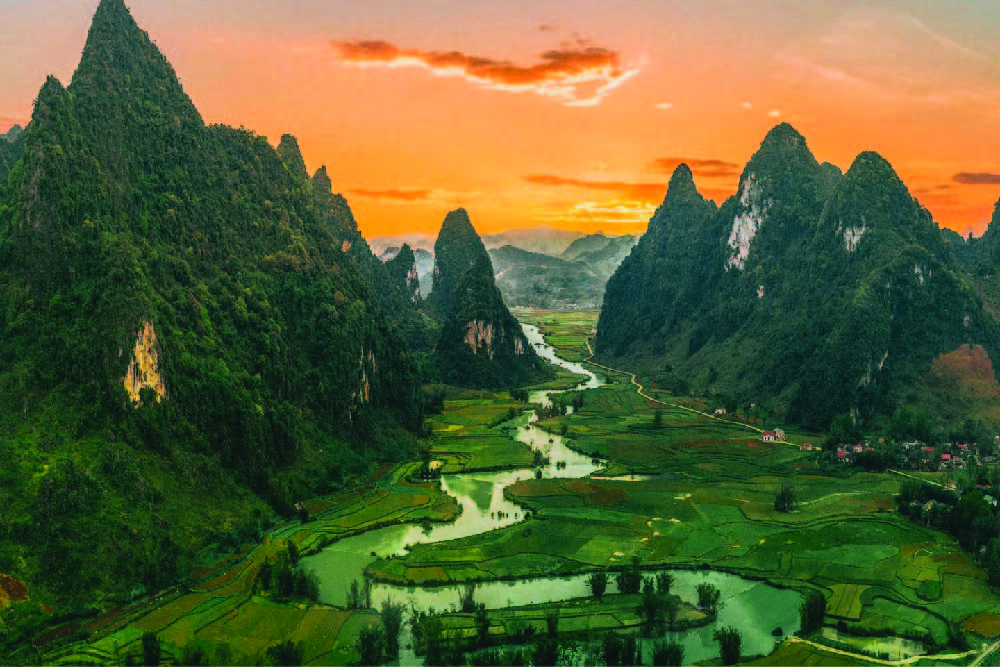
For travelers chasing dramatic mountain scenery, Ha Giang in late September and October is close to unbeatable. This is buckwheat flower season, when entire valleys turn shades of pink and purple against a backdrop of golden rice terraces — a combination that draws photographers from around the world.
The legendary Ha Giang Loop is at its scenic best this time of year, winding past the Ma Pi Leng Pass and the turquoise Nho Que River below. Culturally rich stops like Dong Van Karst Plateau Geopark, Dong Van Market, and the Lung Cu Flag Tower round out a trip that feels as much like a cultural immersion as a scenic drive. Many areas also host Buckwheat Flower Festival events during this window, with folk performances and local food adding another layer to the trip.
Sa Pa
Sa Pa’s autumn rice terraces are the stuff of travel bucket lists — golden, cascading fields set against blue skies and cool morning mist. It’s a strong season for trekking, with drier trails than the summer monsoon and comfortable daytime temperatures for hikes to Ham Rong Mountain, Silver Waterfall, or through the Muong Hoa Valley and villages like Ta Van and Lao Chai.
It’s also a good time to slow down and take in Sa Pa’s cultural side — the Stone Church, the town’s lively market culture, and warming local dishes like grilled specialties and hotpot that suit the cooler mountain air.
Moc Chau
Less crowded than Sa Pa but equally scenic, Moc Chau Highland transforms in autumn into a landscape of tea plantations under soft, golden light, plus blooming buckwheat and white mustard fields. A peaceful walk through Ban Ang’s pine forest rounds out what is one of Northern Vietnam’s most underrated autumn destinations for travelers who want scenery without the crowds.
Hoi An
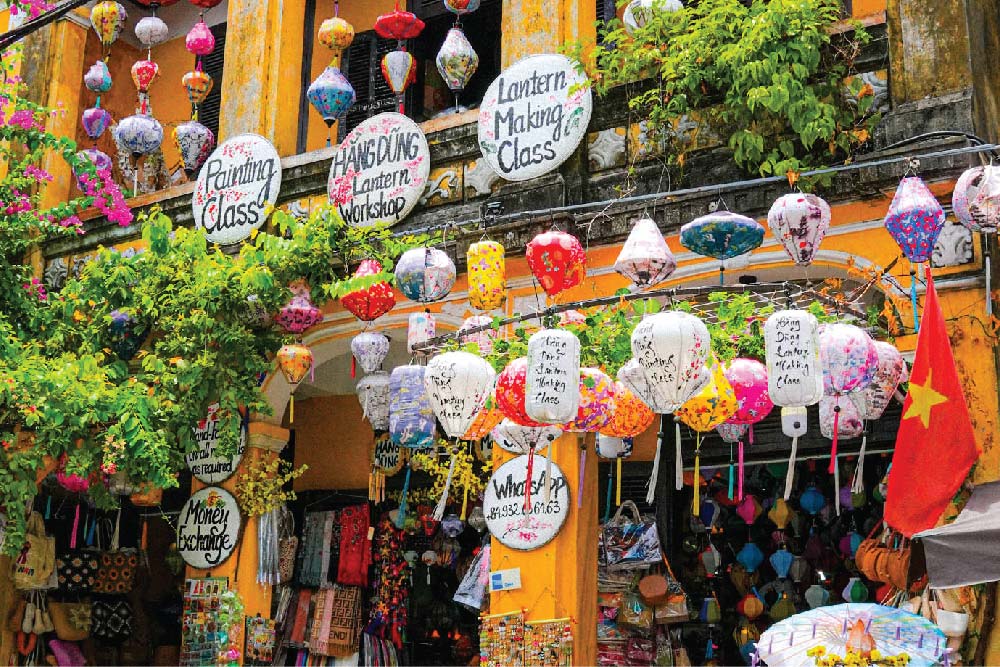
Hoi An’s ancient town takes on a particular magic in autumn, especially around the Mid-Autumn Festival, when the lantern-lit streets host art performances and cultural events. A lantern boat ride along the Thu Bon River — releasing a lantern with a wish — is one of the most memorable low-key experiences in the country. Beyond the old town, Hoi An’s autumn appeal extends to the Cham Islands, Tra Que Vegetable Village, and the region’s famously good street food, including banh mi and mi quang.
Da Lat
Da Lat’s cooler highland climate means its “autumn” flourishes are wild sunflowers and mimosa blossoms rather than dramatic temperature swings. The combination of flower-covered hillsides, waterfalls, and misty air around Xuan Huong Lake and the Valley of Love makes it a popular pick for travelers looking to pair Northern Vietnam’s autumn scenery with a highland escape further south.
The Mid-Autumn Festival: Vietnam’s biggest autumn celebration
If your travel dates land near the 15th day of the eighth lunar month, you’ll be in the country for Tet Trung Thu — the Mid-Autumn Festival. It’s a deeply family-oriented holiday centered on reunion, mooncakes, and moonlit gatherings, and it brings some of the most visually spectacular lantern displays in the country to places like Tuyen Quang, Hue, and Hoi An.

For travelers, this is a double-edged consideration worth flagging on any itinerary: the festival adds a genuinely special cultural layer to a trip, but it also means higher demand for transport and accommodation around the festival dates, so early booking matters more than usual during this window.
Typhoon season: what to actually watch for
Central Vietnam carries real typhoon risk in September and October, and it’s worth building flexibility into any itinerary that includes this region during those months. This doesn’t mean avoiding Central Vietnam in autumn altogether — but it does mean checking forecasts in the week leading up to travel and favoring accommodation and tour operators with flexible rescheduling policies. Northern Vietnam sees far less typhoon exposure by comparison, making it a more predictable autumn choice overall.
What to pack for an autumn Vietnam trip
Autumn’s defining packing challenge is the day-to-night temperature swing, especially in the north and central highlands.
- Lightweight cotton shirts, blouses, or dresses for warm afternoons
- A light jacket, cardigan, or scarf for cool evenings — especially in Ha Noi, Sa Pa, and Da Lat
- Comfortable sneakers for city walking; proper hiking shoes for Sa Pa, Ha Giang, or Moc Chau
- Sunglasses and a hat for the season’s clear, sunny stretches
- A compact rain layer if traveling through Central Vietnam in September or October
Crowds and booking: what to expect

Autumn generally sees quieter attractions than the summer holiday rush or the busy winter high season, which makes it an appealing window for travelers who prefer a less crowded experience. The exception is around festival dates — particularly the Mid-Autumn Festival — when domestic travel and transport demand both spike. Booking transport, accommodation, and tours several weeks ahead is the simplest way to avoid last-minute price hikes or sold-out availability during these peak dates.
Autumn food worth planning around
Seasonal eating is one of the quieter pleasures of an autumn Vietnam trip. In the north, this is the season for young green sticky rice, sweet persimmons, and coffee that tastes better in cool air than in summer humidity. Further south, autumn brings a shift toward comforting warm soups and abundant tropical fruit as the year’s heaviest rains ease off.
Is autumn the right season for your trip?
Autumn suits travelers who want comfortable temperatures, strong photography conditions, and a genuine cultural moment in the form of the Mid-Autumn Festival — without the crowd levels of Vietnam’s busiest months. It’s an especially strong match for anyone building an itinerary around Northern Vietnam’s mountain scenery, since this is when Sa Pa, Ha Giang, and Moc Chau are at their most visually spectacular and least weather-disrupted.
Where autumn asks for more planning is Central Vietnam, given the September–October typhoon window, and around the Mid-Autumn Festival itself, when advance booking becomes more important than usual.
Frequently asked questions
When exactly is autumn in Vietnam? Autumn generally runs from early September through late November, though the most dramatic seasonal shift — and the best scenery in the north — tends to concentrate in late September through October.
Is autumn a good time to see Sa Pa’s rice terraces? Yes — this is widely considered peak season, when the terraces turn a deep gold and trekking conditions are drier and cooler than during the summer monsoon.
Should I worry about typhoons if I’m traveling in autumn? Mainly if your route includes Central Vietnam in September or October. Northern Vietnam is far less exposed to typhoon activity during this period.
Is the Mid-Autumn Festival worth planning a trip around? For many travelers, yes — the lantern displays in places like Hoi An and Hue are genuinely spectacular. Just book transport and accommodation early, since demand rises around the festival dates.
Do I need warm clothing for an autumn Vietnam trip? A light jacket or layer is worth packing, especially for Ha Noi, Sa Pa, Ha Giang, and Da Lat, where evenings turn noticeably cooler even though daytime temperatures stay mild.
Plan your autumn trip with TNK Travel
Autumn’s combination of mild weather and dramatic scenery makes it one of the most rewarding — and most bookable — seasons for a Northern Vietnam itinerary. Whether you’re set on catching Ha Giang’s buckwheat bloom, trekking Sa Pa’s golden terraces, or timing a visit around the Mid-Autumn Festival in Ha Noi or Hoi An, our team can help build a route around exactly what you want to see, with the flexibility to work around any regional weather risk.
Explore our [Northern Vietnam autumn tour packages] or reach out for a custom itinerary built around your travel dates.