
Every September 2nd, Vietnam pauses. Flags line the streets in red and gold, fireworks light up the skies over Hanoi and Ho Chi Minh City, and families gather together in one of the country’s most significant holidays of the year. For travelers who happen to be in Vietnam around this date, it’s worth understanding what the day actually commemorates — a story that stretches back through nearly a century of colonial rule, war, and a single afternoon in 1945 that changed the country’s course entirely.
Here’s the history behind September 2nd, and what to expect if your trip lines up with the holiday.
Vietnam under French colonial rule
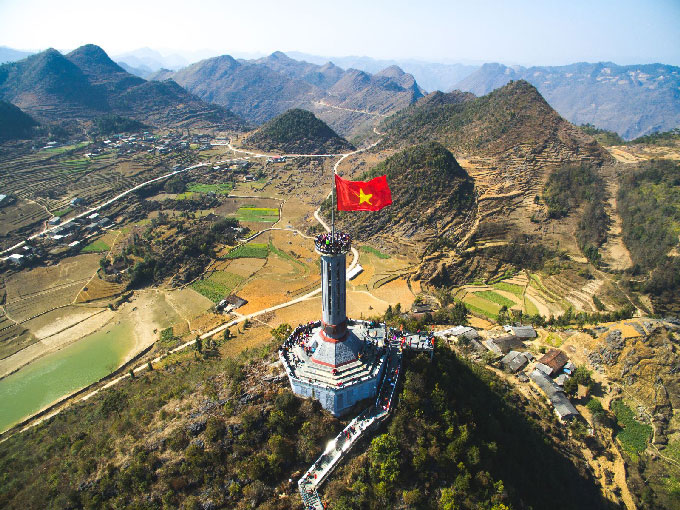
By the late 19th century, France had taken control of Vietnam, folding it together with neighboring Cambodia and Laos into what became known as French Indochina. For nearly a century, Vietnam existed under colonial administration — its resources, labor, and governance shaped largely around French interests rather than Vietnamese self-determination.
Resistance movements emerged throughout the early 20th century, but it was the 1920s that saw the rise of the movement that would ultimately change everything: an independence effort led by a young revolutionary named Nguyen Tat Thanh, who would later become known to the world as Ho Chi Minh.
The rise of the Viet Minh
Ho Chi Minh founded the Viet Minh — formally, the League for the Independence of Vietnam — as a coalition dedicated to freeing the country from colonial rule. During World War II, Vietnam found itself under a new layer of foreign control when Japan occupied French Indochina, and the Viet Minh fought against Japanese forces throughout the war while continuing to build toward the larger goal of full independence.
By August 1945, with Japan’s surrender to the Allies imminent, the Viet Minh saw a rare window of opportunity. The August Revolution swept across the country, beginning in Hanoi on August 19th and spreading rapidly to other provinces. In under two weeks, decades of colonial control gave way, and Vietnam’s last emperor, Bao Dai, was persuaded to abdicate — formally ending the feudal monarchy and opening the door to a new kind of Vietnamese state.
September 2, 1945: the Declaration of Independence
On the afternoon of September 2, 1945, Ho Chi Minh stood before a crowd of hundreds of thousands gathered at Ba Dinh Square in Hanoi and read the Declaration of Independence, formally founding the Democratic Republic of Vietnam.
The timing wasn’t incidental. That same day, Japan formally signed its surrender aboard the USS Missouri in Tokyo Bay, bringing World War II to its official close. September 2nd also fell on a Sunday, making it easier to gather the large crowds needed to witness — and support — the new government’s declaration.
Ho Chi Minh’s words drew deliberately on two of history’s most famous independence documents: the American Declaration of Independence and the French Declaration of the Rights of Man and of the Citizen. He opened with a paraphrase that would have been instantly recognizable to any student of Western history: “All men are created equal. They are endowed by their Creator with certain inalienable rights; among these are Life, Liberty, and the pursuit of Happiness.” It was a pointed choice — invoking the very ideals of the nations whose colonial and wartime actions had shaped Vietnam’s recent history, and turning them back as the foundation for Vietnam’s own claim to sovereignty.
According to accounts from those present, Ho Chi Minh paused partway through the speech and asked the crowd, “Compatriots, can you hear me?” The crowd’s roared response — “Yes, we hear you” — has become one of the most retold moments in modern Vietnamese history, a symbol of a nation speaking as one for the first time in generations.
Independence declared, but not yet secured
Declaring independence and achieving it, unfortunately, turned out to be two very different things. France refused to recognize the new Democratic Republic of Vietnam and moved to reassert colonial control, particularly in the south. Negotiations between the Viet Minh and French authorities broke down, and by December 1946, full-scale conflict had erupted — the beginning of the First Indochina War, a grinding conflict that would last until 1954.
That war ended in French defeat and a negotiated partition of the country, but it set the stage for further decades of conflict, as Vietnam split into a communist-led north and a US-backed south. What followed — the Vietnam War, known in Vietnam as the American War — would consume the next two decades and reshape the region entirely, before the country was finally reunified in 1975.
Ho Chi Minh himself didn’t live to see reunification. He died on September 2, 1969 — 24 years to the day after his declaration at Ba Dinh Square, and just under six years before his forces achieved the unified, independent Vietnam he had spent his life fighting for.
From Independence Day to National Day
In the earliest years of the new republic, September 2nd was actually known as Vietnam Independence Day, while August 19th — marking the start of the August Revolution — held the designation of National Day. Over time, the two dates’ significance shifted, and September 2nd became formally recognized as Vietnam’s National Day, the title it holds today.
Vietnam marked the 80th anniversary of the declaration in 2025, drawing especially large commemorations, including a major parade at Ba Dinh Square. Milestone anniversaries like this tend to bring larger-scale events — official military parades, in particular, are typically reserved for significant anniversary years rather than repeated annually.
What National Day looks like today
Modern celebrations blend solemn official ceremony with genuinely festive public celebration.
Official ceremonies take place in Hanoi, including wreath-laying at the Ho Chi Minh Mausoleum and formal addresses from national leaders. In milestone years, this includes a large military and civilian parade at Ba Dinh Square, the same site where the original declaration was read.
Fireworks displays light up the skies over major cities on the evening of September 2nd — Hanoi, Ho Chi Minh City, Da Nang, and various provincial capitals typically all host their own shows, though exact locations and timings are announced closer to the date and can change year to year.
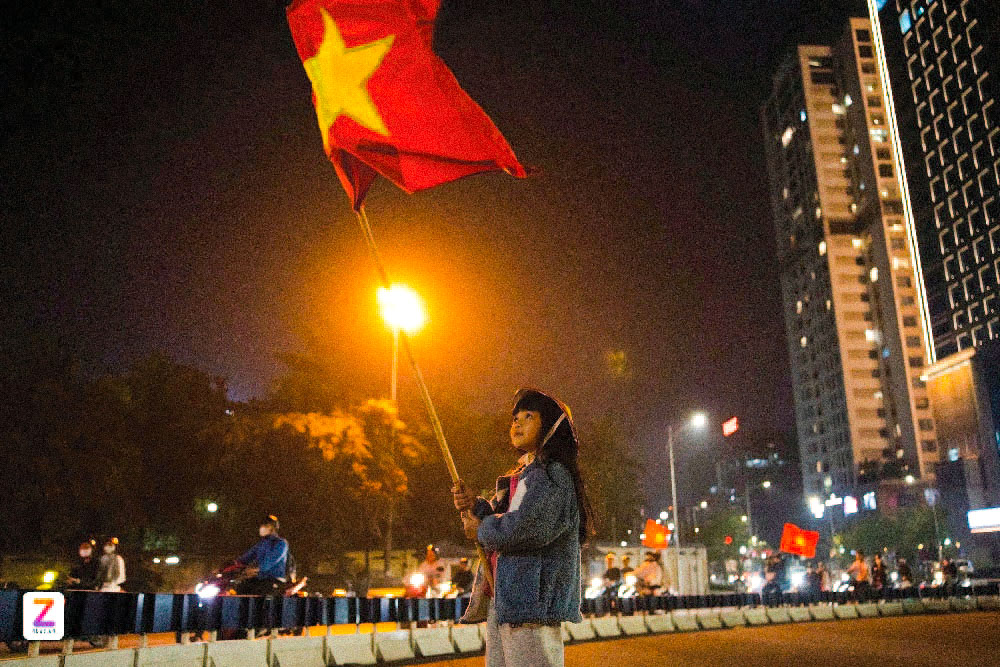
Flags and street decorations transform cities in the days leading up to the holiday, with the national flag’s red and gold appearing on homes, shopfronts, and public buildings throughout the country.
Family gatherings are a major part of how ordinary Vietnamese people mark the day, with the holiday period often used for reunions, short trips, and time away from work.
What travelers should know if visiting around September 2nd
It’s a public holiday, and a significant one. Government offices, banks, and many family-run businesses close, typically for the holiday itself and sometimes an extra connected day, depending on where September 2nd falls on the calendar that year. Larger tourist attractions, restaurants, and shopping malls generally stay open, though some operate on adjusted hours.
Expect crowds and higher prices. Tourist attractions, transport, and popular restaurants get noticeably busier than usual, and hotel prices in major cities can rise given the surge in domestic travel during the holiday period. Booking accommodation well ahead of time is worth doing if your trip overlaps with the holiday.
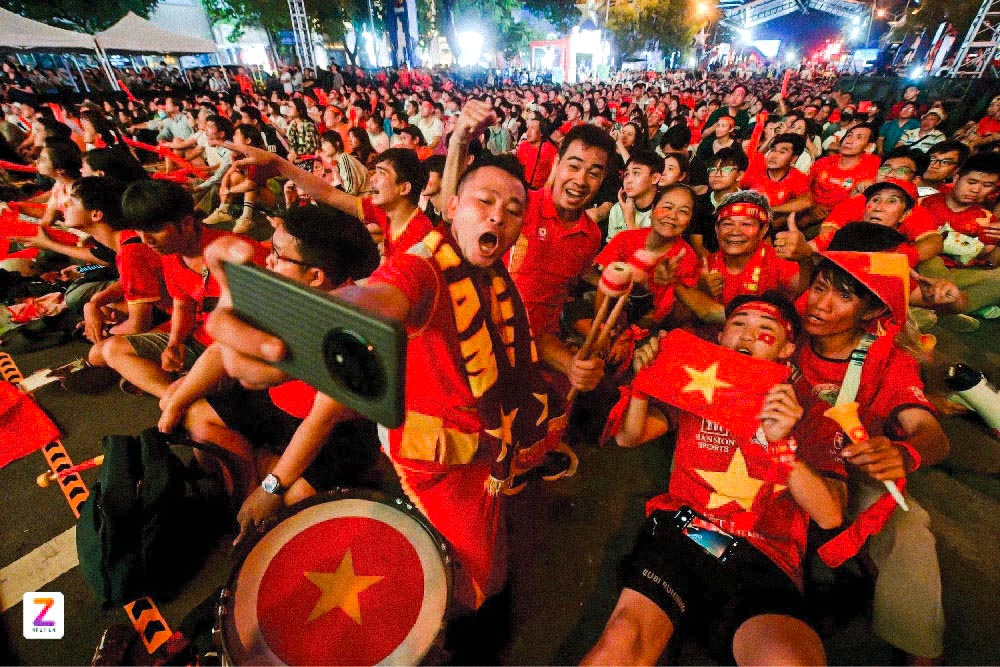
Central districts get crowded after dark, particularly around Ba Dinh Square in Hanoi and Nguyen Hue Walking Street in Ho Chi Minh City, where much of the public celebration and fireworks viewing concentrates. If you’d rather watch from a calmer spot, residential districts and slightly more distant viewpoints tend to offer both a clearer view and an easier exit once the fireworks end.
Visitors are welcome to observe and participate. National Day celebrations are open to everyone, and watching the fireworks or wandering flag-lined streets alongside locals is a genuinely memorable way to experience Vietnam’s sense of national pride. A little cultural sensitivity goes a long way — stay respectful during official ceremonies, and ask before photographing people closely involved in commemorative events.
Check announcements close to your travel dates. Fireworks locations, parade schedules, and event timings are typically confirmed only a few weeks ahead of the holiday itself, so it’s worth checking local news or your hotel for the latest details rather than relying on a previous year’s schedule.
FAQ
What does Vietnam’s National Day on September 2nd commemorate? It marks the day in 1945 when Ho Chi Minh read the Declaration of Independence at Ba Dinh Square in Hanoi, founding the Democratic Republic of Vietnam and formally declaring independence from French colonial rule.
Is Vietnam National Day a public holiday? Yes — it’s one of Vietnam’s most significant public holidays, typically observed with time off for government workers and many businesses, alongside nationwide ceremonies, parades, and fireworks.
Was independence achieved immediately after the 1945 declaration? No. France refused to recognize the new republic, leading to the First Indochina War (1946–1954) and, later, decades of further conflict before Vietnam was fully reunified in 1975.
Where is the best place to experience National Day celebrations? Hanoi’s Ba Dinh Square holds the deepest historical significance, while Ho Chi Minh City’s Nguyen Hue Walking Street and Da Nang’s Han River both offer lively public celebrations and fireworks.
Should I avoid traveling to Vietnam during National Day? Not necessarily — it can be a genuinely memorable time to visit, offering a real window into Vietnamese national pride and history. Just plan ahead for crowds, higher prices, and adjusted business hours.
Experiencing history firsthand
Understanding the story behind September 2nd adds real depth to a trip through Vietnam — the flags lining the streets, the fireworks over the Han or Saigon rivers, and the quiet weight of Ba Dinh Square all connect back to that single afternoon in 1945 when a nation declared, for the first time in nearly a century, that it belonged to itself.





