
Vietnam’s religious architecture spans well over a thousand years, shaped by indigenous ancestor worship, Chinese Buddhism, Confucian tradition, Hindu Cham heritage, and later French colonial influence. The result is one of Southeast Asia’s most varied collections of sacred sites — ancient pagodas on misty hillsides, ornate Chinese assembly halls in old trading ports, and temples built entirely on stilts to survive the Mekong Delta’s seasonal floods.
This guide walks through the country’s most significant temples and pagodas by region, along with the practical details — etiquette, timing, and what each site actually involves visiting.
A quick note on Vietnam’s spiritual traditions
Vietnamese Buddhism, predominantly Mahayana, arrived from China in the early centuries CE and gradually blended with existing ancestor worship and animistic beliefs already present in Vietnamese culture. That blending is exactly what makes Vietnamese temples distinct from Buddhist sites elsewhere — most sacred spaces here layer several traditions rather than representing one in isolation.
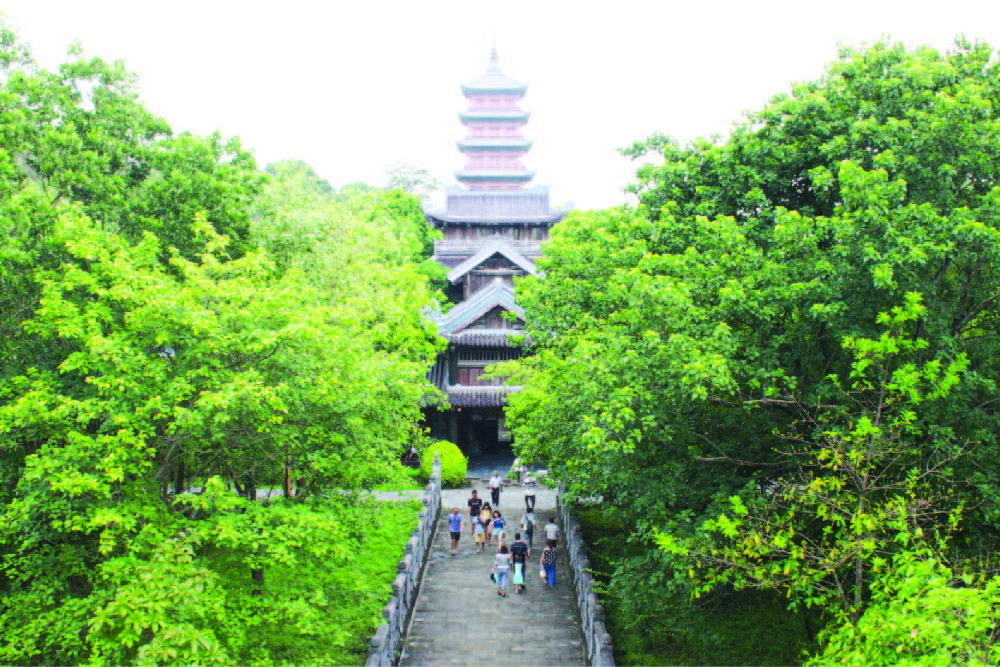
Architecturally, this shows up in curved rooflines, intricate wood carving, and ceramic decoration featuring dragons and phoenixes, alongside multi-level pagoda towers symbolizing the path to enlightenment. Recognizing these elements adds real depth to a visit, since each design choice usually carries specific spiritual meaning rather than being purely decorative.
Temples and pagodas in northern Vietnam
Ha Noi
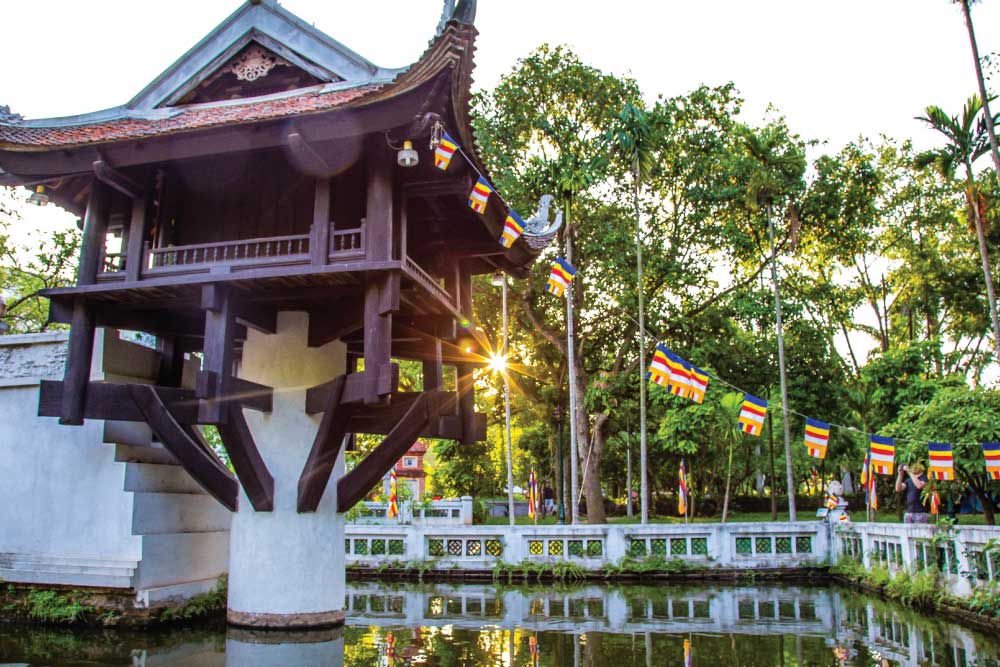
As Vietnam’s capital for over a thousand years, Ha Noi holds some of the country’s most historically significant religious sites.
Temple of Literature (Van Mieu): Founded in 1070 and honoring Confucius alongside Vietnam’s own scholars, this complex includes Vietnam’s first university, added in 1076. Its courtyards, ancient stone stelae, and gardens remain active for educational ceremonies today, making it essential viewing for understanding Vietnamese intellectual history.
Bach Ma Temple: Tucked into Ha Noi’s Old Quarter, this 11th-century temple honors the White Horse spirit believed to have guided King Ly Thai To in founding Thang Long, the city that would become modern Ha Noi. Its location right in the middle of a busy commercial district is itself a good illustration of how sacred spaces sit comfortably alongside everyday urban life in Vietnam.
Quan Su Pagoda: The headquarters of Vietnamese Buddhism, drawing large crowds during major festivals. It’s a good spot for observing contemporary Buddhist practice within a traditional architectural setting.
Ha Long Bay
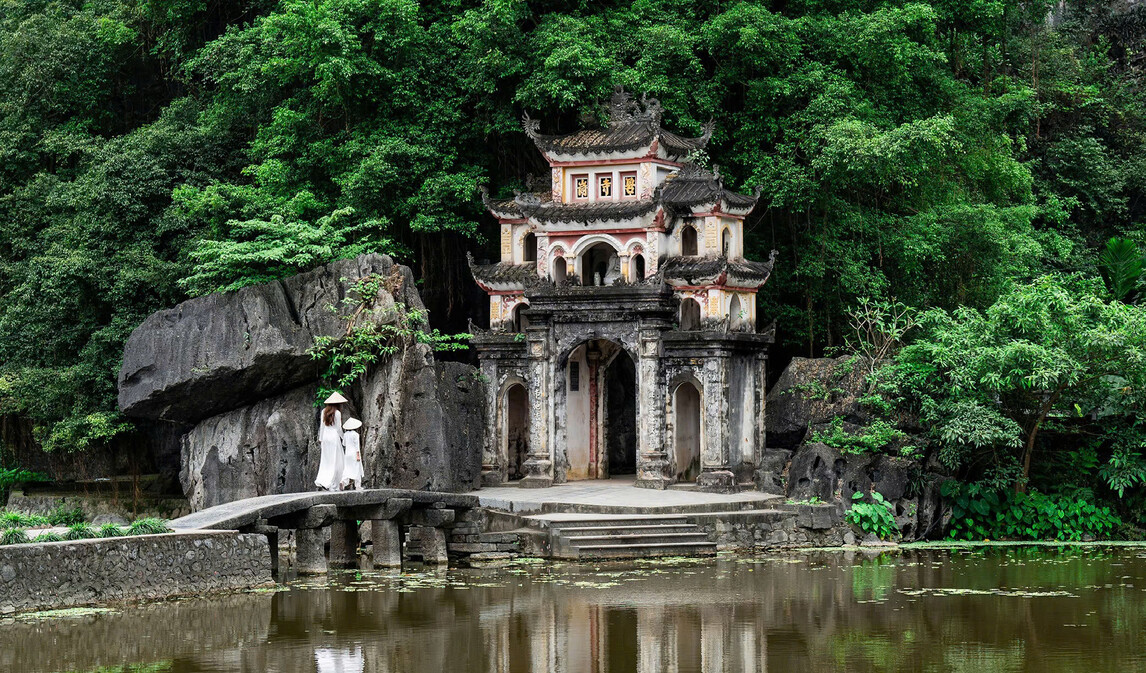
Hang Dau Go (Wooden Stakes Cave): A cave-hidden shrine honoring General Tran Hung Dao, who defeated Mongol invasions in the 13th century — a striking example of how Vietnamese tradition often links historical heroes to sites believed to carry spiritual power.
Floating temples: Several Ha Long Bay itineraries include stops at small floating temples maintained by local fishing communities, where sea spirits and Buddha are both honored in hopes of protecting those who depend on the bay for their livelihood.
Sa Pa
Sa Pa Stone Church: Built by French colonists in 1930, this Catholic church reflects the religious diversity present even in Vietnam’s mountainous highlands, standing in visual contrast to the wooden pagodas found elsewhere in the country.
Ethnic minority spiritual sites: Many villages around Sa Pa maintain traditional altars and sacred groves tied to ancestor spirits and natural forces — not temples in the conventional sense, but a meaningful window into indigenous spiritual practices that predate Buddhism’s arrival in Vietnam.
Temples and pagodas in central Vietnam
Hue
Vietnam’s former imperial capital holds some of the country’s most elaborate religious complexes, many built during the Nguyen Dynasty (1802–1945).
Thien Mu Pagoda: Hue’s most iconic pagoda, built in 1601 on a hillside overlooking the Perfume River. Its seven-story octagonal tower has become a symbol of the city and of Vietnamese Buddhism more broadly. The pagoda also holds a more somber piece of modern history — the car used by the monk Thich Quang Duc in his 1963 self-immolation protest is displayed here.
Tu Hieu Pagoda: A working monastery founded in 1843, offering a genuine look at monastic life and Buddhist education in Vietnam. Its gardens are designed specifically for meditation and contemplation, and it remains an active religious community rather than a purely historical site.
The imperial tombs: Technically mausoleums rather than temples, the Nguyen emperors’ tomb complexes blend Confucian principles with Buddhist elements, and each reflects its emperor’s individual character through distinct architectural and landscape choices.
Hoi An
Hoi An’s centuries as a major trading port left it with a genuinely layered spiritual landscape, shaped by Chinese, Japanese, and Vietnamese influence side by side.
Japanese Covered Bridge (Chua Cau): Built by Japanese merchants in the 1590s, this small temple-bridge spans a canal and remains one of Hoi An’s most recognizable landmarks, adapted from Japanese architectural style to Vietnam’s tropical conditions.
Chinese assembly halls: Built by various Chinese community groups, these halls served both social and religious functions, featuring elaborate decoration, ancestral altars, and courtyards for community gatherings.
Quan Cong Temple: Dedicated to the Chinese general Quan Cong, adopted here as a spiritual protector. The temple’s red and gold decoration and near-constant incense create one of the more intensely atmospheric religious spaces in the old town.
My Son
A UNESCO World Heritage site holding Vietnam’s most significant Hindu temple ruins, built by the Cham people between the 4th and 14th centuries and dedicated to Shiva. My Son offers a direct look at the religious diversity that existed in central Vietnam long before Vietnamese expansion southward, and several decorative and construction techniques from the site later influenced Vietnamese temple architecture more broadly.
Temples and pagodas in southern Vietnam
Ho Chi Minh City
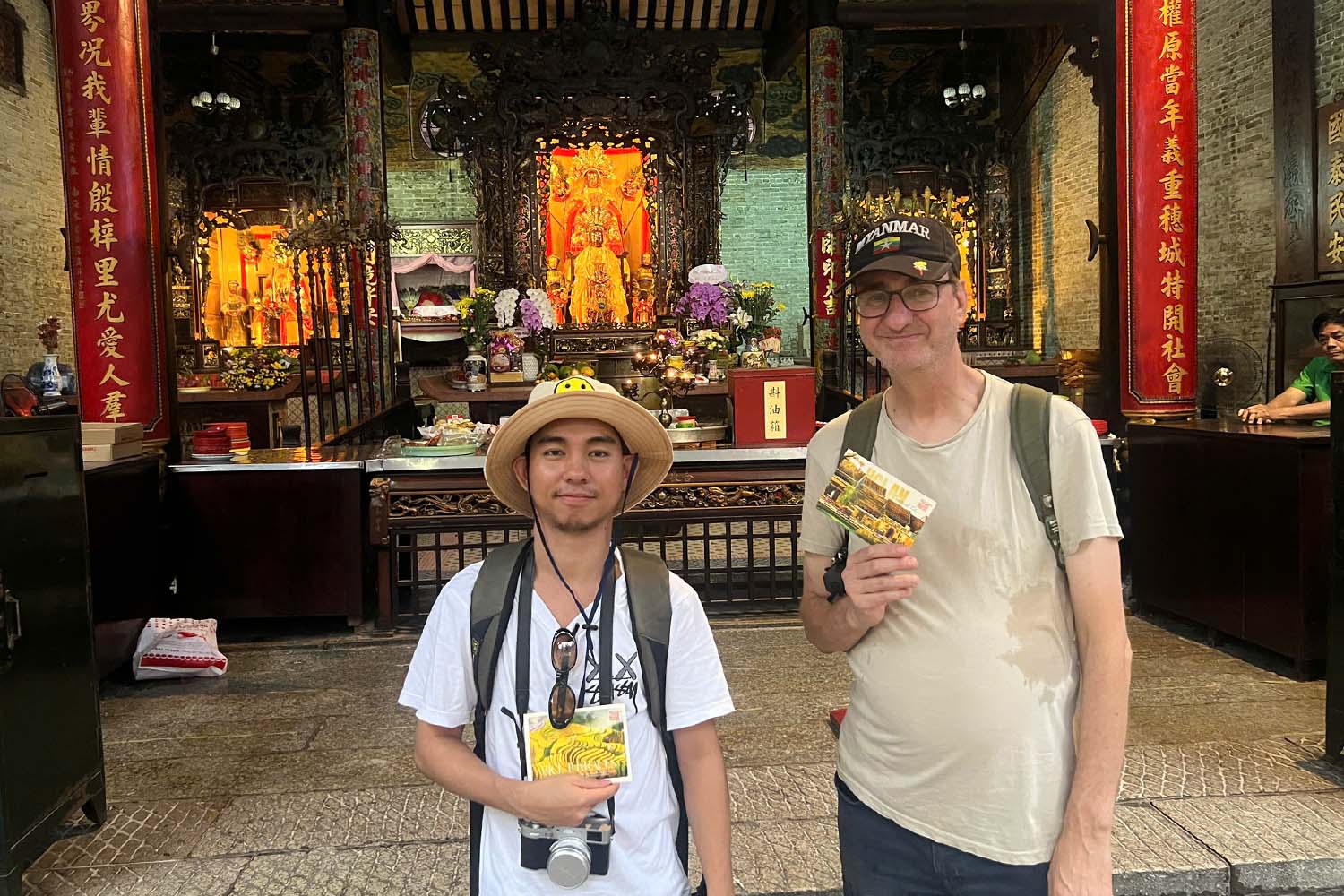
Southern Vietnam’s history of cultural mixing and religious tolerance gives Ho Chi Minh City the most religiously diverse collection of sacred sites in the country.
Jade Emperor Pagoda (Chua Ngoc Hoang): Built in 1909 and blending Taoist and Buddhist elements, this dimly lit, incense-filled pagoda is known for its wooden statues and turtle pond, and remains one of the city’s most memorable spiritual sites for visitors.
Cao Dai Temple: Cao Daism is a genuinely unique Vietnamese religion, originating in the south during the 1920s and blending elements from multiple world religions — its list of venerated figures includes Buddha, Jesus Christ, and Confucius. Visiting a Cao Dai temple offers insight into a faith found almost nowhere outside Vietnam.
Vinh Nghiem Pagoda: Completed in 1971, this pagoda represents a more modern chapter of Vietnamese Buddhist architecture, with a seven-story tower and spacious halls built to accommodate large congregations during festivals.
Mekong Delta
The Delta’s dense network of rivers and canals has genuinely shaped its religious architecture — many temples here are built on stilts or elevated platforms specifically to handle seasonal flooding.
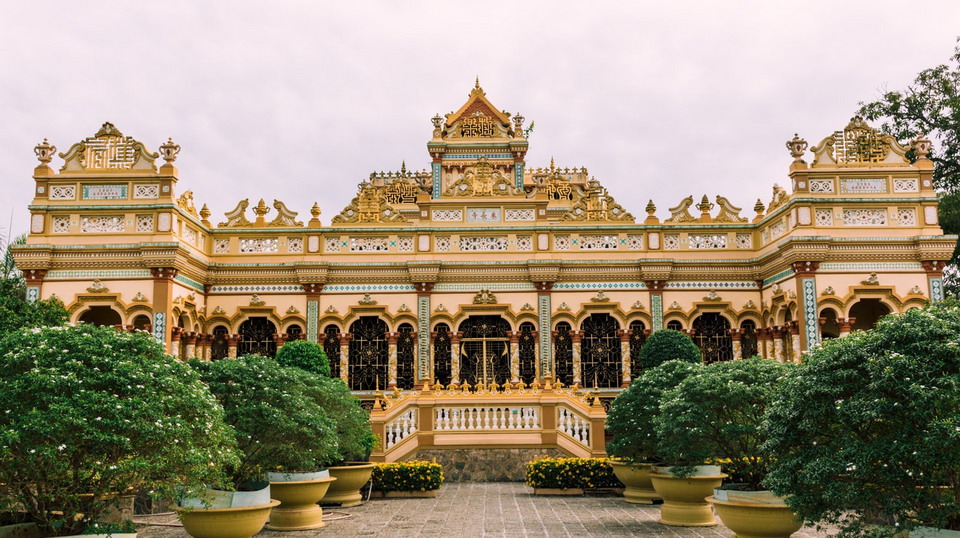
Vinh Trang Pagoda: Located in My Tho, this 19th-century pagoda blends Vietnamese, Chinese, and Khmer architectural elements, reflecting the Delta’s cultural diversity. Its gardens and ornate decoration make it a popular stop for both pilgrims and travelers.
Floating temples: Several Mekong Delta boat tours include stops at small temples built on platforms or islands reachable only by water — a clear example of how Vietnamese Buddhism has adapted to the region’s riverine environment.
Phu Quoc
Su Muon Pagoda: A hilltop pagoda offering panoramic views over Phu Quoc’s forests and coastline, its elevated setting adding a genuine sense of contemplative distance from the island’s busier beach areas below.
Temple etiquette for travelers
Dress modestly. Cover shoulders, legs, and midriffs before entering any temple, and remove your shoes before stepping into main temple halls. Shorts, sleeveless tops, and generally revealing clothing are considered disrespectful in these settings.
Keep your voice down and your movements calm. Temples are contemplative spaces by design, and quiet, unhurried behavior respects both the site and the people worshipping there.
Check before photographing. Some areas — particularly around altars or during active ceremonies — restrict photography, so it’s worth checking for signage or simply asking rather than assuming it’s always fine.
Understand the layered nature of Vietnamese worship. Many temples combine Buddhist altars with ancestor shrines in the same space, reflecting how central family veneration is to Vietnamese spiritual life — it’s not unusual to see both traditions honored side by side in a single visit.
Bring a small donation if you’re able. Most Vietnamese temples are free to enter, but small donations toward maintenance and community activities are welcomed and, in practice, fairly standard.
Best time to visit, by region
- Northern Vietnam: October through December offers the most comfortable conditions for temple visits, with cool, dry weather and clear skies well suited to both extended exploration and photography. This period also overlaps with several significant Buddhist festivals.
- Central Vietnam: February through August is the dry season here, avoiding flooding that can occasionally affect temple access and keeping temperatures manageable for longer visits.
- Southern Vietnam: December through April brings lower humidity and minimal rainfall, ideal for both city-based temple touring and Mekong Delta river visits.
Temple festivals worth knowing about
Tet: Vietnamese New Year brings the year’s most intensive temple activity, as families visit to honor ancestors and seek blessings for the year ahead — a genuinely meaningful window into Vietnam’s most important cultural celebration, if your trip happens to align with it.
Mid-Autumn Festival: Communities gather at temples for ceremonies and shared meals alongside the festival’s more visible lantern displays and dragon dances.
Hue Festival: Historically a biennial, week-long celebration, the Hue Festival has shifted toward a year-round, seasonal programming format in recent years, spreading temple ceremonies and traditional performances across the calendar rather than compressing them into a single week — worth checking the current year’s specific schedule if this is a reason for your trip.
Cao Dai ceremonies: Cao Dai temples hold regular ceremonies open to visitors, offering a rare opportunity to observe this distinctly Vietnamese religious tradition in practice.
Practical visiting details
Getting there: City temples in Ha Noi and Ho Chi Minh City are easily reached by taxi, ride-hailing app, or on foot if you’re already exploring a nearby district. Temples in more remote or mountainous areas — around Sa Pa, for instance — generally require a private vehicle or an organized tour.
Cost: Most temples are free to enter, with donations welcomed rather than required. Larger sites with significant restoration or maintenance needs may request a modest entrance fee, which is usually clearly posted.
FAQ
What’s the most important temple to visit in Vietnam? There’s no single answer, since significance varies by region — the Temple of Literature in Ha Noi for scholarly history, Thien Mu Pagoda in Hue for iconic Buddhist architecture, and My Son for Cham heritage are each essential in their own category.
Do I need to dress a certain way to visit Vietnamese temples? Yes — cover your shoulders, legs, and midriff, and remove your shoes before entering the main hall. This applies at every temple in the country, regardless of size or fame.
Are Vietnamese temples free to visit? Most are, though donations are welcomed and, for larger or more heavily maintained sites, sometimes expected. A few sites request a modest posted entrance fee.
What is Cao Daism? A uniquely Vietnamese religion that originated in the 1920s, blending elements of multiple world religions and venerating figures including Buddha, Jesus Christ, and Confucius. The Cao Dai Temple in Ho Chi Minh City is the most accessible place to see it firsthand.
Can I take photos inside temples? Generally yes in public areas, but photography is often restricted near altars or during active ceremonies. Check for posted signage or ask if you’re unsure.
Planning a temple-focused trip to Vietnam
Vietnam’s temples and pagodas offer a genuine window into the layered spiritual history that shaped the country — Confucian scholarship in Ha Noi, imperial Buddhism in Hue, Hindu Cham heritage at My Son, and a religiously diverse south that includes a faith found nowhere else in the world. Approaching these sites with a little cultural preparation, appropriate dress, and quiet respect turns a temple visit from a quick photo stop into one of the more meaningful parts of a Vietnam trip.





