
Most visitors arrive in Vietnam already knowing pho and banh mi. Both deserve their fame, but they only scratch the surface. Vietnamese cooking changes noticeably from one region to the next, and a bowl of noodles in Ha Noi tastes nothing like a bowl in Hue or Ho Chi Minh City.
This guide walks you through the dishes worth seeking out in each part of the country. It also explains how each one is made, how to eat it, and what to expect from street food as a first-time visitor.
Why Vietnamese food varies by region
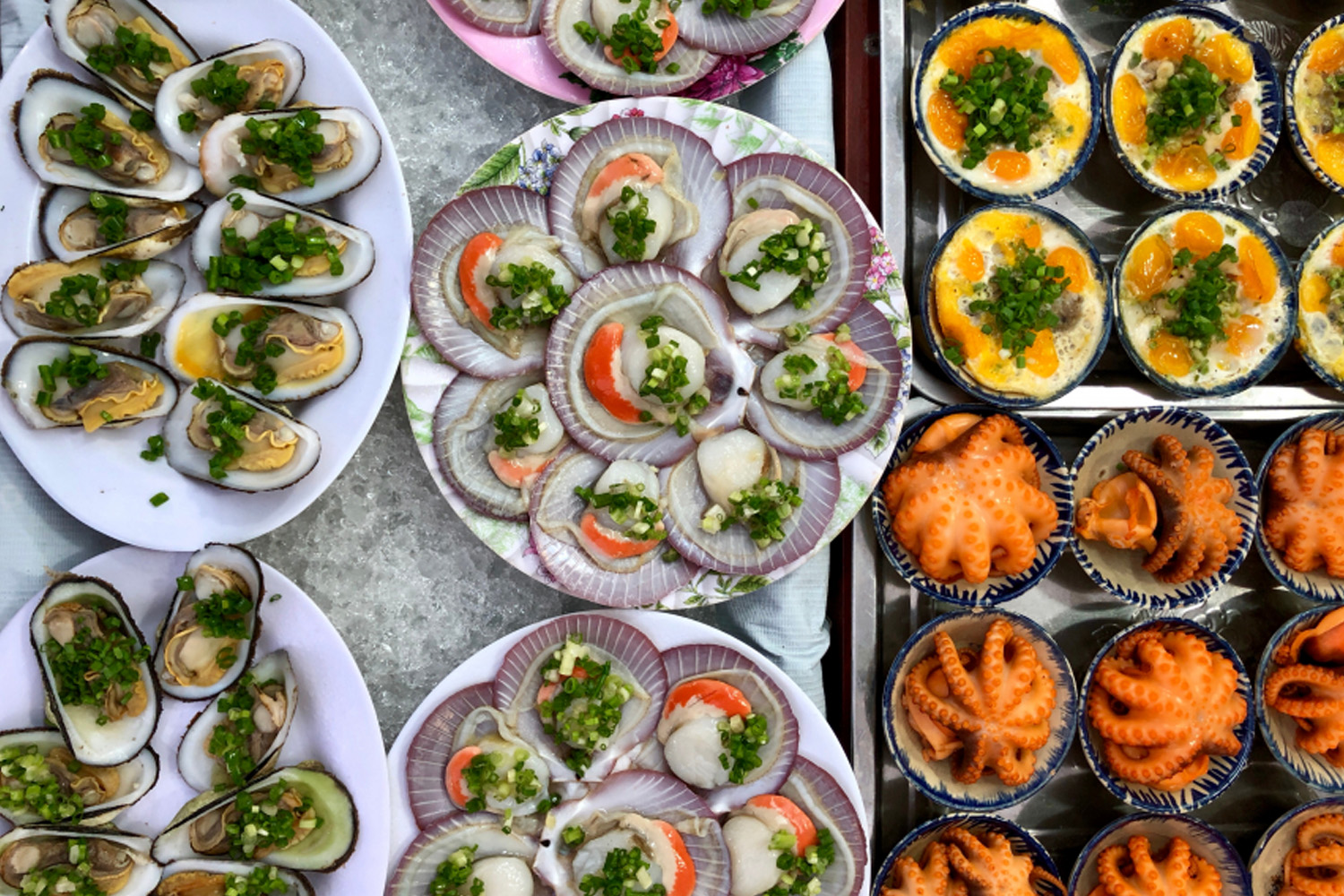
Vietnam stretches roughly 1,650 kilometers from north to south, and its cooking follows the same split as its climate and history. In general, northern dishes lean subtle and savory. Central dishes turn spicy and bold, shaped by the former imperial court in Hue. Southern dishes run sweeter and herbier, helped by a tropical climate that keeps fresh produce coming all year.
Fresh herbs, fish sauce, rice, and a careful balance of sweet, sour, salty, and spicy tie the whole cuisine together. Once you notice that balance, you start to see it in everything from a street-side snack to a banquet dish.
National favorites
Pho: Vietnam’s best-known soup
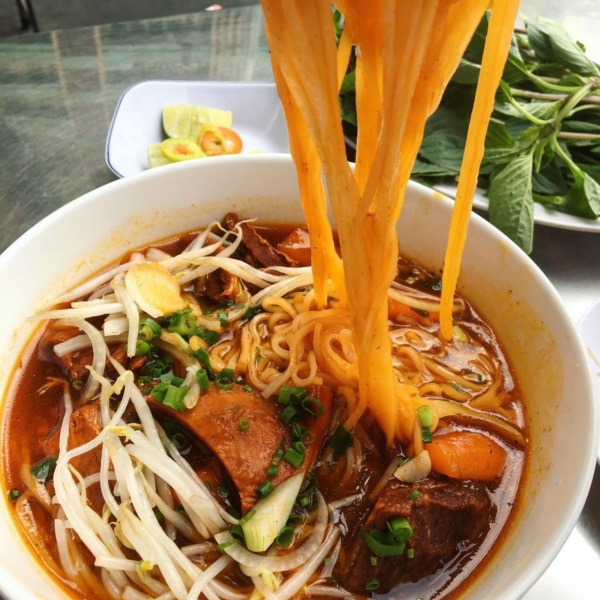
Pho combines a slow-simmered broth, rice noodles, fresh herbs, and thin slices of beef (pho bo) or chicken (pho ga). Vegetarian versions exist too, so almost every traveler can find a bowl to enjoy.
The style changes with the region:
- Northern pho (Ha Noi) keeps things clean and simple. The broth is clear and delicate, the garnishes are minimal, and the beef often arrives as a mix of rare slices and well-cooked brisket.
- Southern pho (Ho Chi Minh City) tastes a little sweeter. Diners get a plate of bean sprouts, herbs, and lime, along with hoisin and chili sauces, and build the bowl to their own taste.
Banh mi: the Vietnamese sandwich
Banh mi turns a French-style baguette into something distinctly Vietnamese. A classic version holds cold cuts, pate, pickled carrot and daikon, cucumber, cilantro, and chili. Each bite delivers sweet, sour, salty, and spicy flavors along with a crisp crust and soft filling.
Fillings vary from vendor to vendor. Grilled pork (banh mi thit nuong) and meatballs (banh mi xiu mai) are both common, and many shops now offer vegetarian options. Because it is cheap, portable, and filling, banh mi makes an easy breakfast or lunch on the go.
Northern Vietnam: Ha Noi’s signature dishes
Bun cha
Bun cha is the dish most closely tied to Ha Noi. Cooks grill pork patties and slices of pork belly over charcoal, then serve them in a bowl of warm, sweet-and-tangy dipping sauce (nuoc cham). A plate of rice vermicelli, fresh herbs, and lettuce comes alongside.
You assemble each bite yourself by dipping noodles and herbs into the sauce and adding a piece of pork. The dish drew worldwide attention in 2016, when Barack Obama and Anthony Bourdain shared a bun cha lunch in Ha Noi. You’ll find it in small family-run restaurants and street stalls across the Old Quarter, usually served at lunchtime.
Cha ca
Cha ca is a Ha Noi classic built around turmeric-marinated fish. The fish is pan-cooked with generous amounts of dill and scallions, often at your table, and served with vermicelli, peanuts, herbs, and shrimp paste. The restaurant that made the dish famous, Cha Ca La Vong, gave its name to the street it sits on.
The cooking happens in front of you, so the meal feels more like a shared activity than a quick lunch.
Bun bo nam bo
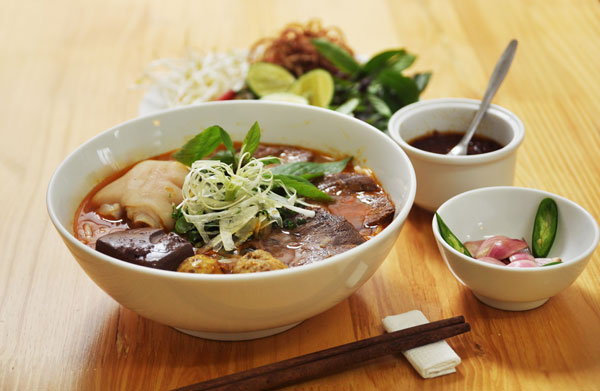
Bun bo nam bo is a dry noodle bowl, which means it has no broth. Rice vermicelli sit under stir-fried marinated beef, fresh herbs, pickled vegetables, bean sprouts, crushed peanuts, and crispy shallots, with a splash of sweet fish sauce dressing over the top. Despite the name, which translates roughly as “southern-style beef noodles,” it is a popular Ha Noi dish. It works especially well in hot weather, when a heavy soup feels like too much.
Central Vietnam: Hue, Hoi An, and Da Nang
Bun bo Hue
Bun bo Hue is central Vietnam’s answer to pho, and it is much bolder. The broth gets its depth from lemongrass, chili oil, and fermented shrimp paste, and it turns a rich red-orange. Thick, round rice noodles sit in the bowl with sliced beef, pork knuckle, and Vietnamese ham (cha lua). Some versions include congealed pork blood, which you can ask to leave out.
The dish reflects Hue’s imperial food tradition, where cooks valued strong flavors and elaborate preparation. If you find northern pho too mild, this is the soup to try.
Cao lau
Cao lau belongs to Hoi An, and locals treat it as a point of pride. Thick, chewy noodles come topped with sliced roast pork, crispy rice crackers, bean sprouts, and fresh herbs, with very little broth. Tradition says the noodles need water from an old local well, and that wood ash from the nearby Cu Lao Cham islands gives them their texture and color. Whether or not you believe every part of that story, the dish tastes different from anything else in Vietnam.
Cao lau also reflects Hoi An’s history as an international trading port. Chinese and Japanese influences show up in the noodles and the way the dish is built.
Mi quang
Mi quang comes from Quang Nam province and Da Nang. Cooks serve wide, turmeric-yellow rice noodles in a small amount of concentrated broth, so the bowl looks closer to a noodle salad than a soup. Toppings usually include shrimp, pork, or chicken, quail eggs, peanuts, herbs, and a crunchy rice cracker.
Because the broth is so limited, the flavors come out strong and savory. Locals traditionally served it at celebrations, which explains why the toppings are so generous.
Southern Vietnam: Ho Chi Minh City and the Mekong Delta
Hu tieu
Hu tieu is the south’s well-loved noodle soup. The broth usually starts with pork bones and dried squid, which gives it a light, sweet flavor. Cooks add rice noodles and top the bowl with pork, shrimp, or other seafood. You can order it with broth (hu tieu nuoc) or dry (hu tieu kho), with the soup served in a small bowl on the side.
It is milder than northern pho and far less spicy than bun bo Hue. That makes it a comfortable choice for travelers who prefer gentler flavors.
Com tam
Com tam means “broken rice.” Farmers originally saved the broken grains, which sold for less than whole rice, and they turned them into a cheap everyday meal. Today it is a beloved Ho Chi Minh City staple.
A typical plate holds a grilled pork chop (suon nuong), shredded pork skin (bi), and a steamed egg meatloaf (cha trung), with pickled vegetables and fish sauce on the side. Many cooks now add grilled chicken, seafood, or a vegetarian option, but the basic idea stays the same.
Banh xeo
Banh xeo is a crispy rice-flour crepe colored with turmeric and stuffed with pork, shrimp, and bean sprouts. The name refers to the sizzling sound the batter makes when it hits the hot pan.
To eat it, tear off a piece, wrap it in lettuce with fresh herbs, and dip it into nuoc cham. The southern version is large and thin, while central Vietnam tends to make smaller, crispier crepes. Either way, the crispy edges and fresh herbs make a satisfying contrast.
Street food and food tours
Street food gives you the quickest route into Vietnamese food culture. Prices stay low, the dishes are cooked in front of you, and the experience tells you a lot about how people actually eat day to day.
Where to start

In Ha Noi, the Old Quarter has dense clusters of vendors, and some streets have built a reputation around a single dish. In Ho Chi Minh City, the area around Ben Thanh Market and the surrounding streets offer an enormous range of southern food.
Both can feel overwhelming at first. A guided food tour solves that problem by introducing you to reliable vendors, explaining what each dish is, and showing you how to eat it. For that reason, a food tour is often a highlight of Vietnam top tours, particularly for first-time visitors who want a confident start.
Staying safe while eating street food
A few simple habits keep you healthy and let you enjoy the food:
- Choose busy stalls, since high turnover means fresh ingredients.
- Pick places where you can see the food being cooked.
- Follow the locals, because a stall full of regular customers usually signals good quality.
- Stick to bottled or filtered water and skip ice if you’re unsure about its source.
Eating with children
Vietnamese food works well for families, and plenty of dishes suit young eaters.
- Mild starters: Chicken pho, fresh or fried spring rolls, and fried rice offer familiar flavors without much spice.
- Hands-on dishes: Banh xeo and fresh spring rolls let kids assemble their own bites, which often makes them more willing to try something new.
- Sweet treats: Che (a sweet dessert soup), banh flan (a creamy custard), and fresh tropical fruit are easy wins at the end of a meal.
Family itineraries often include a cooking class or a short market visit for exactly this reason. Children tend to eat more adventurously when they have helped make the food.
FAQ
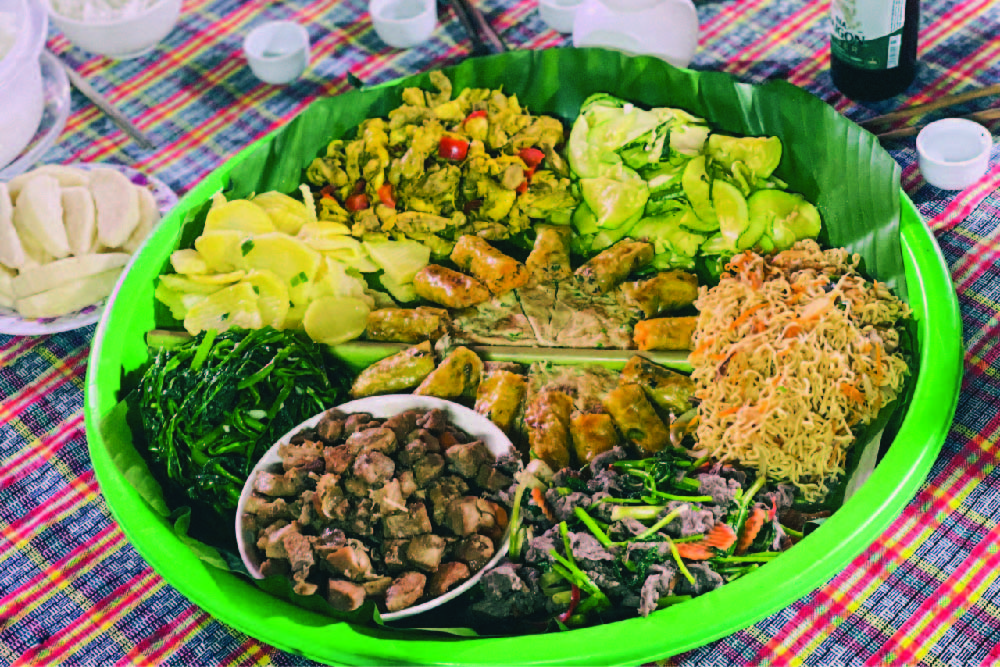
What is the most famous Vietnamese dish? Pho is the best-known Vietnamese dish worldwide, and banh mi is a close second. Both are easy to find in every city.
What are the must-try dishes in northern, central, and southern Vietnam? In the north, try bun cha and cha ca. In the center, try bun bo Hue, cao lau, and mi quang. In the south, try hu tieu, com tam, and banh xeo.
Is Vietnamese street food safe for tourists? Yes, if you pick busy stalls with visible cooking and fresh ingredients. A guided food tour is a good way to build confidence on your first day.
Is Vietnamese food very spicy? Not usually. Most dishes taste balanced rather than hot, and chili typically comes on the side so you can add as much as you like. Central Vietnam, especially Hue, tends to run spicier than the north or south.
Is Vietnamese food good for vegetarians? Yes. Vegetarian restaurants are common, and many dishes have meat-free versions. Fish sauce appears in a lot of cooking, so tell your server you’re vegetarian (“an chay”) and check how the dish is prepared.
Planning your food trip
Vietnamese food rewards curiosity. Start with the dishes you already know, then follow the regional specialties as you travel from Ha Noi through Hue and Hoi An down to Ho Chi Minh City. If you plan your route around what you want to eat, you’ll find that every stop tastes different, and the meals often become the best memories of the trip.





