
Hue Imperial City is the walled heart of Vietnam’s last royal capital. Gates, palaces, temples, and gardens fill this sprawling complex, which once housed the Nguyen Dynasty’s emperors and their court. For any first-time visitor to central Vietnam, it’s one of the country’s most significant historical sites. However, it’s also one of the easiest to get wrong without a little preparation: the grounds are vast, the dress code is enforced, and knowing what to prioritize makes the difference between a rushed walk-through and a genuinely rewarding half-day.
This guide covers the history, the practical details you need before you go, and how to plan a visit that actually does the site justice.
A brief history of Hue Imperial City
Hue Imperial City sits within the citadel of Hue. From 1802 to 1945, this citadel served as Vietnam’s national capital under the Nguyen Dynasty, the country’s last royal dynasty before French colonial rule. Construction began in 1804 under Emperor Gia Long. Feng shui and geomantic principles shaped the layout, blending Vietnamese tradition with Chinese and, later, French colonial influence.
At the center of the citadel sits the Forbidden Purple City. This inner enclave was reserved exclusively for the emperor and his family, who used it for state affairs and private royal ceremonies.
The site’s history hasn’t been an easy one. After the monarchy ended in 1945, the complex fell into disrepair. Then, in 1947, a six-week battle between Viet Minh forces and French counter-attack operations destroyed large sections, burning much of the Imperial Palace. The citadel was hit again during the 1968 Tet Offensive, when North Vietnamese and Viet Cong forces fought South Vietnamese, American, and allied troops. Only 10 of the site’s original 160 buildings survived.
UNESCO recognized Hue Imperial City as a World Heritage Site in 1993, as part of the wider Complex of Hue Monuments. Since then, sustained restoration work has rebuilt or stabilized dozens of structures. A major government-backed conservation project ran from 1996 through the 2010s, and further conservation planning now extends toward 2030.
What’s inside the Imperial City
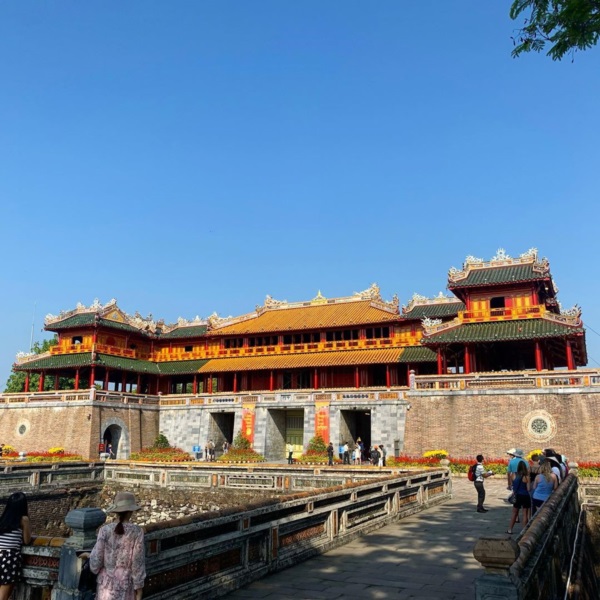
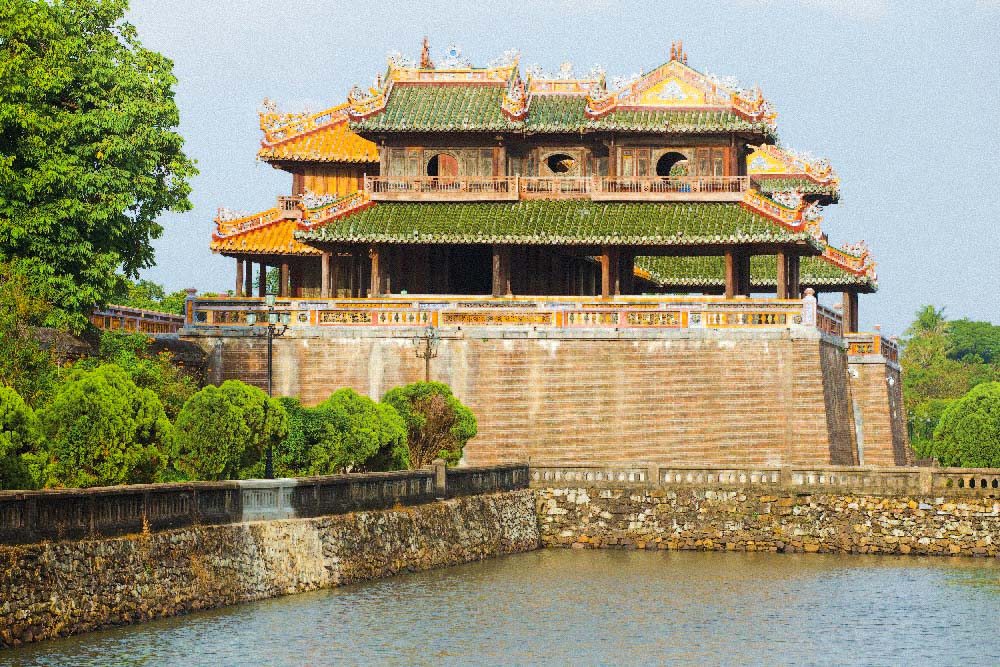
Ramparts and a moat spanning over 2 kilometers enclose the Imperial City, and Ngo Mon Gate (the Meridian Gate) serves as the main entrance. Inside, the complex splits into distinct sections, each with its own architectural character:
- The Forbidden Purple City — the innermost, most restricted section, once exclusive to the emperor’s household
- Thai Hoa Palace — the ceremonial palace used for major state occasions and royal audiences
- Numerous temples and shrines dedicated to Nguyen emperors and their ancestors
- Gardens, lotus ponds, and pavilions woven throughout the grounds
Beyond the Imperial City itself, the wider Complex of Hue Monuments includes the tombs of several Nguyen emperors — among them Minh Mang, Khai Dinh, and Tu Duc. Each tomb has its own separate entrance fee and distinct architectural style, and each is worth a visit in its own right if time allows.
Hue Imperial City entrance fee
You can buy tickets directly at Ngo Mon Gate.
| Visitor type | Entrance fee |
|---|---|
| Adults | 200,000 VND (~$8.50 USD) |
| Children aged 7–12 | 40,000 VND (~$1.50 USD) |
| Children under 7 | Free |
Pricing stays the same for both international visitors and Vietnamese citizens. Keep in mind that this fee covers the Imperial City itself only. The Nguyen emperor tombs elsewhere in the Complex of Hue Monuments — Khai Dinh, Minh Mang, Tu Duc, and others — each require a separate ticket, typically ranging from 100,000–150,000 VND depending on the site. If you’re planning to visit multiple sites, ask about combination tickets at the counter, since they’re usually worth it.
Hue Imperial City opening hours
| Season | Hours |
|---|---|
| Summer | 6:30 AM – 5:30 PM |
| Winter | 7:00 AM – 5:00 PM |
The Imperial City and the wider Complex of Hue Monuments stay open daily. Given the size of the grounds, it’s worth arriving earlier in the day for two reasons: cooler temperatures for walking, and fewer crowds around the main gates and palace buildings before tour groups arrive.
What is the dress code for Hue Imperial City?
The complex includes sacred royal temples, so a modest dress code applies, particularly at palace and temple entrances.
What to wear:
- Tops with sleeves that cover the shoulders
- Bottoms that cover the knees — long pants, jeans, or long skirts
- Comfortable, sturdy shoes, since you’ll cover several kilometers on stone paths (you don’t need to remove your shoes to enter buildings)
What to avoid:
- Tank tops, sleeveless shirts, crop tops, short shorts, or mini-skirts
- Hats, caps, and sunglasses inside indoor worship areas — remove these before entering
Practical tip: If you’re wearing shorts or a sleeveless top because of the heat, pack a lightweight scarf or sarong. You can wrap it around your shoulders or waist before entering key buildings. Security enforces the dress code at palace entrances, so being underdressed can mean missing out on specific structures altogether.
Guided tour or self-guided visit?
Both approaches work well, and the right choice depends on how much context you want along the way.
For first-time visitors who want the history explained rather than pieced together from signage, guided tours are the better option. A knowledgeable guide can bring the site’s feng shui layout, dynastic history, and ceremonial function to life in a way that’s easy to miss on a self-guided walk. Guided options range from focused walking tours of the Imperial City itself to full-day tours that combine the citadel with the Nguyen emperor tombs.
On the other hand, self-guided visits suit travelers who prefer to move at their own pace, linger in the gardens, or explore quieter corners away from tour groups. A map, available at the entrance, is enough to navigate the main sections. That said, some of the historical context is easier to miss without a guide.
Suggested time to spend
- Imperial City only: 2–3 hours is enough to see the main gates, Thai Hoa Palace, and the Forbidden Purple City ruins at a reasonable pace.
- Imperial City plus one or two tombs: Plan for half a day, especially if you’re combining your visit with Khai Dinh Tomb, a common pairing given its distinct, more ornate architectural style.
- Full Complex of Hue Monuments: Set aside a full day if you want to see the Imperial City alongside multiple emperor tombs and Thien Mu Pagoda along the Perfume River.
Practical tips for visiting
- Visit early morning. This keeps temperatures cooler and helps you beat tour bus crowds, which tend to arrive from mid-morning onward.
- Bring water and sun protection, since much of the walking route is outdoors and exposed, especially in the central courtyards.
- Pace yourself across the grounds. The site is large, and it’s easy to spend all your energy in the first hour and rush the rest.
- Combine your visit with a Perfume River boat trip if time allows. Many itineraries pair the Imperial City with a river cruise to Thien Mu Pagoda for a fuller picture of Hue’s royal and religious history.
- Check the combination ticket options at the entrance if you plan to visit more than one site in the Complex of Hue Monuments. This usually works out more cost-effective than buying separate tickets.
FAQ
How much does it cost to visit Hue Imperial City? Adults pay 200,000 VND (~$8.50 USD), and children aged 7–12 pay 40,000 VND (~$1.50 USD). Children under 7 enter free. This fee covers the Imperial City only — the Nguyen emperor tombs require separate tickets.
How long does it take to visit Hue Imperial City? Plan for 2–3 hours if you’re visiting the Imperial City alone, or a half to full day if you’re combining it with nearby tombs and Thien Mu Pagoda.
Is there a dress code for Hue Imperial City? Yes. Cover your shoulders and knees, and remove hats, caps, and sunglasses inside indoor worship areas. Security enforces this at palace entrances.
Do I need a guide to visit Hue Imperial City? Not strictly, but a guide adds significant historical context that’s easy to miss with signage alone, particularly around the site’s feng shui layout and dynastic history.
Is Hue Imperial City worth visiting if I’ve already seen the Nguyen emperor tombs? Yes. The Imperial City served as the political and ceremonial heart of the Nguyen Dynasty, which sets it apart from the tombs, each of which served a different, more personal and spiritual function for its emperor.
Planning your visit to Hue
Hue Imperial City rewards visitors who give it enough time and come prepared for the dress code and the walking involved. Centuries of dynastic history, war, and restoration live in every gate and courtyard here, which makes it one of the more layered historical sites in Vietnam. For a fuller trip, consider pairing it with a wider central Vietnam itinerary that connects Hue with Da Nang and Hoi An, so the history of the Imperial City sits alongside the coastal and cultural highlights of the region.





