
Long before Hoi An became the lantern-lit trading port travelers know today, the land it sits on belonged to a different kingdom entirely. The story of how that land changed hands begins not with a battle, but with a wedding — and one of the most quietly consequential sacrifices in Vietnamese history. This is the tale of Princess Huyen Tran.
Who was Princess Huyen Tran?
Born in 1287, Huyen Tran was the daughter of Emperor Tran Nhan Tong and the younger sister of Emperor Tran Anh Tong, rulers of the Dai Viet kingdom during the Tran Dynasty. She grew up as royalty in every sense, but her life took a dramatic turn at eighteen, when her father decided her marriage could serve a far greater purpose than tradition alone.
At the time, Dai Viet’s southern neighbor was the kingdom of Champa, a seafaring, Indian-influenced civilization that had ruled much of central Vietnam for centuries. Relations between Dai Viet and Champa had cycled between conflict and uneasy alliance for generations. In 1301, the retired emperor Tran Nhan Tong—by then a monk—visited the Cham king Jaya Simhavarman III, known in Vietnamese as Che Man, and was received so warmly that the king offered his daughter’s hand in marriage as a gesture of lasting peace between the two kingdoms.
A marriage that redrew the map
The proposal wasn’t universally welcomed back home. Many at the Dai Viet court resisted the idea of a Vietnamese princess marrying outside the kingdom, and the arrangement was debated for years before it finally moved forward. King Che Man ultimately sweetened the alliance considerably: as part of the marriage agreement, he ceded the two regions of O and Ly to Dai Viet — territory stretching from the Thach Han River down to the Hai Van Pass, near what is now Da Nang.
In 1306, the marriage took place, and Huyen Tran became queen consort of Champa. Through a single wedding, Dai Viet gained vast, fertile new territory without a single battle fought — land that would eventually become Quang Tri and Thua Thien Hue provinces, and mark a major step in Vietnam’s centuries-long southward expansion, known as Nam Tien.
Tragedy, rescue, and a life in devotion
The story doesn’t end at the wedding. Just a year later, in 1307, King Che Man died. According to Cham royal custom of the time, a queen was expected to join her king on his funeral pyre. To save his sister from this fate, Emperor Tran Anh Tong secretly dispatched General Tran Khac Chung to Champa under the pretense of attending the funeral, with the real mission of bringing Huyen Tran safely home. The rescue succeeded, and after a long journey back by sea, Huyen Tran returned to Dai Viet.
She lived a quiet life afterward, and historical accounts suggest she later became a Buddhist nun, following the same spiritual path her father had taken after his own abdication. Centuries later, she’s remembered as one of Vietnamese history’s most poignant figures — not a warrior or a ruler, but a woman whose personal sacrifice reshaped a nation’s borders. Her memory lives on today at the Huyen Tran Princess Temple, perched on Thien Thai Mountain near Hue, where visitors still come to reflect on her legacy.
From Cham lands to Vietnamese soil
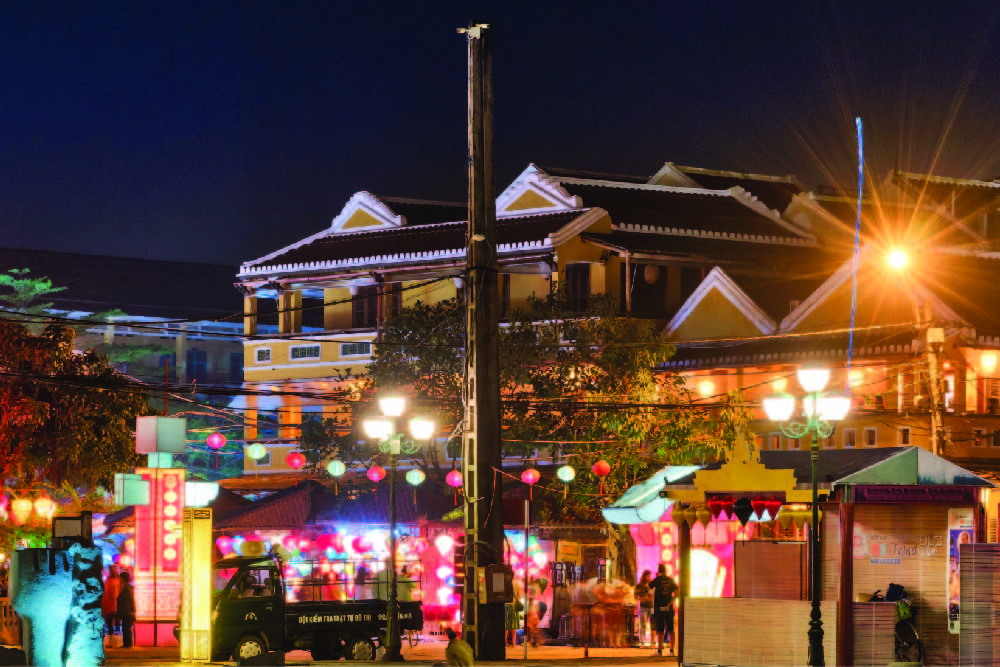
This is where Huyen Tran’s story quietly connects to Hoi An. The land she helped bring under Dai Viet’s control in 1306 didn’t stop at Hue — it opened the door for Vietnamese influence to keep pushing further south along the central coast over the following centuries, into territory that once belonged entirely to Champa. Hoi An itself sits on land shaped by exactly this long, gradual transition: a Cham trading settlement that, over generations, became part of a growing Vietnamese kingdom, and eventually blossomed into one of Asia’s great international ports.
In other words, the port town’s very existence as we know it today traces back through centuries of exactly the kind of history Huyen Tran’s marriage set in motion. That deeper story — of a coastline changing hands, cultures blending, and a small port town rising to meet the world — is exactly what one of Hoi An’s most striking modern experiences was built to tell.
Hoi An Memories Land: where centuries of history come alive
The Hoi An Memories Show is Vietnam’s largest outdoor cultural performance, staged nightly on a 25,000 square-meter set built directly on the Hoai River. Told through five acts and performed by a cast of over 500 actors, the show traces roughly 400 years of Hoi An’s history — from the earliest days of the port’s founding and its rise as a bustling international trading hub, through to the cultural identity the town carries today. There’s no spoken narration; the story unfolds entirely through movement, light, music, and staging on a scale unlike anything else in Vietnam.
Show schedule:
- Performances run nightly except Tuesdays, from 8:00 PM to around 9:00 PM
- The Hoi An Impression Theme Park section of the complex opens earlier, at 4:00 PM
- Smaller mini-shows and cultural performances run between 5:00 and 7:00 PM, before the main event
Ticket categories (2026 pricing, approximate):
| Category | Approx. price (VND) | Best for |
|---|---|---|
| Eco | ~350,000 | Budget-conscious visitors, closest to the stage |
| High | ~500,000 | Best overall view — elevated, central position |
| VIP | ~700,000–900,000 | Extra comfort, includes light refreshments |
Children under 1 meter tall generally enter free, with reduced pricing for those between 1 and 1.4 meters. Prices and promotions shift periodically, so it’s worth checking current rates before booking.
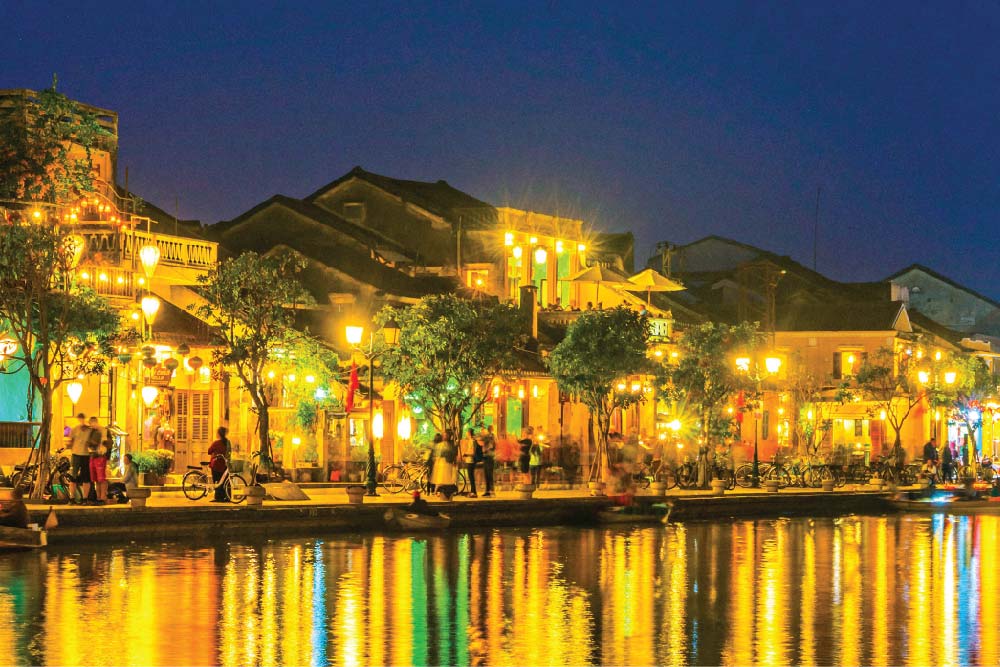
Getting there: Hoi An Memories Land sits on Con Hen (Cam Nam Island), just a short distance from Hoi An’s Old Quarter. The venue has on-site parking, and many visitors combine the show with dinner in the Old Quarter beforehand, since the riverside setting is only a short trip from the ancient town’s lantern-lit streets.
Why the show is worth building into your Hoi An itinerary
Visiting Hoi An’s Old Quarter by day gives you the architecture — the merchant houses, the Japanese Covered Bridge, the quiet canals. The Memories Show gives you the story behind it: centuries of trade, migration, and cultural exchange condensed into a single, theatrical hour. Understanding a piece of that deeper history — how this stretch of coastline came to belong to Vietnam in the first place — adds real weight to what you’re watching unfold on stage.
A few practical tips:
- Arrive early enough to catch the mini-shows between 5:00 and 7:00 PM if you want the full evening experience rather than just the main performance.
- Book a few days ahead during peak season (especially around Lantern Festival nights and summer weekends), since popular seat categories can sell out.
- Mid-week evenings are quieter, with better availability and a more relaxed atmosphere than weekend performances.
- Pair the show with an earlier visit to Hue, where the Huyen Tran Princess Temple offers a quieter, more contemplative counterpoint to the show’s scale and spectacle — together, they tell two very different sides of the same regional history.
FAQ
Is Princess Huyen Tran a real historical figure? Yes. She was a real princess of the Tran Dynasty, born in 1287, and her 1306 marriage to the Cham king Che Man is documented in Vietnamese historical records, even though some details of the legend — particularly around her rescue — have been passed down and embellished over generations.
Does the Hoi An Memories Show depict Princess Huyen Tran directly? No — the show focuses on Hoi An’s founding and its rise as a trading port over roughly 400 years, rather than dramatizing Huyen Tran’s story specifically. The connection is historical rather than literal: her marriage set in motion the territorial shift that eventually brought this stretch of coastline into Vietnamese hands.
How long is the Hoi An Memories Show? The main performance runs approximately 60 minutes, typically from 8:00 to 9:00 PM.
Which ticket category should I choose? High seats generally offer the best overall value, with an elevated, central view of the full stage. Eco seats sit closer to the action but can have a narrower viewing angle given the size of the production.
Can I visit the Huyen Tran Princess Temple as part of a Hue trip? Yes — the temple, on Thien Thai Mountain near Hue, is a peaceful, less-visited site that pairs well with a broader central Vietnam itinerary covering Hue, Da Nang, and Hoi An.
Two sides of the same story
Princess Huyen Tran’s sacrifice and the Hoi An Memories Show sit at opposite ends of the same long story — one quiet and personal, the other loud and theatrical, but both rooted in the same centuries of history that shaped central Vietnam into what it is today. Building both into a central Vietnam itinerary gives travelers a fuller picture of the region: the history behind the land, and the spectacle built to celebrate it.





