
December settles over Northern Vietnam like a gentle veil, cool, misty, and quietly intoxicating. The region transforms into a world of soft silver light, drifting fog, and poetic winter moods that you can rarely see within tropical Asia. Northern Vietnam’s weather in December brings an unexpected beauty: a winter that is mild yet atmospheric, full of movement in the rivers, mountains, and ancient cities. Traveling through the North this month feels like leafing through a personal travel journal, where every page captures a new landscape wrapped in mist, a new cultural rhythm aligned with winter, and a new emotional impression shaped by each region’s unique blend of cold air and warm life.
This article is aimed to guide you through that journey. We will explore how the cold settles differently in the mountains than in the deltas, how sunlight filters through winter skies, and how people move, eat, work, and celebrate in this season of quiet. Most of all, it shows you what it feels like to truly be here, waking up to fog-draped valleys, warming your hands around a bowl of soup, inhaling the scent of smoke drifting from winter kitchens, and walking through landscapes softened by December’s delicate touch.
A distinct Northern winter
Vietnam stretches across several climate zones, but December is the month when the differences become most tangible. While central and southern regions bask in sunshine, Northern Vietnam becomes a realm shaped by the northeast monsoon. The wind travels from mainland China, carrying with it a crispness that reshapes the air, the landscapes, and the rhythm of daily life.
Within the lowlands, Hanoi, Hai Phong, and Ninh Binh, the winter is cool and humid, with temperatures floating between the mid-teens and low twenties. The cold isn’t harsh, but it lingers in the air in a way that makes you instinctively reach for a warm drink or wrap a scarf around your neck. Unique to this region is a damp chill that doesn’t rely on low temperatures; even 17°C can feel surprisingly cold when wrapped in moisture from the Red River Delta.
In the highlands, however, December submerges in a Western winter. Sapa, Ha Giang, and other mountain provinces often begin the mornings with temperatures hovering near 5°C. Mist gathers thickly among the terraces and limestone formations, and in some years, frost paints the edges of rice stalks in shimmering white. The mountains amplify winter’s presence, creating landscapes that feel closer to alpine Europe than tropical Asia.
This distinction between lowland humidity and highland cold forms the foundation of the unique Northern Vietnam weather in December. It also provides travelers with a varied emotional journey, a winter that shifts in tone and texture as you move from one province to another.
Hanoi: a city wrapped in winter poetry
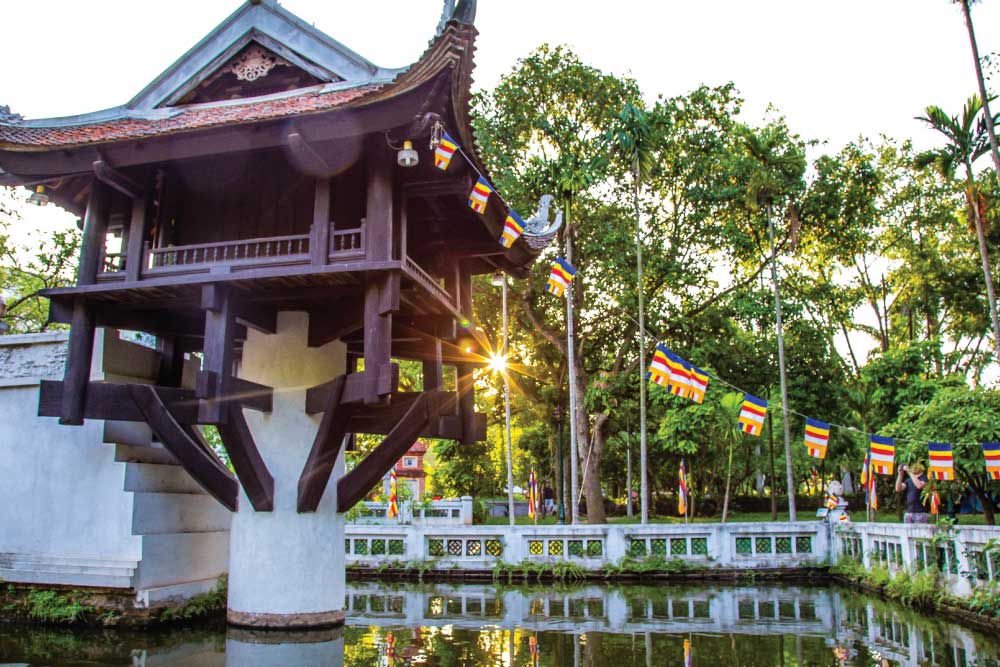
December transforms Hanoi with a softness that never fully leaves the air. Stepping outside early in the morning, you often find the city blanketed in a fine mist that merges with the quiet hum of scooters and the soft rustle of leaves from the city’s ancient trees. The iconic Hoan Kiem Lake becomes a mirror reflecting grey skies, its surface disturbed only by the slow movement of turtles beneath or the gentle ripples made by joggers leaning over to stretch.
Walking through the Old Quarter, you notice how winter changes everything: the way coffee steam curls from small sidewalk cups, vendors huddle around their street kitchens, and the colors of yellow colonial buildings appear muted under the December sky. Vietnamese winter clothing appears everywhere: knitted hats, long coats, woolen scarves, and thick hoodies. There is an unmistakable warmth that the city cultivates despite the cold, found especially in the aroma of grilled corn, baked sweet potatoes, and steaming pots of hot ginger tea.
By mid-afternoon, the pale ray of sunlight starts to spread across the wide boulevards lined with banyan trees. The temperature rises only slightly, perhaps reaching 20°C on a good day, but the air feels dry and refreshing. At West Lake, couples ride bicycles around the shoreline, taking in the winter reflections of temples and lotus cafes that line the banks. The lake appears almost metallic, its surface catching subtle hints of white and gold as the sun moves across the sky.
Evenings in Hanoi during December carry a kind of graceful melancholy. It is a city that feels both awake and subdued. Winter brings people outdoors to hotpot restaurants, where groups of friends gather around boiling broth, sharing stories while the cold settles more deeply into the night. The scent of cinnamon and star anise drifting from street food stalls becomes unmistakable. The city feels older, more poetic, more reflective in winter,a place that invites slow walking, slow eating, and slow thinking.
Experiencing Hanoi in December is experiencing Vietnam at its most contemplative. It is the perfect introduction to the season, a gentle welcome into the North’s winter world.
Sapa: A mountain woven in fog and frost
The journey into Sapa begins with a quiet sense of anticipation. As you ascend the mountains, the temperature drops noticeably with each curve in the road, and the landscape shifts from green valleys to drifting clouds. Arriving in Sapa in December feels like stepping inside a cloud that has settled gently on the ground.
Mornings begin with windows coated in condensation. When you open them, the valley below is swallowed by fog. The legendary terraced fields appear only when the mist parts, revealing their curves like the strokes of an ancient brush painting. These terraces, golden in autumn, green in summer, turn brown and reflective in winter, their wet surfaces glistening with soft light. Sometimes wisps of smoke drift from small hilltop houses, adding to the scene’s rustic winter charm.
Walking through the villages of Lao Chai, Y Linh Ho, and Cat Cat, you notice how winter shapes daily life. Children wear thick coats while playing among fallen leaves. Buffaloes move slowly in the fields, exhaling clouds of warm breath that look like drifting steam. Shopkeepers keep their doors slightly open, letting in slivers of light but keeping out the deeper cold with heavy curtains.
The cold in Sapa is biting, especially when the wind sweeps across the ridges. It is not unusual for temperatures to dip near freezing at night, especially in the surrounding mountains. The prospect of frost or light snowfall adds a sense of magic to the air. Though snow is rare, when it does appear, Sapa transforms into a wonderland that brings both joy and astonishment to locals and travelers alike.
By night, Sapa town glows under yellow street lamps, and the chill becomes sharper. Travelers gather in warm cafés and homestays, sitting close to fireplaces or charcoal braziers while sipping hot herbal tea with lemongrass and cinnamon. Outside, the sky often remains misty, creating a halo effect around every light. This is Sapa’s winter mood: quiet, cold, mystical, and deeply atmospheric.
Ha Giang: Winter on the edge of the earth
Ha Giang in December is a completely different expression of Northern Vietnam’s winter. Here, the landscape is fierce and majestic, shaped by towering limestone mountains, deep valleys, and roads that cling to the edges of cliffs. Winter sharpens everything: the wind, the sky, the scent of pine, the outline of every rock formation.
Riding along the Ha Giang Loop in December is both thrilling and meditative. The day begins with a thin frost on rooftops and a cold that seeps into your bones if you’re not properly layered. But as you travel through Quan Ba and ascend toward the Dong Van Plateau, the winter sun gradually reveals itself. It shines with a gentle white glow, illuminating the karst formations in a way that makes them appear sculpted by ancient hands.
The air is crisp and extraordinarily clean. Every breath carries the scent of stone, grass, and cool mountain wind. Villages appear along the roadside, often quiet in the early hours as smoke rises from kitchens where breakfast is prepared. The cold keeps the world still until late morning.
By the time you reach the Lung Cu Flag Tower, the northernmost point of Vietnam, the wind becomes stronger, sweeping across open plateaus. From this vantage point, the landscape stretches endlessly, rolling fields, distant Chinese mountains, and villages carved into steep terrain. The cold here is invigorating and pure.
Then comes the legendary Ma Pi Leng Pass. In December, the pass feels otherworldly. Mist rises from the Nho Que River far below, curling and unfurling like silver ribbons. The cliffs seem even steeper, the chasm even deeper, the silence even more profound. Standing here in winter is a humbling experience; it is a reminder of nature’s vastness and the smallness of human worries.
Ha Giang in December is rugged and raw, offering a winter that feels untouched and wild. For adventurers, it is a paradise; for dreamers, it is a poem written in stone and wind.
Ninh Binh: Masterpiece in water and limestone
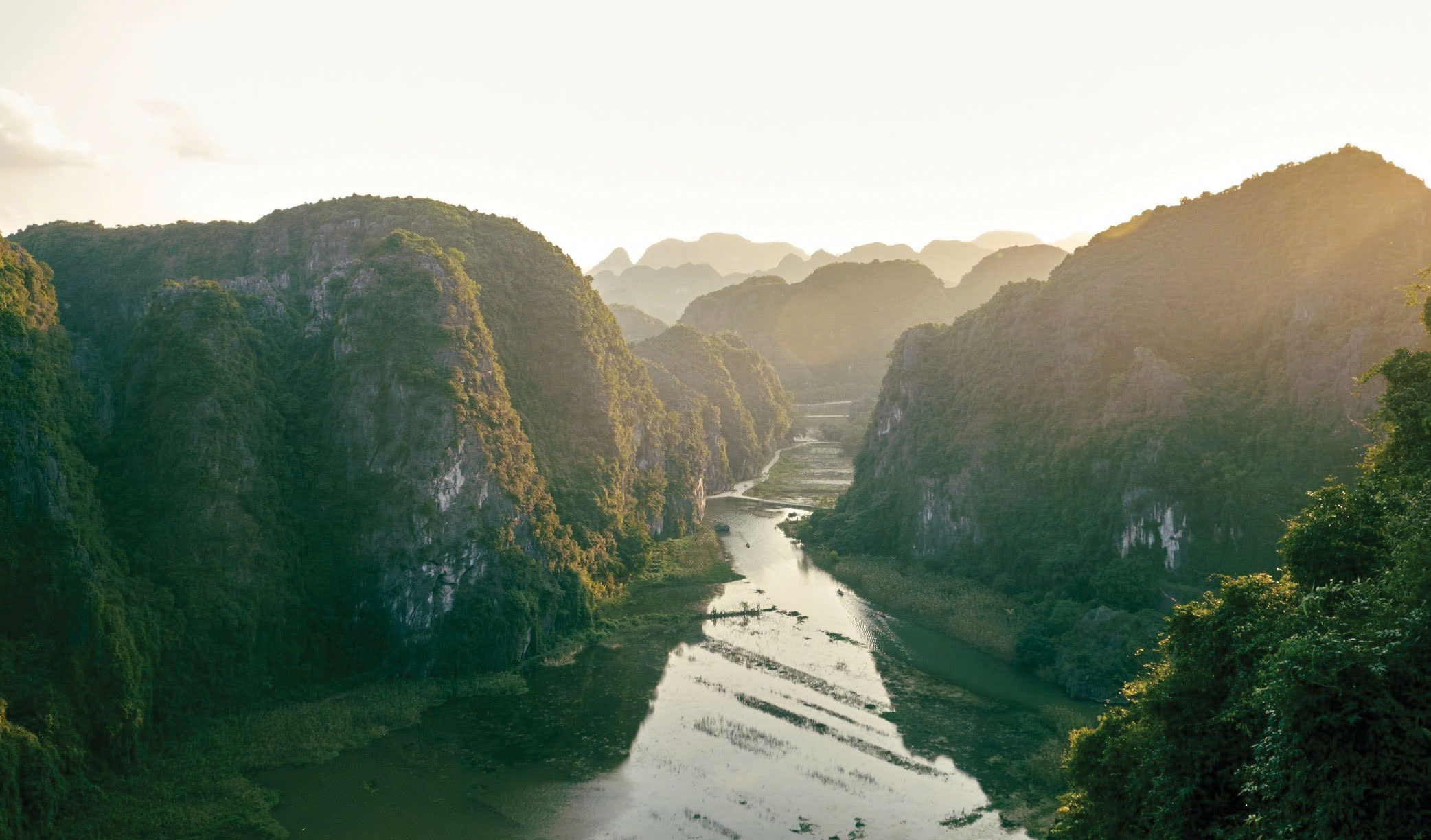
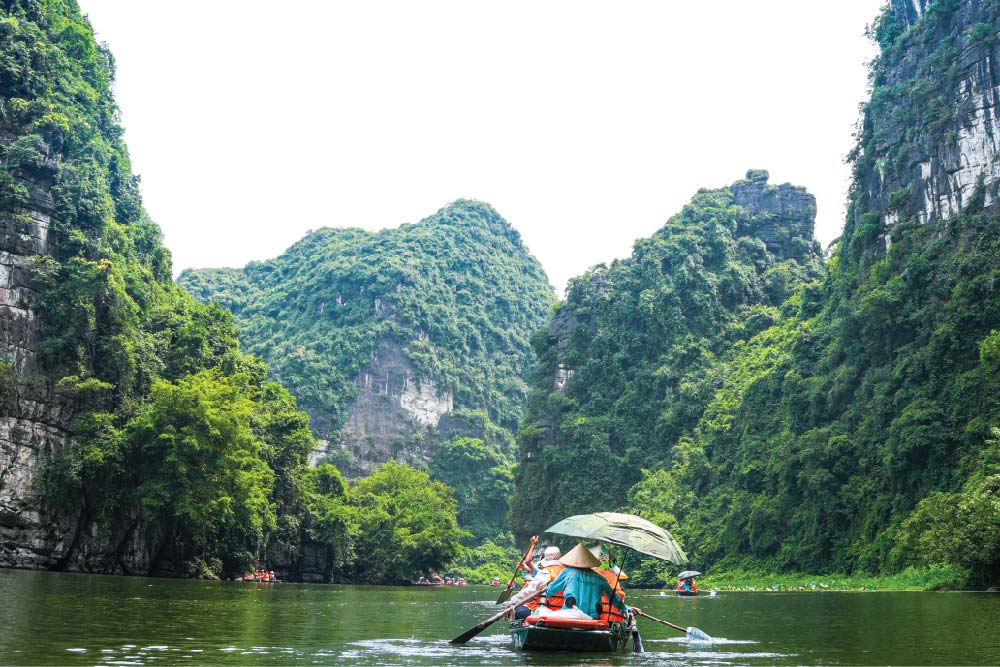
If the mountains of Ha Giang and Sapa represent winter’s boldness, then Ninh Binh represents its serenity. December drapes Ninh Binh in a soft, cinematic veil. The limestone karsts that rise almost vertically from green plains become shrouded in gentle mist in the mornings. The rivers that wind through Tam Coc and Trang An move slowly, their surfaces smooth as glass.
Taking a boat ride through Tam Coc in December is like drifting through a dream. The air carries a chill that brushes against your cheeks, but not so sharply that you retreat into your coat. The oar strokes of the boatwoman are slow and rhythmic, creating ripples that break the reflected image of the mist-covered cliffs. Birds skim across the water, their wings almost touching the surface.
The caves you drift through feel colder, their ceilings dripping with mineral-rich water. Emerging from each cave is like awakening into a slightly altered version of the same dreamscape: mist curling around karsts, scattered rice fields resting after harvest, and distant sounds softened by winter’s embrace.
Climbing to Hang Mua Viewpoint during December offers a different beauty. The steps wind up the limestone peak, and each pause rewards you with views of a valley washed in subtle winter hues. The landscape below spreads wide and calm, with river paths etched between karsts and fields that appear golden-brown under the pale winter sun.
December gives Ninh Binh an almost European feel, calm, cool, and muted in palette. It is the perfect place for reflection, creativity, and slow travel.
Ba Be & Cao Bang: an underrated quiet corner
While many travelers head to Sapa or Ha Giang for their winter experience, the regions of Ba Be and Cao Bang offer a quieter, more introspective version of December. Ba Be Lake, surrounded by dense forests and limestone hills, becomes especially enchanting in this month. Early mornings often blanket the lake in fog so thick that the opposite shore disappears. Fishermen move quietly across the water in wooden boats, their silhouettes faint against the soft grey light.
As the afternoon sun emerges, the lake becomes a vast mirror reflecting sky and forest. The cool breeze carries the smell of wet earth and wood smoke from nearby homestays. Ba Be feels timeless in December, a place where winter deepens the silence and amplifies nature’s presence.
Further northeast, Cao Bang’s Ban Gioc Waterfall thunders with winter strength. Mist rises from the cascading water, merging with December’s natural haze to create an ethereal atmosphere. The surrounding fields and villages sit peacefully in the cool air, their colors softened under winter light.
These regions showcase winter not as cold or harsh but as peaceful, gentle, and profoundly grounding.

The Rhythm of a Northern Winter
December in Northern Vietnam is carried on a rhythm of fog-filled mornings, soft midday sunlight, and cool nights that descend early. The interplay between mist and light is one of the month’s most defining features. Fog settles over lakes, valleys, rice terraces, and city streets, creating a world where edges blur, and sounds soften.
Sunshine appears in gentle bursts rather than bright waves. When it breaks through the clouds, it bathes the land in a subdued golden glow, revealing layers of mountains or rooftops that seem to fade into the horizon. This quality of light makes December one of the best months for photography.
The northeast monsoon brings steady breezes, never stormy, but always cool. In the highlands, these breezes become strong, slicing through mountain passes and amplifying the cold. In the lowlands, they rustle through Hanoi’s boulevards and old trees, carrying the scent of winter food stalls.
Experiencing December: food, culture, and local traditions
No travel journal of December would be complete without mentioning the winter cuisine of Northern Vietnam. The cold weather brings families together over hearty dishes. In Hanoi, steaming bowls of cháo (rice porridge) are served with warm fried dough sticks. Bún thang, a delicate chicken and egg noodle soup, becomes a winter favorite. Grilled corn, roasted chestnuts, and hot baked sweet potatoes appear at nearly every street corner, warming both hands and hearts.
In Sapa and Ha Giang, winter cuisine highlights warming broths and locally grown vegetables. Hallmark dishes like thắng cố (a traditional ethnic minority stew) or hotpot filled with mountain herbs help locals combat the deep cold.
December also marks the beginning of preparations for the Lunar New Year. Markets fill with early decorations, fragrant kumquat trees, and festive red ornaments. Although the main celebrations occur later, the anticipation adds a sense of excitement to winter’s calm.
A winter journey through the north
Northern Vietnam’s weather in December is a living story, fluid, atmospheric, and deeply sensory. It is not a harsh winter, but a gentle sculptor of landscapes and emotions. It pulls a soft grey blanket over the mountains, scatters mist across ancient cities, and brings cool, fragrant breezes to rivers and lakes. It asks travelers to walk more slowly, look more closely, and breathe more deeply.
More than temperatures and clouds, what truly defines Northern Vietnam’s weather in December is the emotion it evokes. It is the month that invites inward reflection. The landscapes are quieter, the colors softer, the air cleaner. Travelers often speak of feeling more connected to the places they visit because winter strips everything down to its essence: land, water, sky, people.
There is romance in the foggy mornings of Hanoi, adventure in the windswept ridges of Ha Giang, serenity in the waters of Ninh Binh, and mystery in the cloud-wrapped valleys of Sapa. December touches every part of the North with its own kind of beauty, creating experiences that linger in the back of one’s mind long after.
Frequently Asked Questions
Is December a good month to visit Northern Vietnam?
Yes, but expect cold temperatures, especially in the mountains. The weather is dry and great for trekking and sightseeing.
How cold does it get in Northern Vietnam in December?
Hanoi ranges from about 14–22°C, while Sapa and Ha Giang can drop to 3–10°C, with some nights approaching freezing.
Does it rain in December?
Rainfall is low. December is one of the driest months, though mist and fog are common in mountain areas.
Is Sapa or Ha Giang too cold in December?
It can be very cold, especially at high altitudes. Warm clothing is essential, but the landscapes are atmospheric and stunning.
Does Northern Vietnam get snow in December?
Snow is rare but possible in the highest peaks of Sapa or nearby mountains during strong cold waves.
What should travelers wear?
Warm layers, jackets, gloves, scarves, and good shoes for trekking. Hanoi also requires winter clothing during cold spells.
Are trekking conditions good in December?
Yes. Trails are dry and views are clear, although morning frost or fog may appear in highlands.
Is it a good time to visit Hanoi?
Yes. Hanoi is cool, dry, and comfortable for walking tours, food exploration, and cultural sites.
Is Halong Bay good in December?
Yes, but expect cooler temperatures and occasional fog. Cruises run normally, and the atmosphere is calm and peaceful.
Is December crowded in the North?
Moderately. Popular trekking areas see more visitors because of dry conditions, but it’s not the peak holiday rush.