Once a year, Vietnam’s streets fill with paper lanterns, drumbeats, and the smell of freshly baked mooncakes. Tet Trung Thu — the Mid-Autumn Festival — is one of the country’s most beloved traditional celebrations, and for travelers, it’s one of the most rewarding times to be on the ground. Unlike Tet (Lunar New Year), it isn’t a public holiday, which means shops stay open and transport runs as normal — but the atmosphere is every bit as festive.
In 2026, Tet Trung Thu falls on Friday, September 25, the 15th day of the eighth lunar month. Here’s what the festival means, what to expect, and where to experience it best.
What is Tet Trung Thu?
Tet Trung Thu shares its roots with the Mid-Autumn Festival celebrated across East Asia, but Vietnam’s version has its own distinct character. While the festival elsewhere often centers on adult family reunions, in Vietnam it’s known first and foremost as the “Children’s Festival.” The timing traces back to Vietnam’s agricultural calendar — by mid-autumn, the rice harvest was largely finished, giving farming families their first real chance in months to slow down and spend time with their children.
That harvest connection is still visible today, especially in Northern Vietnam, where the Mid-Autumn Festival often overlaps with the golden rice-terrace season in places like Sa Pa and Ha Giang — full moon celebrations set against freshly harvested fields.
The legend behind the lanterns
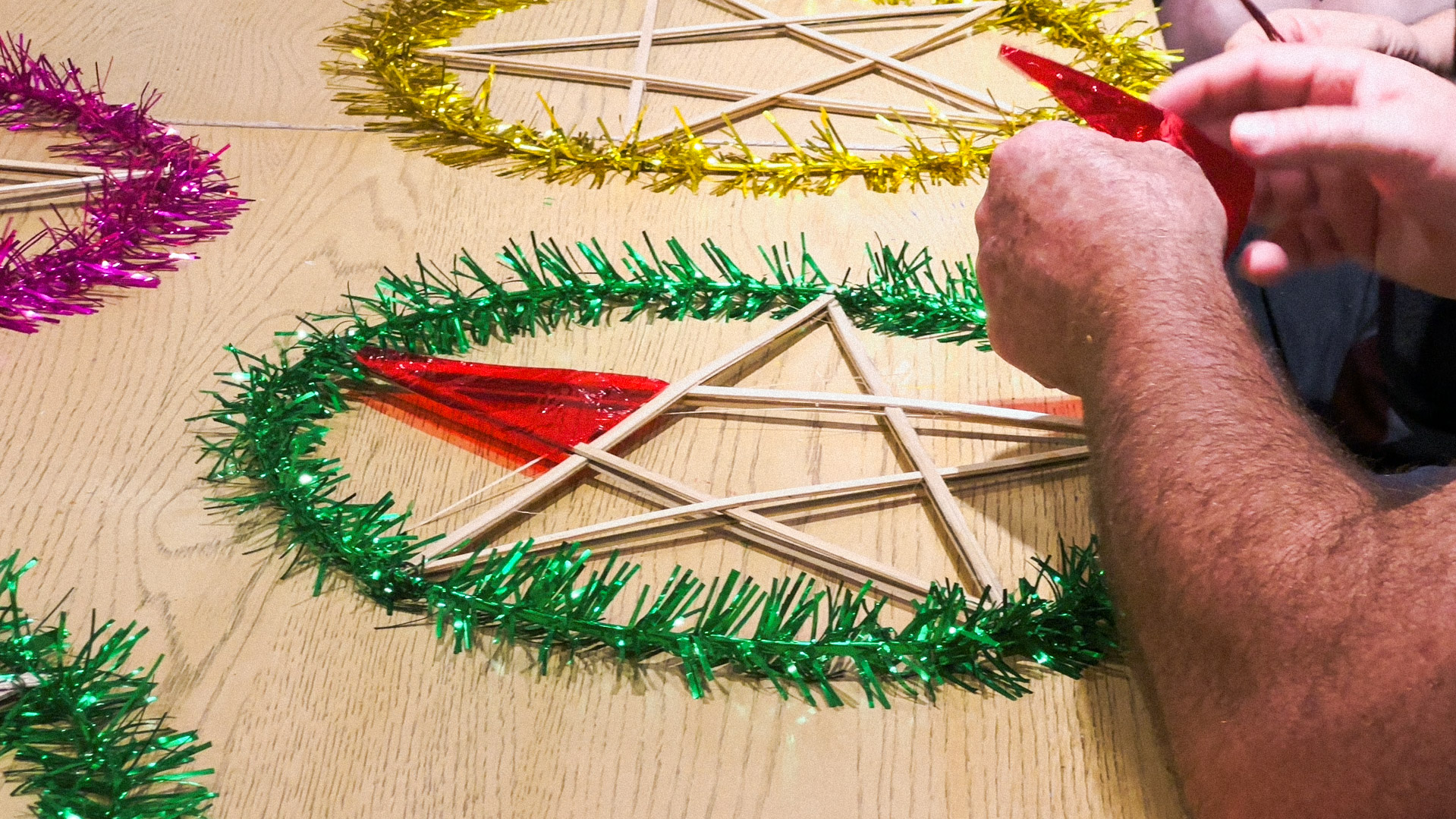
Ask a Vietnamese child why lanterns matter on this night, and you’ll likely hear the story of Cuoi — a man who, in an accident involving a magical banyan tree, found himself carried up to the moon, tree and all. Vietnamese tradition holds that the dark shape visible on a full moon is Cuoi sitting beneath his tree, and that children carrying bright lanterns through the streets help light his way back down to earth. It’s a gentle, imaginative story, and it’s a big part of why the lantern is the festival’s defining symbol.
What actually happens during the festival
Lanterns everywhere
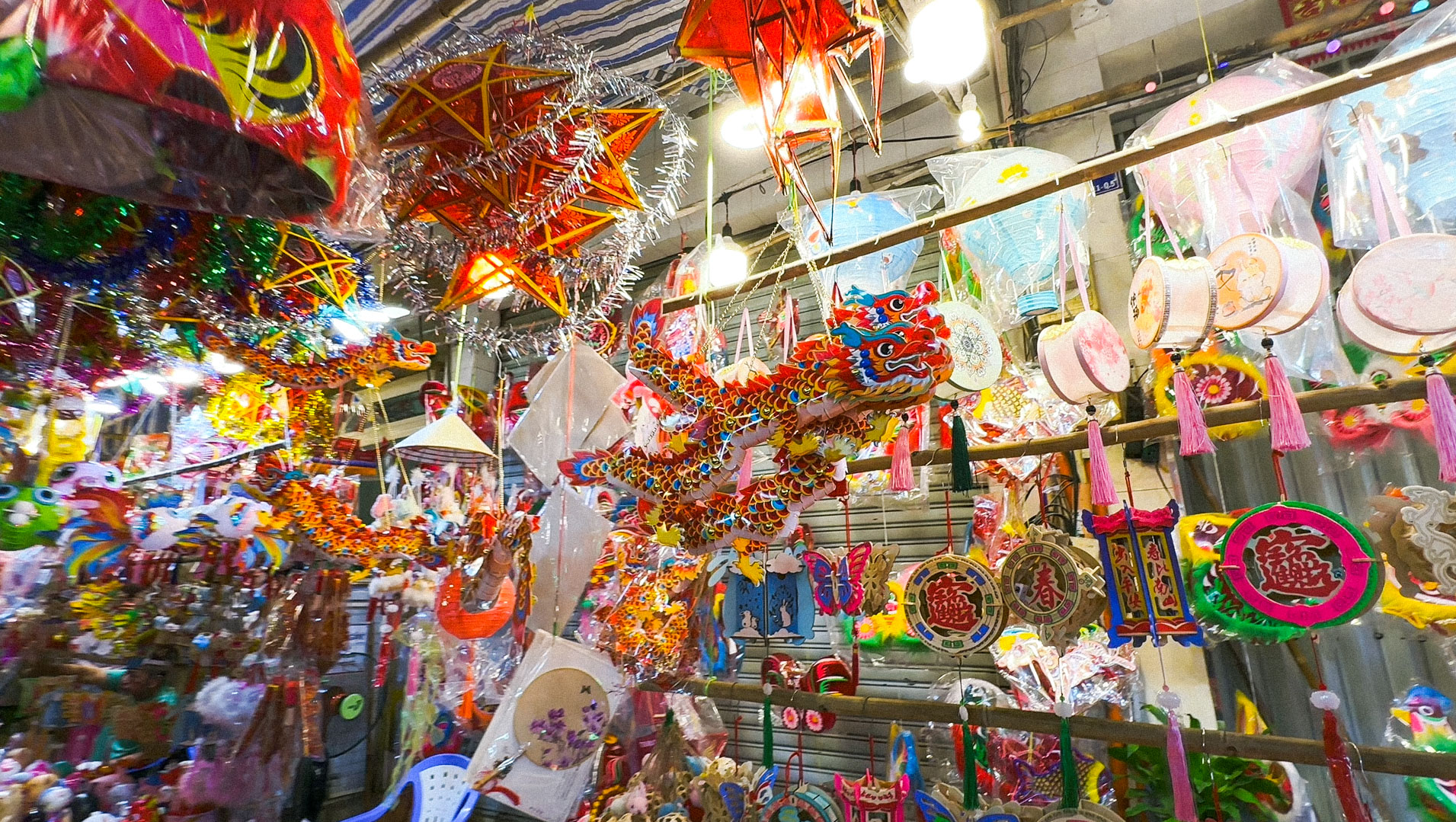
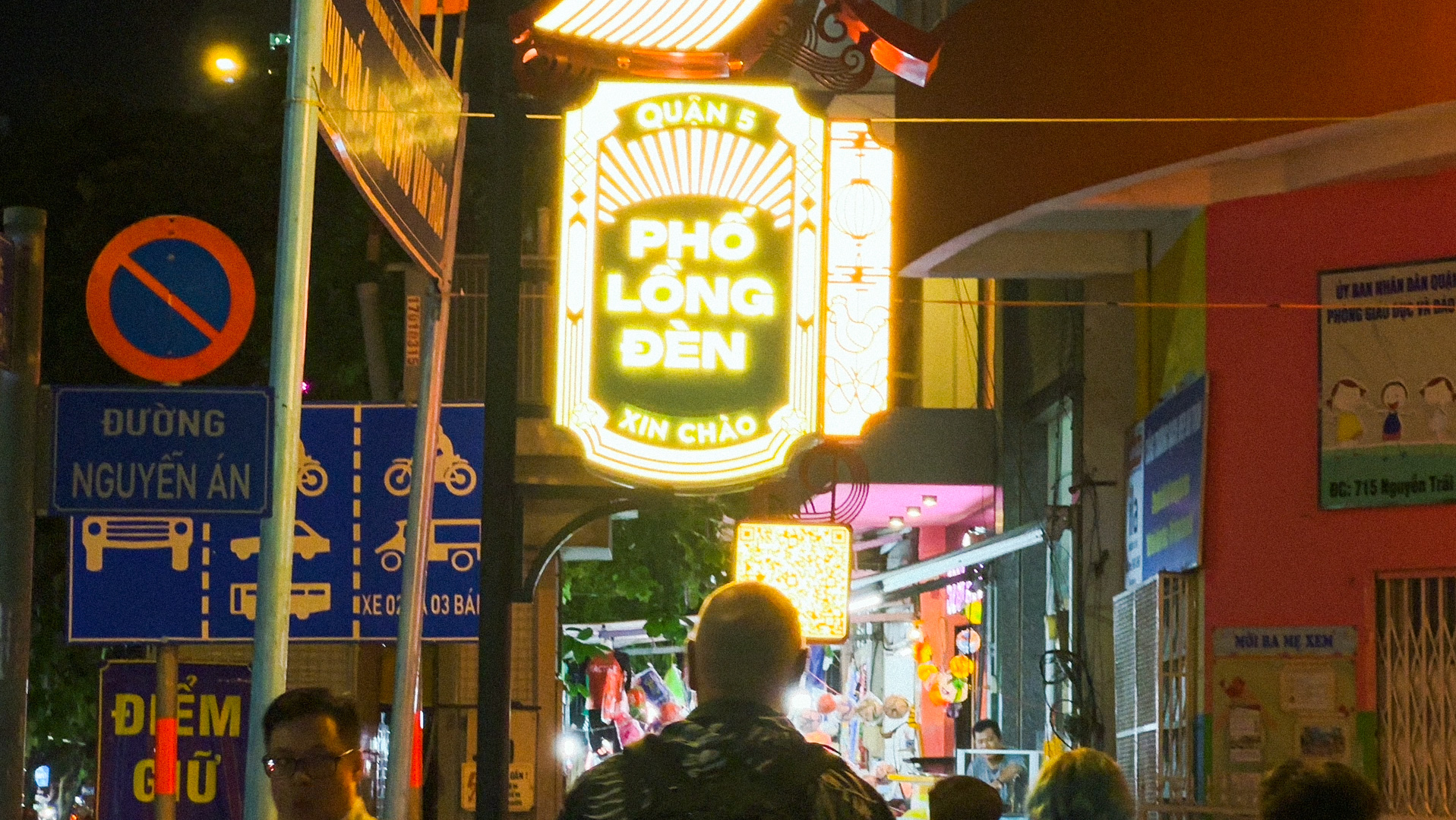
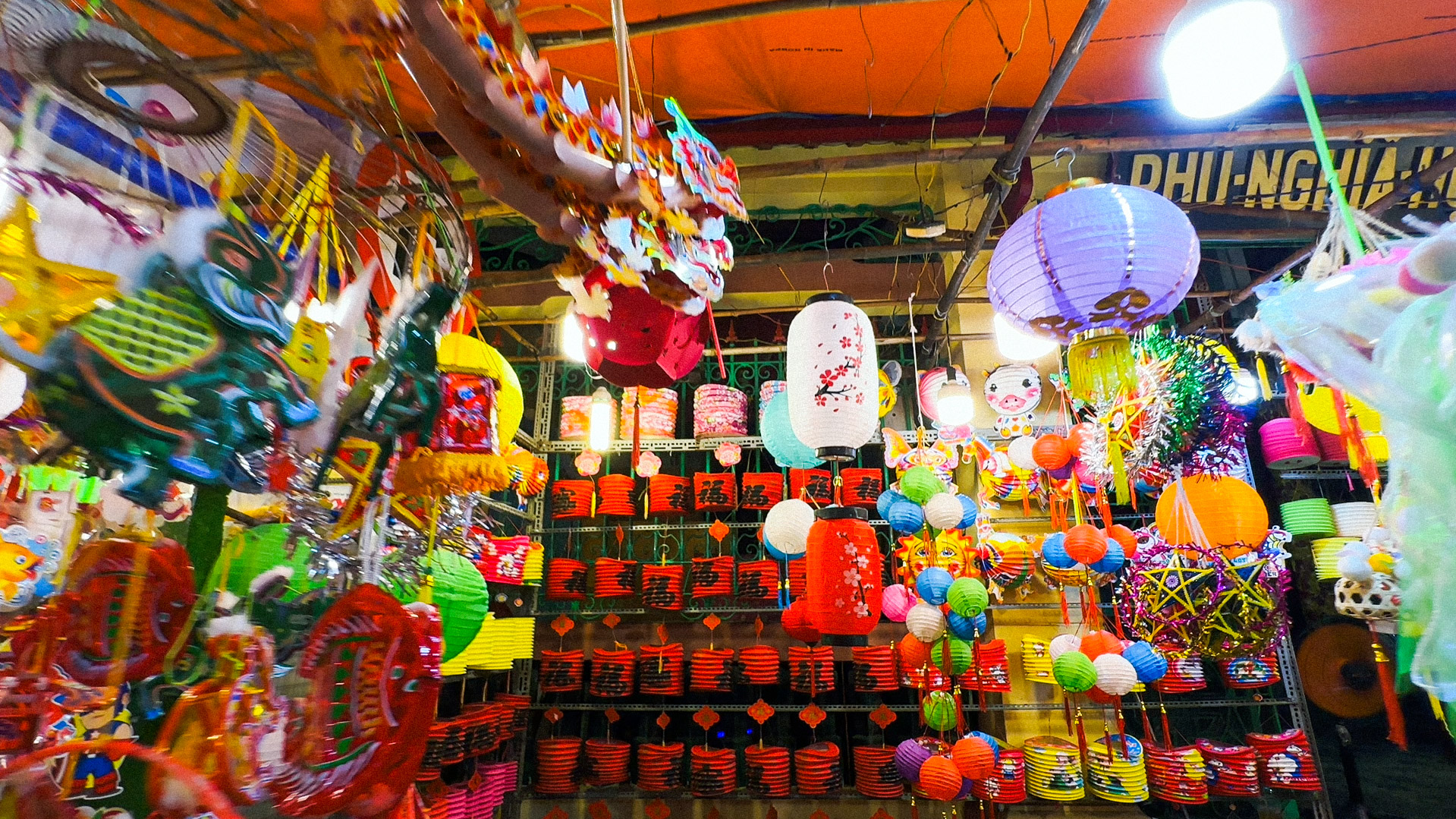
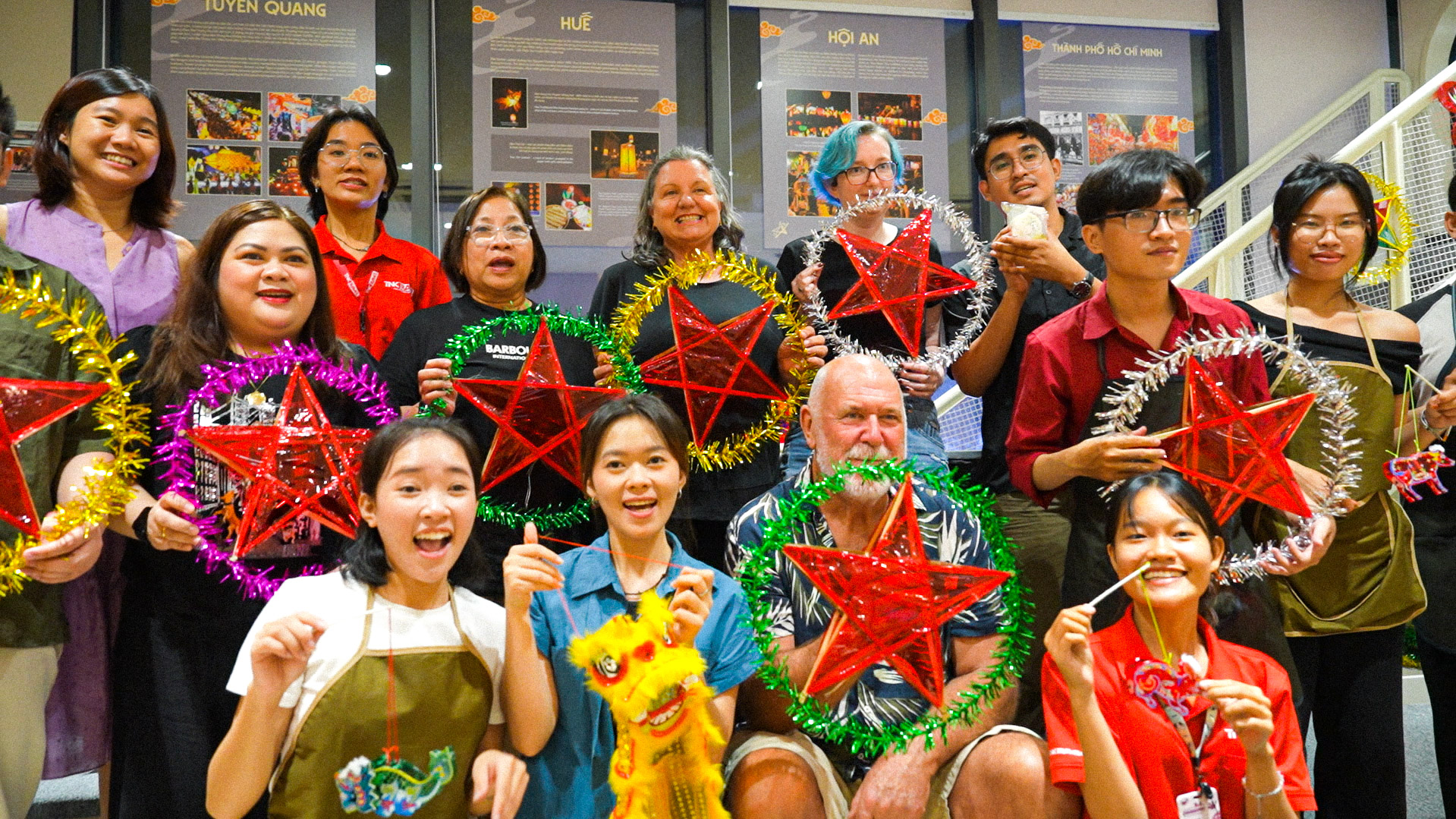
In the weeks leading up to Tet Trung Thu, entire streets — particularly in the old quarters of major cities — transform into pop-up lantern markets. Star-shaped lanterns made from red cellophane are the most iconic, but you’ll also find carp-shaped, butterfly-shaped, and increasingly elaborate handmade designs. On the night itself, children parade through their neighborhoods carrying lit lanterns, singing traditional festival songs along the way.
Mooncakes take over
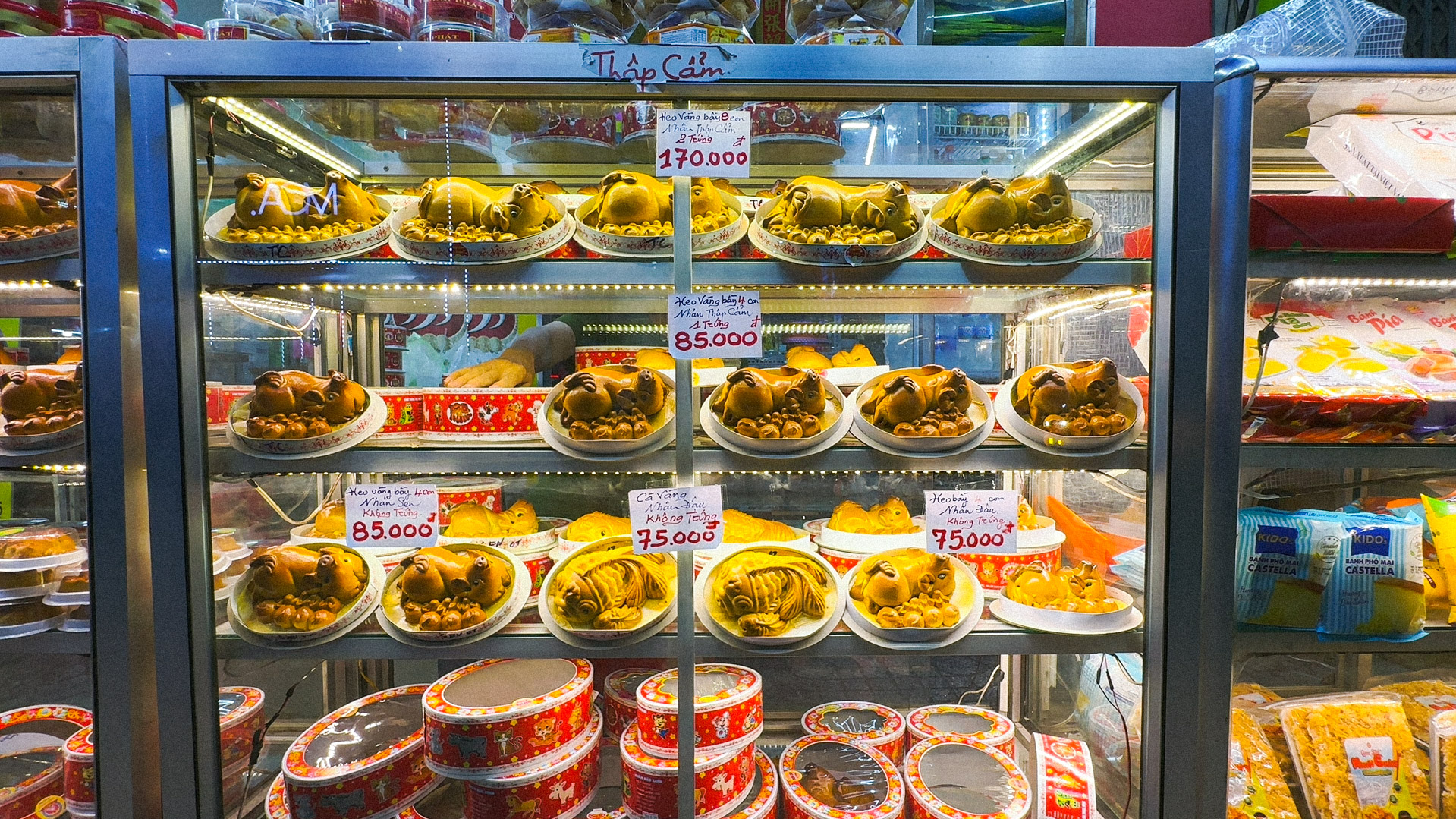
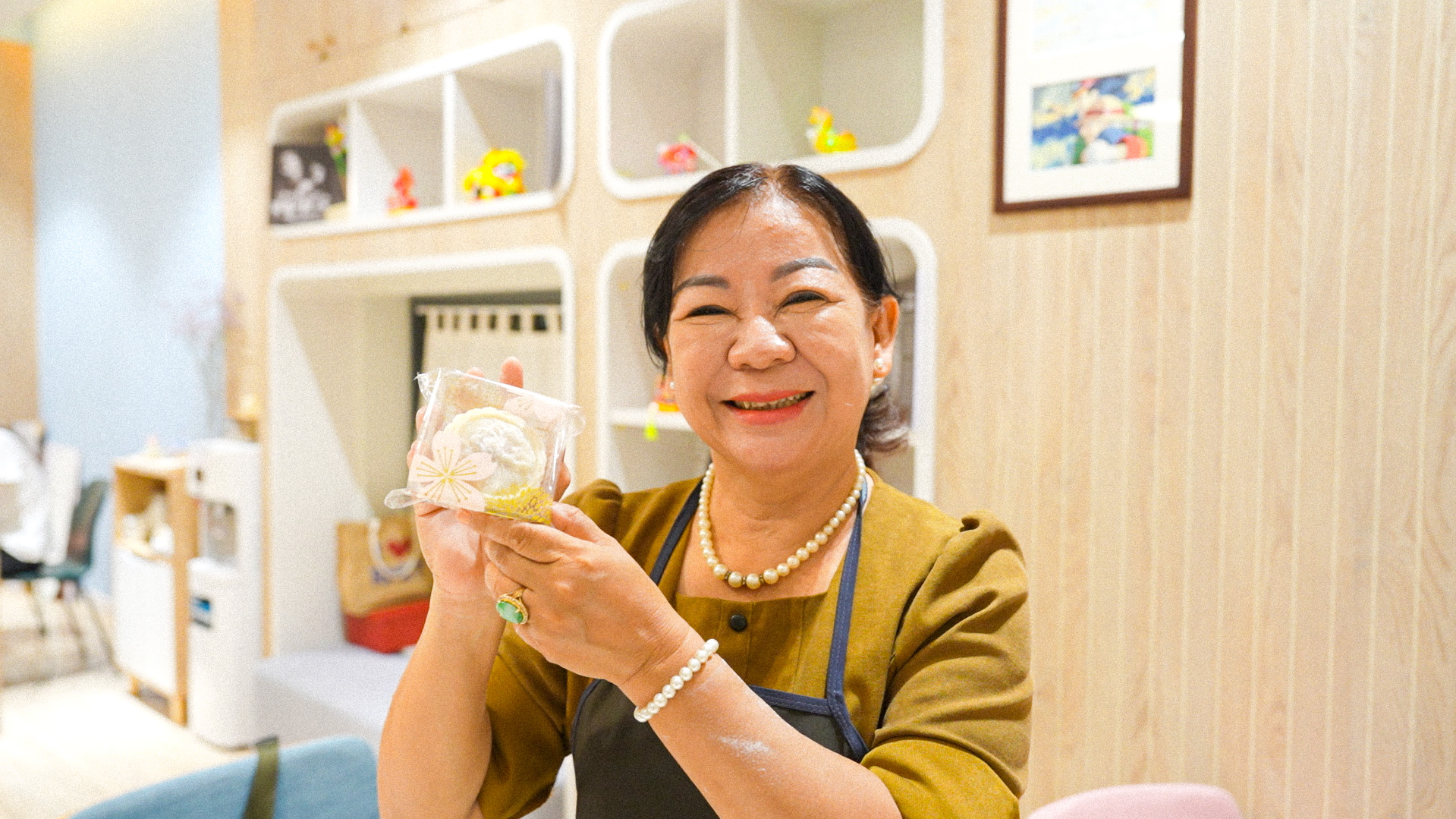
No Tet Trung Thu celebration is complete without banh trung thu — mooncakes. Vietnamese families place a tray of mooncakes and seasonal fruit on the ancestral altar as an offering before sharing the cakes themselves, traditionally under the open night sky. There are two main styles: banh deo, a soft, chewy cake with a mochi-like texture, and banh nuong, a baked version with a firmer, golden crust. Fillings range from classic lotus seed and mung bean to salted egg yolk and modern fusion flavors — buying a box to share with local hosts or friends is a small gesture that goes a long way.
Lion dances fill the streets
Lion dancing, or mua lan, is the festival’s most electrifying tradition. Troupes — sometimes professional, often made up of local kids — move from home to home and business to business, performing to booming drumbeats before a mask-wearing dancer representing the Earth God, Ong Dia. Ong Dia’s comic, exaggerated gestures are a crowd favorite, especially with children, and hosts often give the performers lucky money as thanks for the blessing the dance is believed to bring.
Honoring the moon and the harvest
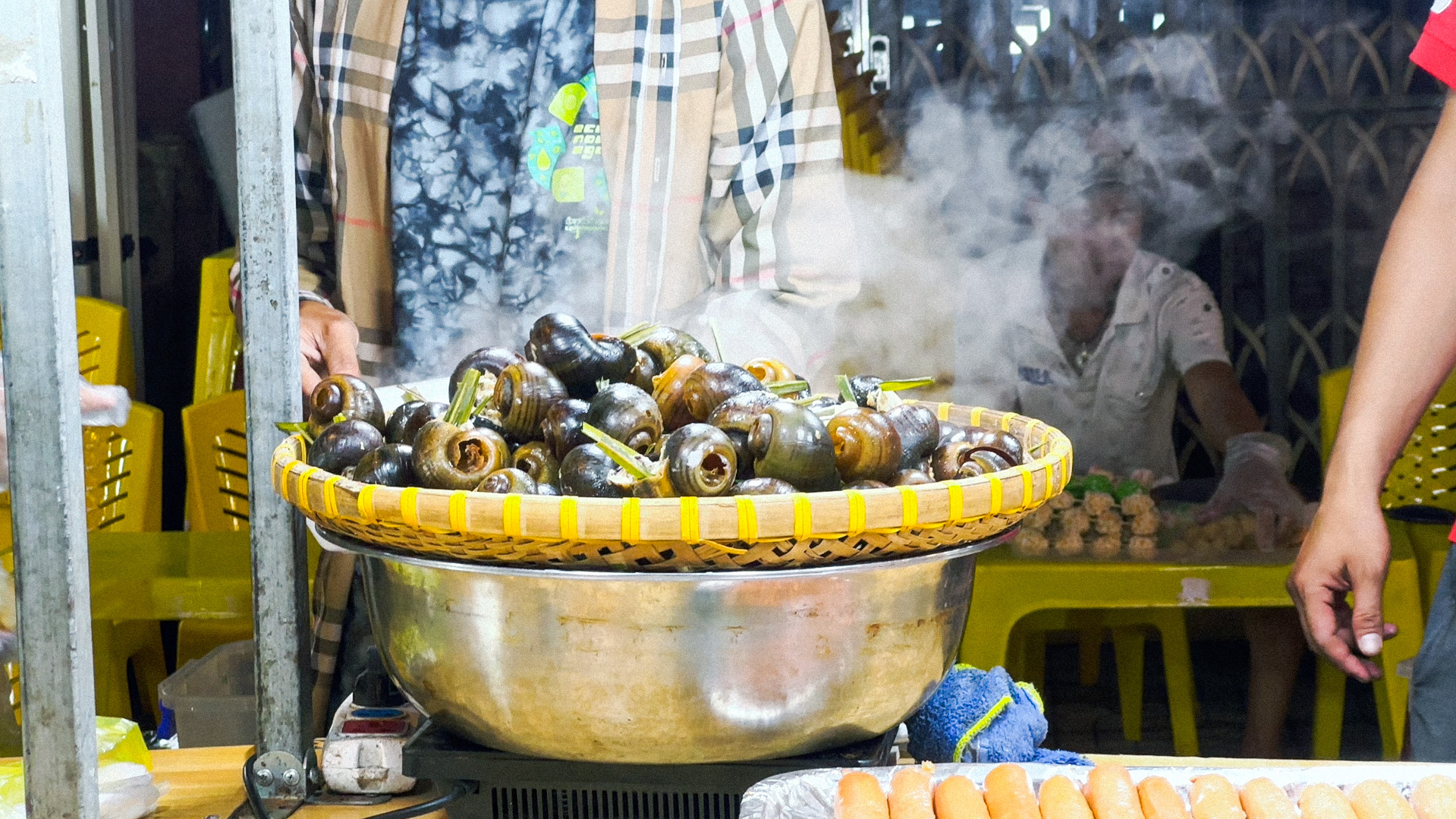
Underneath the festivities is a quieter tradition: families setting up an altar, offering food to their ancestors, and gathering to admire the full moon together. It’s this blend of loud street celebration and quiet family ritual that gives Tet Trung Thu its particular charm — equal parts carnival and homecoming.
Where to experience the Mid-Autumn Festival in Vietnam
Ha Noi
In the days before the festival, head to Hang Ma and Luong Van Can streets in the Old Quarter, where shopfronts overflow with lanterns, masks, and traditional toys. For a closer look at how these pieces are made, artisans often set up demonstrations near Ma May Street. On the eve of the festival, the Youth Theatre and the Children’s Palace host lantern-lit musical performances for families.
Hoi An
Hoi An is arguably Vietnam’s most atmospheric place to experience the festival — its ancient town is already known for monthly full-moon lantern nights, and Tet Trung Thu takes that tradition and multiplies it. Lion dance troupes move through the streets performing in front of pagodas and shopfronts, floating candles drift along the Thu Bon River, and nearly every home along the riverside sets up a small altar out front. Arriving a few days before the festival lets you watch the town’s lantern-making workshops in full swing.
Ho Chi Minh City
In the south, the Cho Lon district is the epicenter of the celebration. Luong Nhu Hoc Street becomes a sea of lanterns, masks, and lion heads for sale, and it’s a popular spot to pick up an authentic souvenir lion head from shops that have supplied the city’s dance troupes for decades.
Tips for planning a trip around the festival
- Book accommodation early, particularly in Hoi An — the festival isn’t a public holiday nationwide, but it’s a major draw for domestic travelers and increasingly for international visitors too.
- Arrive a few days ahead of the festival date if possible. Much of the charm is in the lead-up: lantern markets, mooncake stalls, and street decorations often peak in the days before the full moon rather than only on the night itself.
- Evening is when it comes alive. Plan daytime sightseeing as usual, and keep evenings free for lantern parades and lion dance performances, which typically pick up after dark.
- This is a family festival first. Expect a warm, high-energy atmosphere centered on children — a great fit for family travelers, and a genuinely welcoming cultural experience for solo travelers and couples too.
What to pack
- Comfortable walking shoes — most of the festival experience happens on foot in crowded, lively streets
- A light jacket for the cooler September evenings, especially in Ha Noi
- A camera or phone with a steady low-light setting — lantern-lit streets and river scenes make for some of the best photos of an autumn Vietnam trip
- Small cash for mooncakes, lantern souvenirs, or lucky money if you’re invited to host a lion dance performance
Frequently asked questions
When is the Mid-Autumn Festival in Vietnam in 2026? Tet Trung Thu 2026 falls on Friday, September 25, the 15th day of the eighth lunar month.
Is the Mid-Autumn Festival a public holiday in Vietnam? No — it’s a widely celebrated cultural festival, but not an official public holiday, so businesses, banks, and transport operate as normal.
Which city is best for experiencing the festival? Hoi An is often considered the most atmospheric choice thanks to its lantern-filled Ancient Town and riverside celebrations, though Ha Noi and Ho Chi Minh City both offer their own distinct, lively versions of the festival.
Do I need to book anything in advance for the festival? Formal bookings aren’t required to enjoy street celebrations, but accommodation in popular spots like Hoi An can fill up, so booking a few weeks ahead is a good idea if your trip lines up with the festival dates.
Is the Mid-Autumn Festival suitable for family travel? Very much so — it’s centered on children and family, with a joyful, welcoming atmosphere that makes it one of the better cultural festivals in Vietnam to experience with kids.
Time your trip around Tet Trung Thu with TNK Travel
Few experiences capture the warmth of Vietnamese culture quite like a Mid-Autumn evening in Ha Noi’s Old Quarter or along Hoi An’s lantern-lit river. If September 2026 is on your radar, our team can help build an itinerary around the festival dates — pairing the celebration with Northern Vietnam’s autumn scenery for a trip that hits both culture and landscape at their seasonal best.
Explore our [Northern Vietnam autumn tour packages] or reach out for a custom itinerary timed around Tet Trung Thu.