Ask Vietnamese travelers where to eat the country’s most refined food, and many will point not to Ha Noi or Ho Chi Minh City, but to Hue — the former imperial capital, where centuries of royal court cooking shaped a food culture built around precision, presentation, and balance. Hue is widely considered Vietnam’s culinary capital, home to hundreds of distinct dishes, many developed specifically to please the palates of Nguyen Dynasty emperors.
What makes Hue especially rewarding for food travelers is the range: elaborate, small-portion “royal” dishes sit alongside some of the best and most affordable street food in the country, often prepared by families who’ve made the same recipe for generations. This guide covers what to eat, where to eat it, and how to build a trip to Hue around the food itself.
Why Hue’s cuisine is different
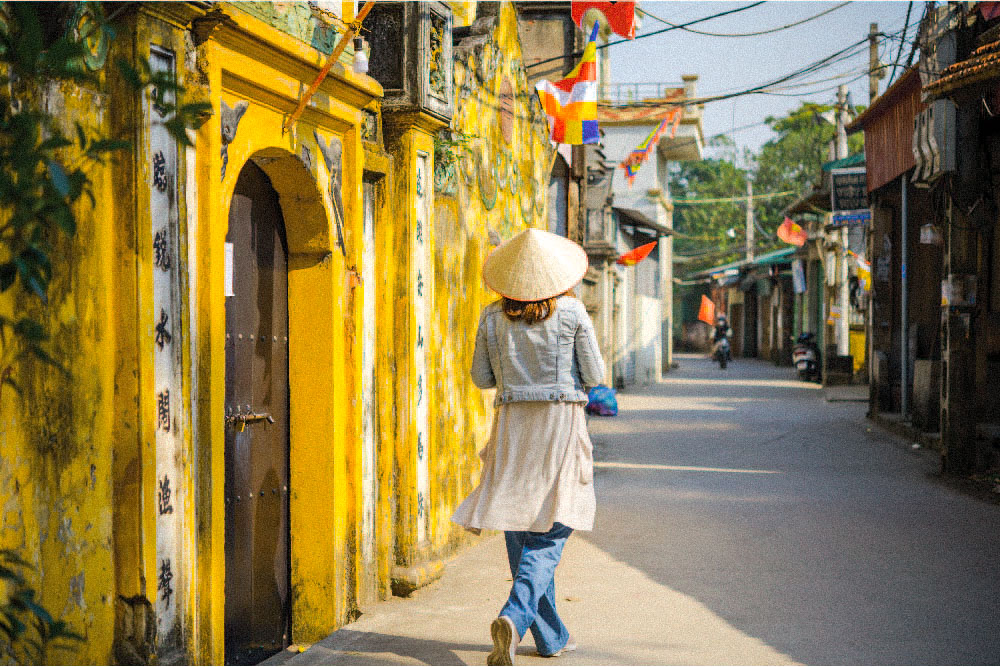
Hue’s food identity is shaped by two forces that don’t usually coexist: imperial refinement and humble, resourceful home cooking.
- Imperial influence: As the seat of the Nguyen Dynasty (1802–1945), Hue developed an elaborate court cuisine emphasizing small portions, intricate presentation, and balanced flavor — reportedly with a different dish served for nearly every day of the year to keep the emperor’s meals varied.
- Everyday resourcefulness: Outside the palace, Hue’s cooks became known for turning modest, inexpensive ingredients into deeply flavorful dishes, a tradition that persists in the city’s street food today.
The result is a food scene where a bowl of noodle soup from a plastic-stool street stall can be just as celebrated as a multi-course tasting menu.
Must-try dishes in Hue
1. Bun bo Hue
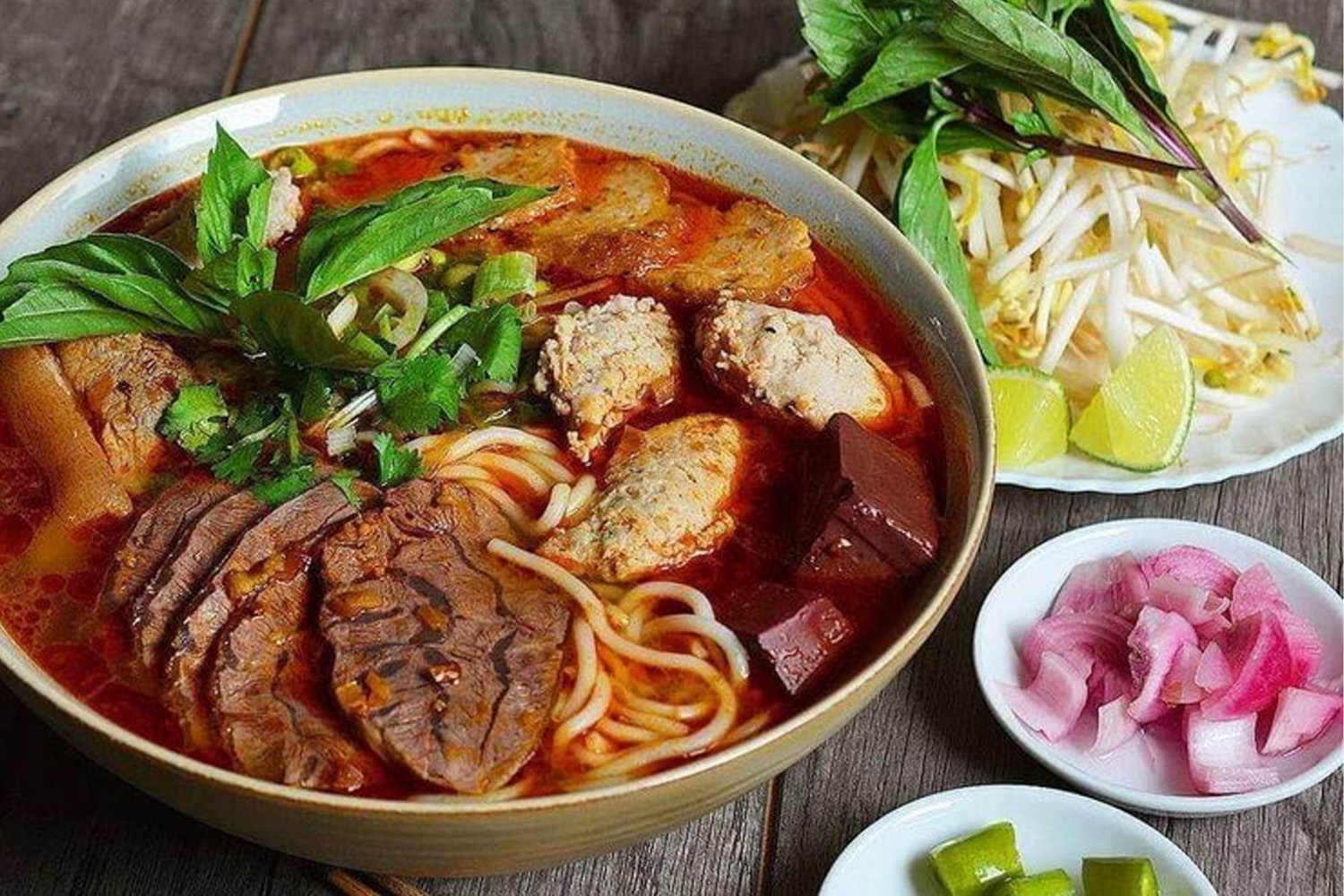
Hue’s most famous export, this spicy beef and pork noodle soup is richer and more intensely flavored than its more famous cousin, pho — built on a lemongrass-and-chili broth with lean beef, pork knuckle, and sometimes congealed pig’s blood cake. Nearly every Hue local has a favorite bun bo Hue stall, and opinions on the “best” one are passionately defended.
2. Com hen (baby clam rice)
A humble but beloved dish: tiny river clams stir-fried and served over rice with herbs, peanuts, pork crackling, and a spicy broth poured tableside. Cồn Hến, a small island in the Perfume River, is the traditional home of this dish and still where many locals go to eat it.
3. Banh khoai
Hue’s version of the crispy Vietnamese pancake, smaller and thicker than its southern counterpart (banh xeo), filled with shrimp, pork, and bean sprouts, and wrapped in lettuce and herbs before being dipped in a rich peanut-based sauce unique to the region.
4. Nem lui
Grilled lemongrass pork skewers, served with rice paper, herbs, green banana, and star fruit, and rolled at the table before being dipped in the same distinctive peanut sauce that accompanies banh khoai.
5. Royal-style tasting dishes (com cung dinh)
Restaurants specializing in “royal cuisine” recreate the small, elaborately presented dishes once served to emperors — think delicately carved vegetables, miniature spring rolls, and multi-course tasting formats. These meals are more about experience and presentation than quantity, and several restaurants in Hue offer set menus styled after imperial banquets, sometimes with staff in traditional dress.
6. Banh beo, banh nam, banh loc
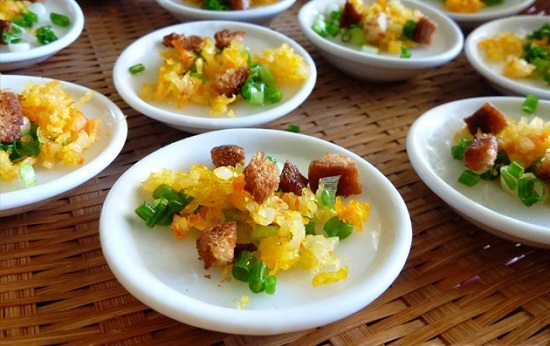
A trio of small steamed and dumpling-style rice cakes, each with a different texture and filling (shrimp, pork, or both), typically served on small plates as a shared tasting spread. These are considered some of the most technically demanding dishes in Hue’s repertoire, despite their small size.
7. Che Hue
Hue is also known for its wide variety of che, sweet dessert soups made from beans, fruit, tapioca, and coconut milk. Some vendors offer dozens of varieties side by side, making it easy to sample several in one sitting.
Where to eat in Hue
| Type of experience | Where to go | What to expect |
|---|---|---|
| Street food and local stalls | Dong Ba Market area, Cồn Hến island | Casual, plastic-stool seating, some of the most authentic bun bo Hue and com hen in the city |
| Royal-style tasting menus | Restaurants near the Imperial City and along the Perfume River | Set menus, traditional decor, higher price point, focus on presentation |
| Riverside dining | Restaurants and cafes along the Perfume River | Relaxed atmosphere, good for evening meals with river views |
| Dessert and che tasting | Che stalls near Hung Vuong Street and the Citadel area | Multiple varieties available at a single stall, inexpensive |
A one-day food-focused itinerary in Hue
Morning
- Start with bun bo Hue at a local stall (many of the best spots open early and sell out by late morning)
- Visit Dong Ba Market to see fresh ingredients and local vendors
Midday
- Head to Cồn Hến island for com hen, paired with a walk along the quieter riverside streets
Afternoon
- Sample banh beo, banh nam, and banh loc at a dedicated rice cake restaurant
- Break for che at a dessert stall
Evening
- Nem lui and banh khoai for dinner, ideally at a spot with tableside rolling
- For a special-occasion meal, book a royal-style tasting menu near the Imperial City to close the day
Pairing food with Hue’s sights
Hue’s culinary scene sits alongside some of Vietnam’s most significant historical architecture, making it easy to combine eating with sightseeing:
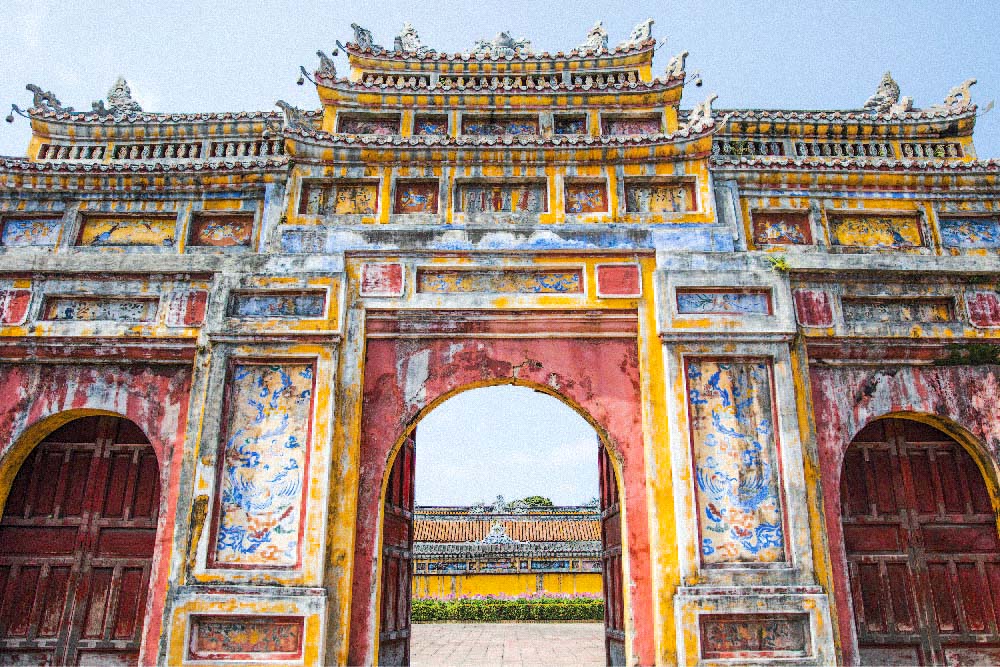
- The Imperial City (Hue Citadel): The former royal palace complex, and the historical source of Hue’s imperial cuisine traditions
- Perfume River boat trips: Many evening cruises include or are followed by a meal along the river
- Royal tombs: The tombs of emperors such as Tu Duc and Khai Dinh are set in landscaped grounds outside the city center, often paired with a countryside lunch stop
Best time to visit Hue for food travel
Hue’s weather is distinct from both Ha Noi and Ho Chi Minh City, with a pronounced dry and wet season split.
| Season | Months | Notes |
|---|---|---|
| Dry season | March–August | Warm to hot, best for extended walking and market visits |
| Wet season | September–January | Higher rainfall, with October and November prone to heavier rain and occasional flooding |
Best window: March to June offers warm, mostly dry weather without the peak heat of midsummer, making it comfortable for a full day of market visits and walking between food stops.
Frequently asked questions
Is Hue food spicier than other regions of Vietnam? Generally, yes. Central Vietnamese cuisine, including Hue’s, tends to use more chili than northern cooking and often more than southern cooking as well, particularly in dishes like bun bo Hue.
Do I need reservations for a royal-style tasting menu? It’s recommended, especially in high season, as these set-menu restaurants often have limited seating and prepare dishes to order.
Is street food in Hue safe for travelers? Street food is a core part of Hue’s culinary identity and is generally safe when eaten at busy, high-turnover stalls where food is cooked fresh to order — a good rule of thumb anywhere in Vietnam.
How many days should I spend in Hue for a food-focused trip? One full day covers the highlights, but two days allow time to pair meals with the Imperial City, a Perfume River cruise, and the royal tombs without rushing.
What’s the difference between Hue’s banh khoai and southern banh xeo? Banh khoai is smaller, thicker, and typically served with Hue’s distinctive peanut-based dipping sauce, while banh xeo (more common in the south) is larger, thinner, and usually paired with a lighter fish-sauce-based dip.
Can I combine a Hue food tour with Da Nang or Hoi An? Yes — Hue, Da Nang, and Hoi An are commonly combined in Central Vietnam itineraries, connected by a scenic 2–3 hour drive over the Hai Van Pass.
Plan your Hue food trip with TNK Travel
From guided street food walks through Dong Ba Market to a royal-style dining experience near the Imperial City, TNK Travel can build a Hue itinerary centered around the city’s food. Explore our Central Vietnam tours and Hue city tours, or get in touch with our travel consultants to add a food-focused day to your itinerary.