Introduction Ninh Binh in May

There is a reason why so many travelers describe Ninh Binh using one word before anything else, and that word is green, not simply because of trees or rice fields, but because of the way this color stretches across limestone mountains, rivers, and valleys, forming a landscape that feels both peaceful and deeply rooted in something older than tourism itself.
For years, visitors came here to admire the scenery and then move on, often treating Ninh Binh as a short stop rather than a destination worth exploring in depth, even though the landscape itself suggested there was more waiting beneath the surface.
That perception is now changing, as Ninh Binh gradually shifts into a place where heritage, culture, and performance exist within the environment itself, allowing travelers to move beyond observation and experience the destination in a more meaningful way.
The green of Ninh Binh is more than scenery
For a long time, travelers approached Ninh Binh as a visual destination, visiting Trang An, Tam Coc, or Hoa Lu, capturing images of limestone formations rising from rice fields, and continuing their journey without fully understanding the cultural layers behind what they were seeing.
Today, the change does not come from the landscape itself, but from how it is experienced, as the province begins to treat its natural environment as an active space where culture and daily life unfold naturally.
This shift turns the green of Ninh Binh into more than a visual impression, giving it narrative depth and connecting it to the way people have lived and adapted to this land over generations.
When heritage becomes a live experience
One of the most important developments in Ninh Binh’s tourism strategy is the introduction of large-scale outdoor performances that bring history and culture into real spaces, allowing visitors to experience stories in the same environment where they originally took shape.
These performances do not rely on traditional stages. Instead, they unfold within heritage sites, using rivers, mountains, and open landscapes as part of the experience, which creates a stronger connection between the story and its setting.
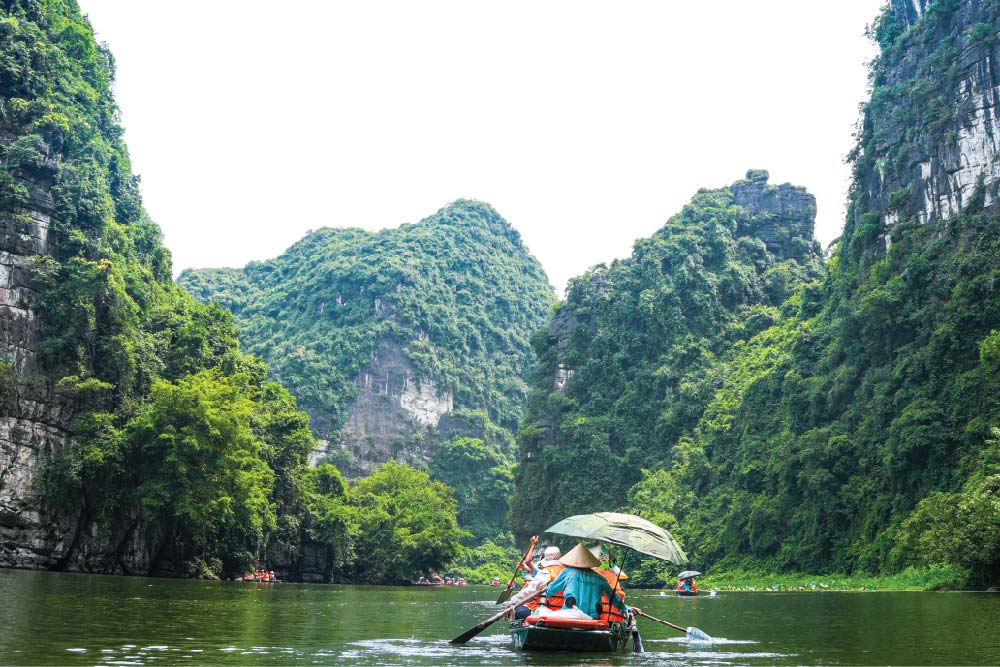
Rather than watching from a distance, visitors move through the landscape, often on small boats, observing scenes that emerge naturally around them, where music, craft demonstrations, and storytelling blend into the environment without feeling separate from it.
How the green landscape becomes part of the story

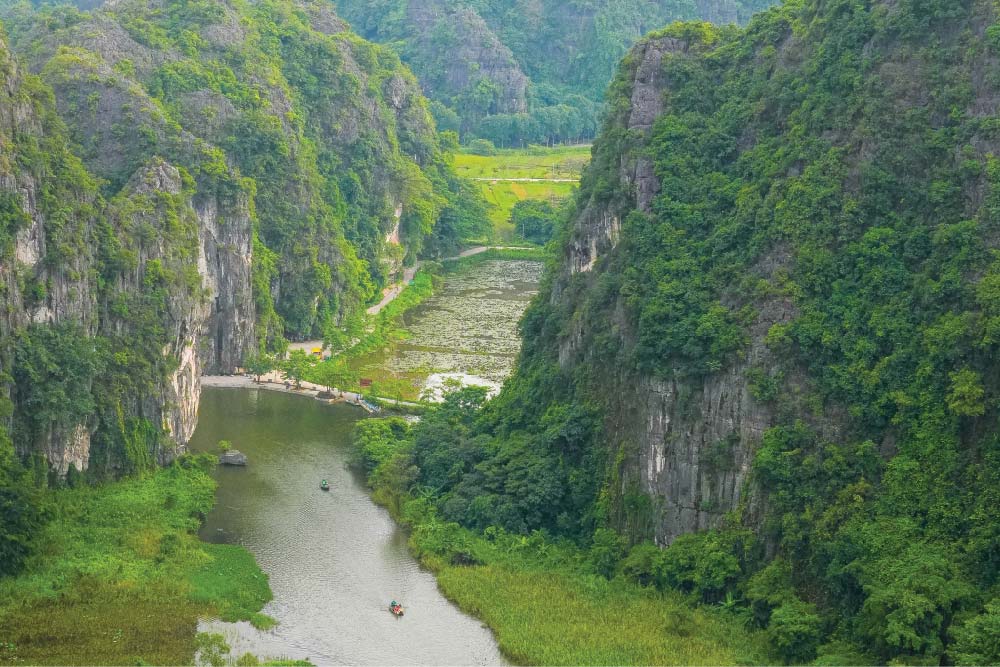
What makes these experiences stand out is how the landscape itself becomes part of the narrative, allowing the green of Ninh Binh to carry meaning rather than simply provide a visual backdrop.
Rice fields reflect cycles of life and agriculture, rivers act as long-standing connections between villages, and limestone mountains represent permanence, shaping both the physical and cultural identity of the region.
When performances unfold in this setting, each element gains context, and the environment itself helps explain the story, making the experience feel more natural and grounded in reality.
Craft villages and living traditions
These experiences also bring attention to traditional craft villages, which have always been part of Ninh Binh’s identity but were often overlooked by visitors who lacked context.
By involving real artisans, the performances show the process behind each craft, from sedge mat weaving in Kim Son to stone carving in Ninh Van, revealing the patience and skill required to maintain these traditions.
Instead of observing finished products, visitors see the work behind them, which creates a stronger connection to both the craft and the people who continue to preserve it.
Why this changes the way people travel
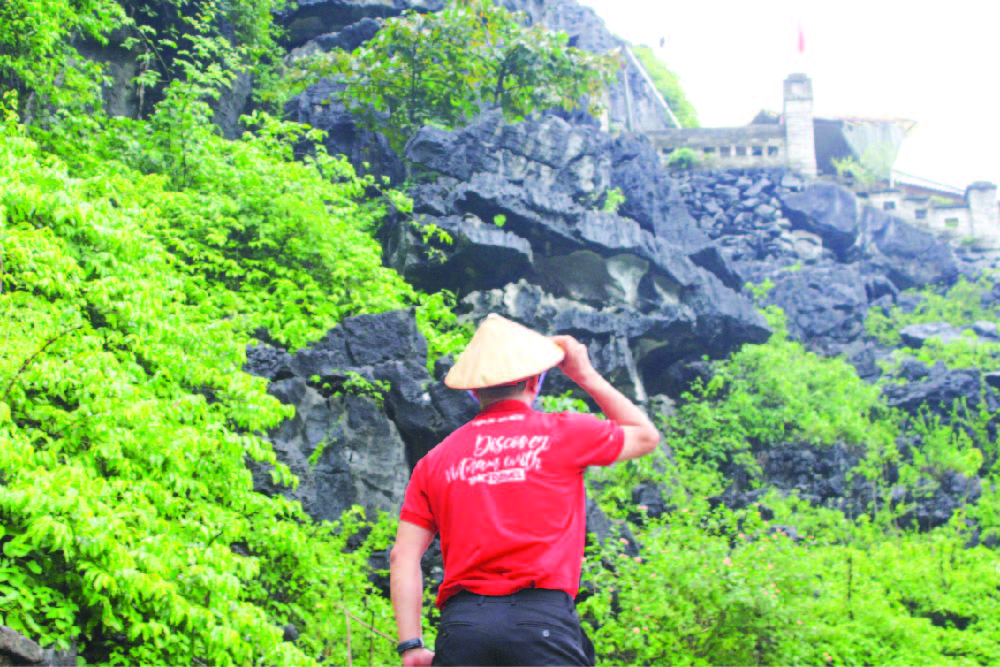
These changes are quietly reshaping how travelers experience Ninh Binh, encouraging longer stays and deeper engagement rather than quick visits focused only on scenery.
Visitors who once spent only a few hours now choose to stay overnight or longer, drawn by experiences that extend beyond daytime sightseeing, especially with the addition of evening performances.
This shift also makes the destination more engaging for families and first-time travelers, as storytelling, music, and visual elements help make history easier to understand and more enjoyable to explore.
From passive tourism to immersive experience
What is happening in Ninh Binh reflects a broader shift in travel, where destinations move away from simple sightseeing and toward experiences that allow visitors to participate in the story of a place.
Instead of focusing only on natural beauty, the region now connects culture, history, and environment into a more complete experience, one that feels less superficial and more meaningful.
In this context, the green of Ninh Binh becomes the foundation of the experience, shaping how visitors understand and interact with the destination.
How the green of Ninh Binh supports sustainable tourism
Sustainability plays an important role in this transformation, as tourism development is built around preserving the landscape rather than replacing it.
Instead of adding large structures, the province uses natural features as they are, allowing rivers, fields, and mountains to remain intact while becoming part of the experience itself.
This approach protects the identity of Ninh Binh while creating a form of tourism that feels more authentic and closely connected to the environment.
Local communities at the center of the experience
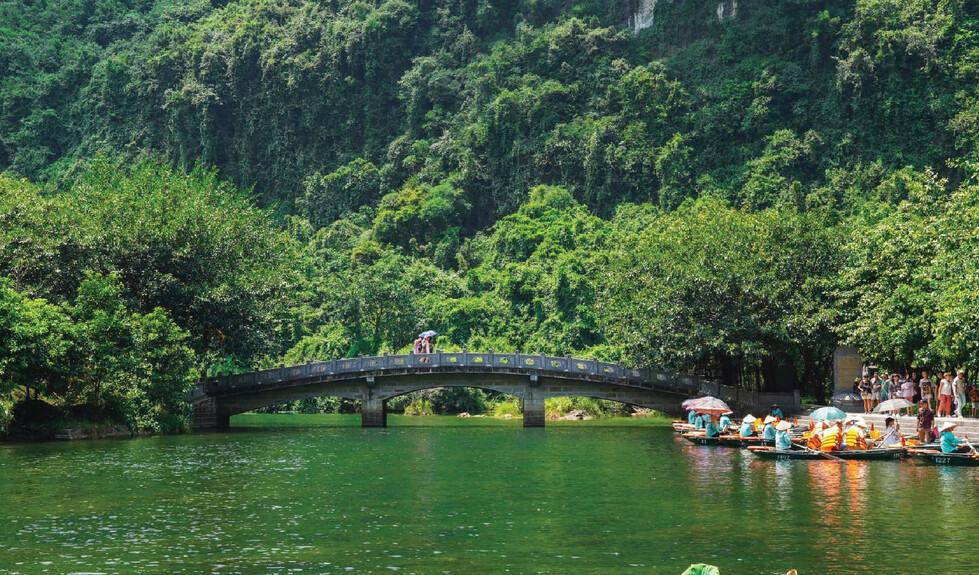
Local communities now play a much more active role, as boat rowers, artisans, and farmers become part of the visitor experience, sharing their daily life and knowledge directly.
This creates a stronger connection between visitors and the destination, because the stories being told come from real experiences rather than constructed narratives.
It also ensures that tourism benefits are distributed more evenly, supporting long-term growth while preserving cultural identity.
Final thoughts on the green of Ninh Binh

The transformation of Ninh Binh shows how a destination can evolve without losing its identity, building new experiences around what already exists rather than replacing it.
The green of Ninh Binh remains at the center of this evolution, shaping how visitors experience the region and how the region presents itself to the world.
What begins as a landscape slowly becomes something more, turning into a story that stays with you long after the journey ends.