Introduction

There is a moment in Ninh Binh when everything slows down, not because the world stops, but because the landscape itself begins to shift in a way that demands your attention without ever asking for it.
It happens quietly, almost without announcement, as the familiar green of the valley gives way to something warmer, richer, and far more fleeting, turning the rice fields of Tam Coc into a sea of molten gold that seems to glow under the early summer sun.
This is not just a seasonal change.
It is a transformation that reshapes how you experience the entire region.
Because in Ninh Binh, the landscape is never just scenery, and the golden harvest season is not simply something you look at, but something you feel, moving through it slowly, almost without realizing that you have adjusted to its rhythm.
The moment you enter the Ngo Dong River
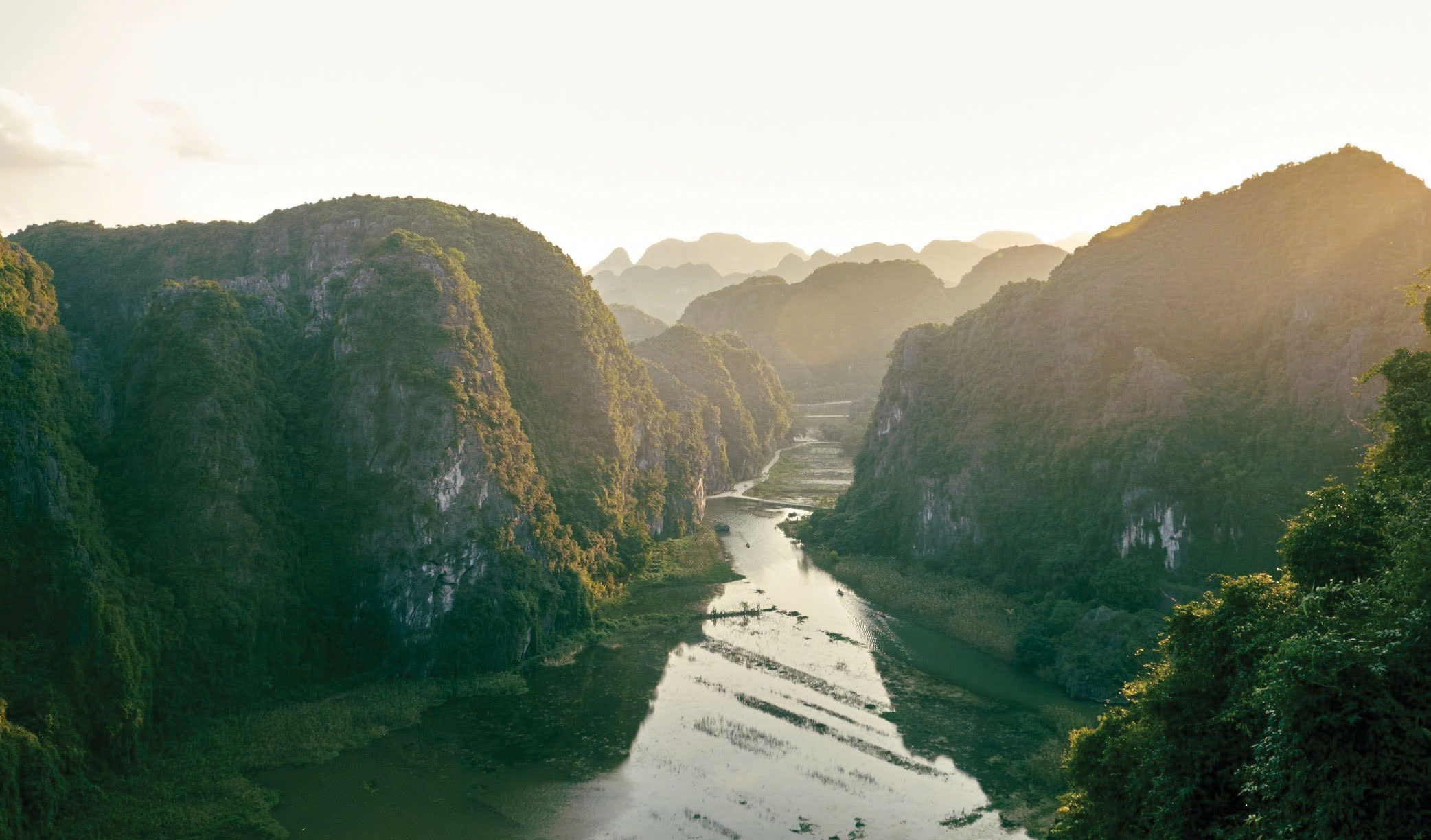
The world begins to quiet the moment you step onto the boat along the Ngo Dong River, where the usual sounds of travel disappear and are replaced by something much softer, something more deliberate.
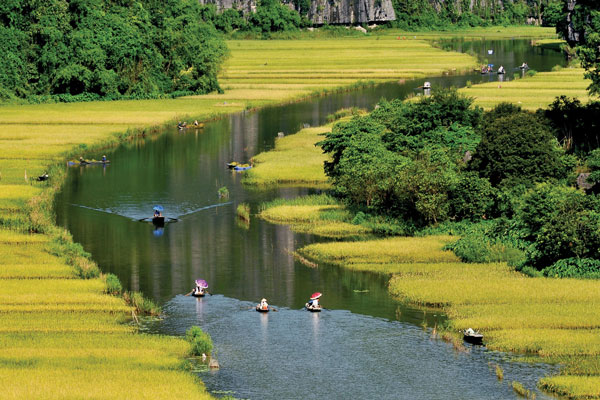
There is no engine here, no constant background noise, only the steady rhythm of wooden oars meeting the water, guided by the practiced movements of a local rower who has spent years navigating these narrow channels, sometimes with hands, sometimes with feet, always with a sense of familiarity that feels effortless.
As the boat drifts forward, the landscape opens gradually rather than all at once, revealing layers of limestone formations rising out of the fields, their presence constant and unmoving, as if they have been quietly observing the cycles of this valley long before anyone thought to visit.
In early June, that cycle reaches one of its most visually striking moments, as the rice fields surrounding the river shift into golden tones, creating a contrast between the stillness of stone and the movement of life below.
When the green turns to gold
For most of the year, Ninh Binh is defined by its green, a deep and consistent color that spreads across fields and hills, giving the region its calm and balanced atmosphere.
But during the harvest season, particularly in Tam Coc, that green begins to fade, replaced by a golden hue that feels warmer, heavier, and more alive, not just visually, but sensorially.
The air itself changes.
There is a subtle scent of ripening grain, mixed with the warmth of sun-baked earth, creating an environment that feels grounded and tangible in a way that is difficult to describe until you experience it.
From the low angle of the boat, this transformation becomes even more immersive, as the fields surround you on both sides, stretching toward the base of the limestone cliffs, reflecting light in a way that shifts constantly depending on the time of day.
It is not a static view.
It moves with you.
Why Tam Coc feels different in this season
What makes Tam Coc particularly special during this time is not just the color of the fields, but the way the entire environment seems to align with the harvest cycle, creating a sense of continuity between landscape, labor, and life.
The river becomes more than just a route.
It becomes a path through a living process.
Farmers work along the edges of the fields, moving slowly and methodically, while boats pass by at a pace that matches the environment rather than disrupting it, creating a shared rhythm that feels almost unspoken.
Unlike more structured tourist experiences, there is no clear beginning or end to this moment, and that is precisely what makes it memorable, because it allows you to exist within it rather than observe it from the outside.
The quiet weight of the limestone mountains
Throughout this experience, the limestone karsts remain constant, rising sharply from the valley floor, their surfaces marked by time, weather, and history, creating a sense of permanence that contrasts with the fleeting nature of the harvest season.
These formations are not just visual landmarks.
They shape the entire environment.
They guide the river, influence the wind, and frame the fields in a way that makes every perspective feel intentional, even though nothing here is designed.
As the light shifts throughout the day, the relationship between stone and field changes, with shadows stretching across the gold surface, softening the intensity of the color and adding depth to the landscape.
It is this interplay between permanence and change that defines Ninh Binh, and nowhere is it more visible than during the golden season.
Moving beyond the boat
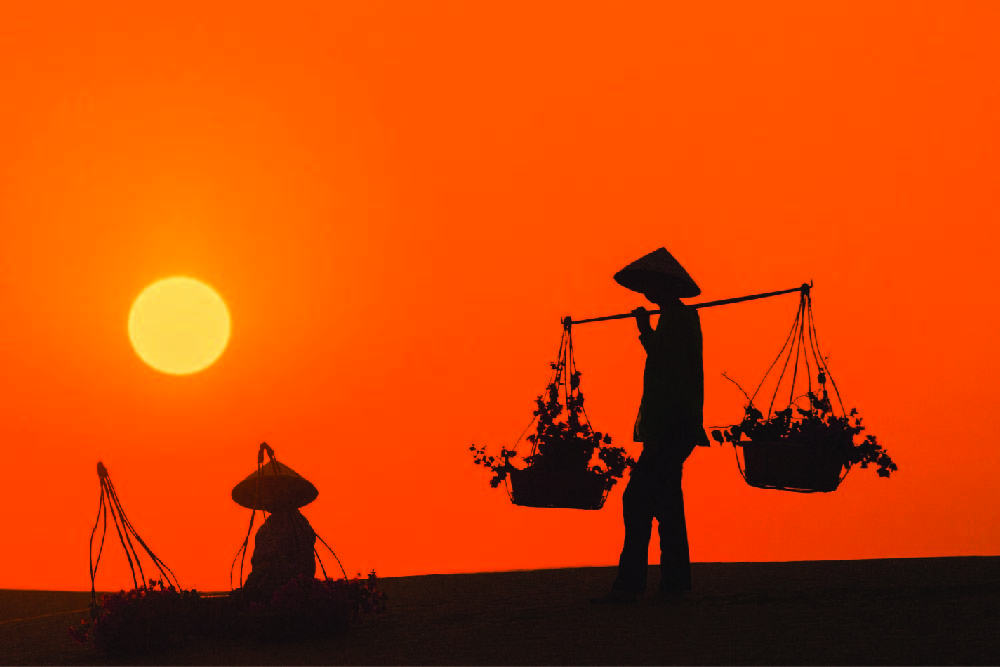
After leaving the river, the experience does not end, but instead evolves into something quieter and more personal, especially as you move away from the main routes and into surrounding villages.
Cycling toward areas like Van Lam, the environment shifts again, with narrow roads leading through gateways, small houses, and workshops where daily life continues at its own pace, largely unaffected by the presence of visitors.
Here, the golden fields become part of a larger context, connected to the people who cultivate them and the traditions that have been passed down over generations.
The transition from water to land is subtle, but it changes how you see the landscape, turning it from something you pass through into something you begin to understand.
Where the journey slows down
Once you move away from the river and into the quieter corners of Ninh Binh, something begins to shift, not in the landscape, but in the way you move through it, as the pace naturally slows without any effort, guided more by curiosity than by any fixed itinerary.
Cycling through villages like Van Lam, the roads narrow and the noise fades, replaced by the soft hum of daily life, where people sit in the shade, children pass by without urgency, and the presence of time feels less rigid, almost as if it stretches to match the rhythm of the surroundings.
It is here that the golden fields become less of a spectacle and more of a backdrop to something deeper, something lived rather than displayed, allowing you to see how the harvest season connects not only to the land, but to the routines and traditions of the people who depend on it.
Craft, patience, and the beauty of quiet work
In these villages, the experience of Ninh Binh continues through its crafts, where artisans work in small, open spaces, creating textiles and handmade goods with a level of patience that feels almost at odds with the pace of modern travel.
Watching a needle move through silk, or hands weaving materials that have been prepared over days, even weeks, changes the way you think about time, because nothing here is rushed, and nothing is made for the sake of speed.
These are not performances.
They are continuations of tradition.
And in the context of the golden season, they take on an added meaning, as the work reflects the same cycle of care, repetition, and attention that defines the harvest itself.
This connection between land and craft is subtle, but once you notice it, it becomes impossible to ignore.
Why the best moments are often unplanned
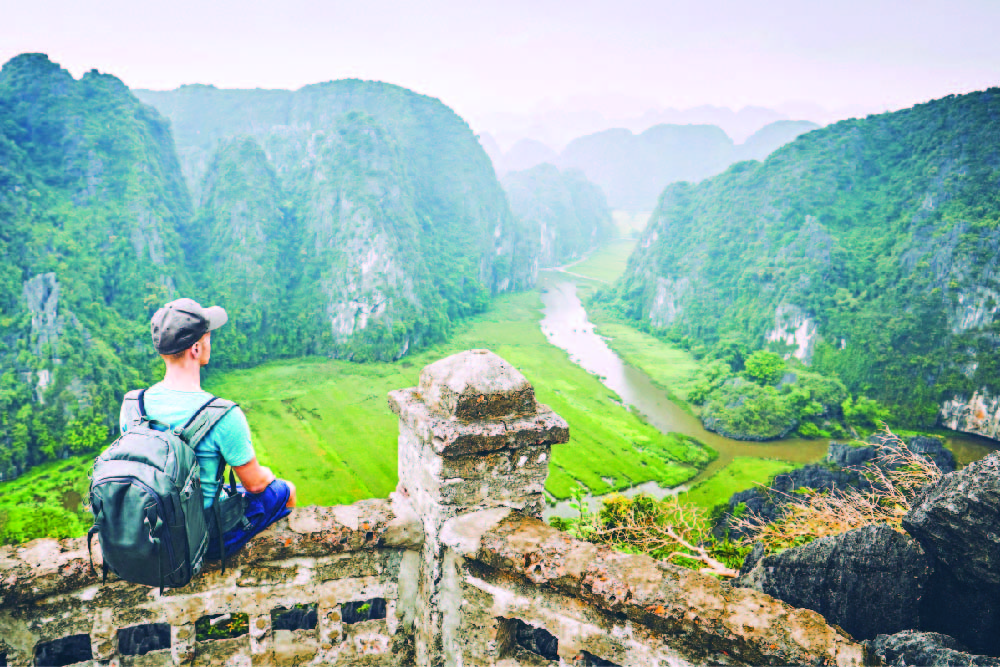
What sets Ninh Binh apart during this season is not just what you see, but what happens when you stop trying to see everything, because the most meaningful experiences often come from moments that are not part of any schedule.
You might find yourself skipping a well-known viewpoint, choosing instead to sit beside a lotus pond, watching the way light moves across the surface of the water, or how the color of the fields shifts slightly as clouds pass overhead.
There is no urgency here.
No need to capture every angle.
And in that absence of pressure, the experience becomes more personal, allowing you to notice details that would otherwise be overlooked.
This is where Ninh Binh reveals its depth, not through highlights, but through stillness.
The rhythm of the golden season
The harvest season in Tam Coc is not defined by a single moment, but by a rhythm that unfolds gradually, influenced by weather, sunlight, and the pace of farming itself.
Some days, the fields appear brighter, reflecting direct sunlight in a way that feels almost luminous, while on others, the color softens, becoming more muted and layered, especially in the early morning or late afternoon.
This variation is what makes the experience feel alive, because it changes constantly, ensuring that no two visits feel exactly the same, even within the same week.
It also means that timing matters, not in a strict sense, but in a way that encourages flexibility, allowing you to adapt your day to the conditions rather than following a fixed plan.
Best time to see the golden fields in Ninh Binh
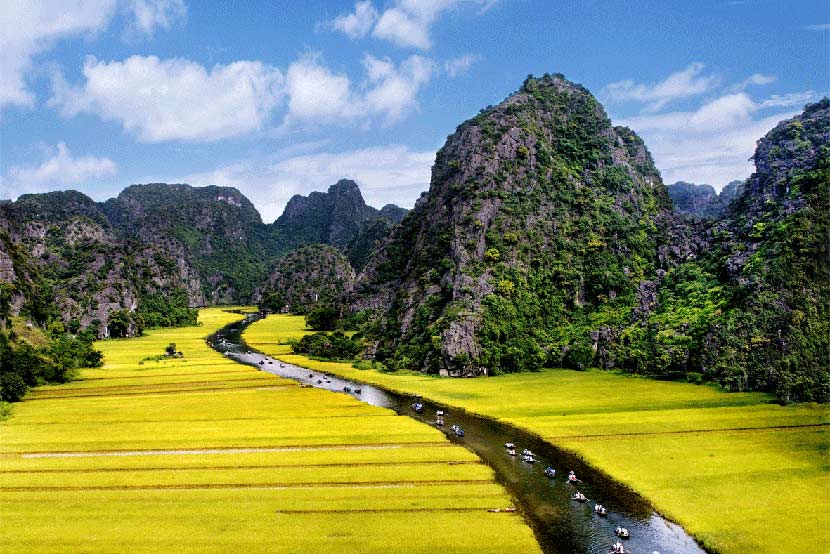
The golden season typically arrives between late May and early June, although the exact timing can vary slightly depending on the weather and the agricultural cycle of each year.
Early morning is often the most peaceful time to visit, when the air is cooler, the light is softer, and the number of visitors is still low, creating a quieter and more reflective atmosphere.
Late afternoon offers a different kind of beauty, with warmer light that enhances the golden tones of the fields and creates longer shadows across the landscape, adding depth and contrast.
Midday, while brighter, can feel more intense due to the heat, but it also reveals the full vibrancy of the color, making it a trade-off between comfort and visual impact.
How to experience Ninh Binh the right way
Experiencing Ninh Binh during this season is less about following a checklist and more about adjusting your approach to travel, allowing the environment to guide your decisions rather than the other way around.
Start your day early, when the landscape feels calm and the light is at its most gentle, then take breaks during the hotter hours instead of pushing through them, and allow time in the evening to simply walk or sit without a specific goal.
Avoid trying to visit every location in a single day, as this often leads to a rushed experience that misses the subtle moments that define the region.
Instead, focus on fewer places, but spend more time in each, allowing the details to reveal themselves naturally.
Who this experience is for
The golden season in Ninh Binh is not designed for travelers who want constant activity or structured schedules, but for those who appreciate slower travel, where the experience unfolds gradually and meaning comes from observation rather than action.
It is ideal for couples, photographers, and anyone who values atmosphere over itinerary, as well as for travelers who are willing to step away from the usual expectations of sightseeing and embrace a more intuitive way of exploring.
For families, it can also offer a different kind of experience, one that encourages patience and curiosity rather than constant movement.
Final thoughts on the rhythm of molten gold
What makes Ninh Binh during this season so memorable is not just the color of the fields, but the way everything seems to move in quiet coordination, from the flow of the river to the work in the fields and the stillness of the mountains above.
It is a place where time does not feel fixed, but flexible, where moments are not measured by what you do, but by how you experience them.
The golden fields will not last forever.
They arrive, they change, and they fade back into green.
But for a short window, they offer something rare, a reminder that travel is not always about seeing more, but about seeing differently.
And in Ninh Binh, that difference begins with the rhythm of the land, but stays with you long after you leave.