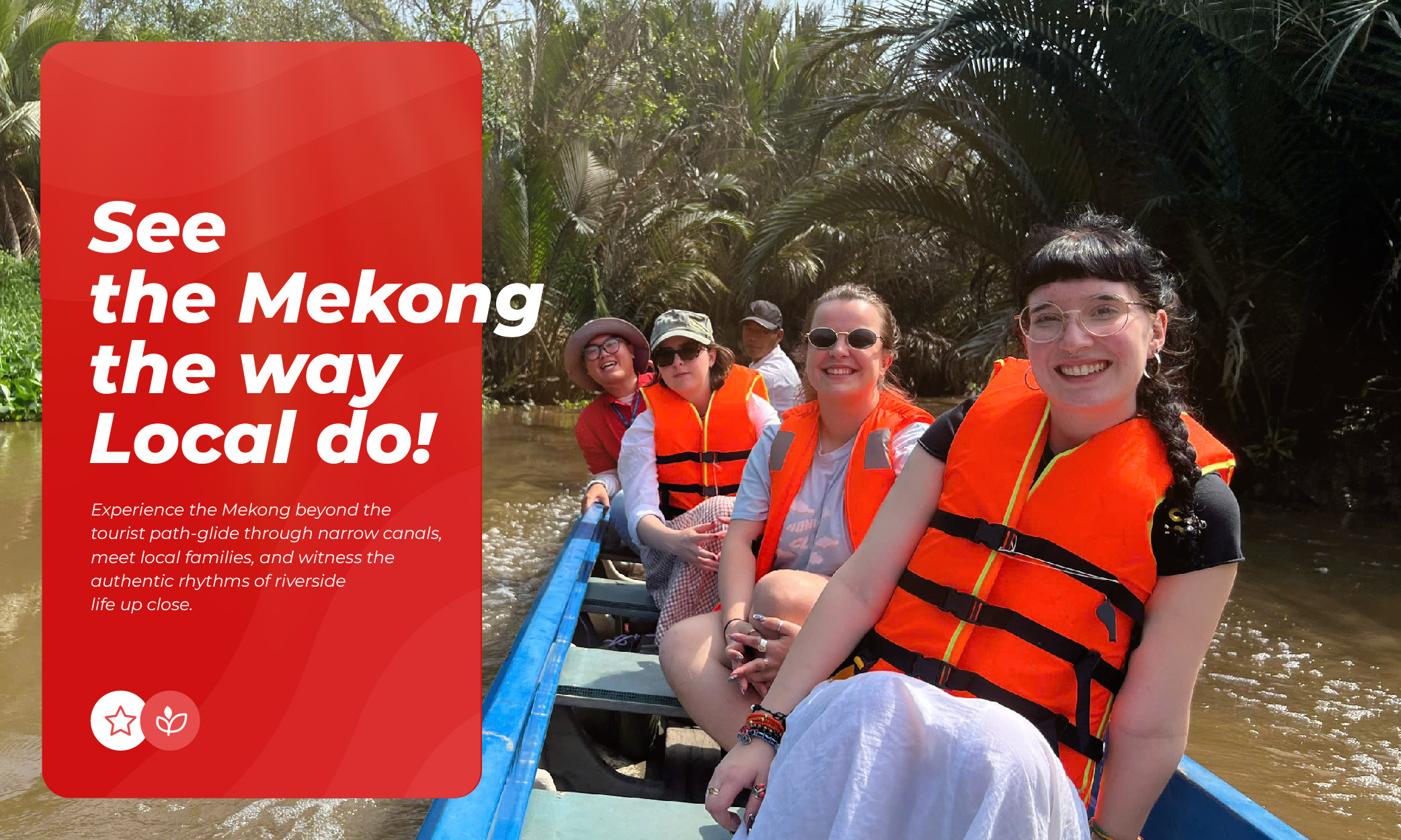
August in Southern Vietnam — Ho Chi Minh City, the Mekong Delta, Phu Quoc, Con Dao, and Vung Tau — falls firmly in the region’s rainy season. Expect hot, humid days, dependable afternoon downpours, and lush, green scenery across the Delta’s rice fields and orchards. Unlike the north, typhoons are rare this far south, which makes the rain pattern here more predictable, if not exactly light.
This guide breaks down what to expect region by region, so you can plan an August trip that works with the weather instead of around it.
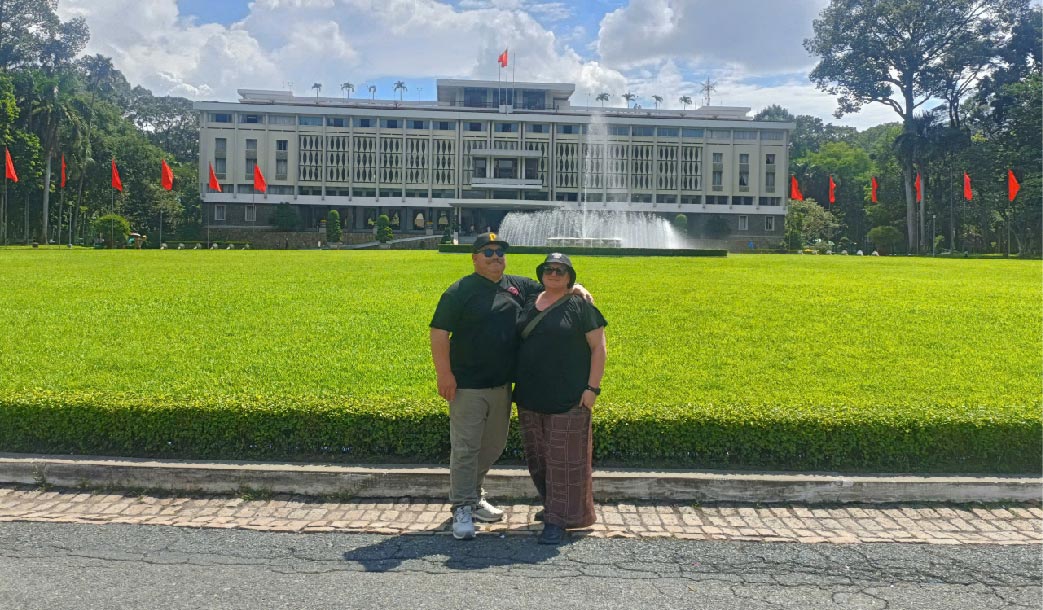
Quick answer: Southern Vietnam weather in August at a glance
| Factor | What to expect |
|---|---|
| Average temperature | 26°C–33°C (79°F–91°F) |
| Humidity | 80–90% |
| Rainfall | High — one of the wettest stretches of the year |
| Typhoon risk | Very low — the south is rarely affected by typhoons |
| Rain pattern | Short, heavy afternoon or evening downpours, usually clearing within an hour or two |
| Mekong Delta water levels | Rising, as the river’s flood season begins |
| Best time of day for activities | Morning, before afternoon storms build |
Why August is reliably rainy in the south
Southern Vietnam has a tropical monsoon climate with two seasons: a dry season from roughly December to April, and a rainy season from May to November. August sits in the heart of that rainy season, driven by the southwest monsoon, which brings consistent afternoon and evening thunderstorms across Ho Chi Minh City, the Mekong Delta, and the surrounding coast.
The good news for travelers: this region sees very little typhoon activity compared to Central and Northern Vietnam, since storms forming in the South China Sea rarely track this far south before losing strength or curving away. That means August rain here tends to be predictable — heavy, brief, and generally confined to a few hours a day — rather than the more disruptive storm systems that can affect the north and center in the same season.
Ho Chi Minh City weather in August
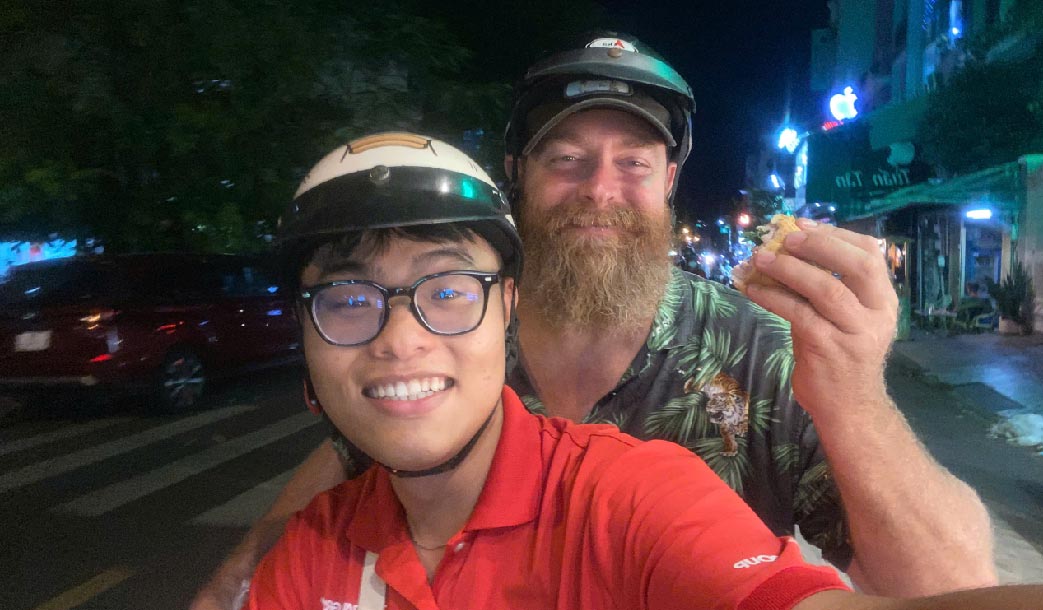
Vietnam’s largest city sees a textbook rainy-season pattern in August.
Typical conditions:
- Average high: 31–33°C (88–91°F)
- Average low: 24–25°C (75–77°F)
- Rainfall: High — among the city’s wettest months
- Rainy days: Roughly 20–22 days with measurable rainfall
- Humidity: Frequently above 85%
What this means for your trip: Mornings in Ho Chi Minh City are usually the most comfortable window for sightseeing — the Reunification Palace, Ben Thanh Market, and a walk through District 1’s French colonial landmarks are all well suited to an early start. Afternoon storms are heavy but typically brief, and the city’s café culture, rooftop bars, and covered markets make easy shelter when the rain rolls in. Flash flooding on some low-lying streets is common after the heaviest downpours, so waterproof footwear is a smart addition to your packing list.
Mekong Delta weather in August
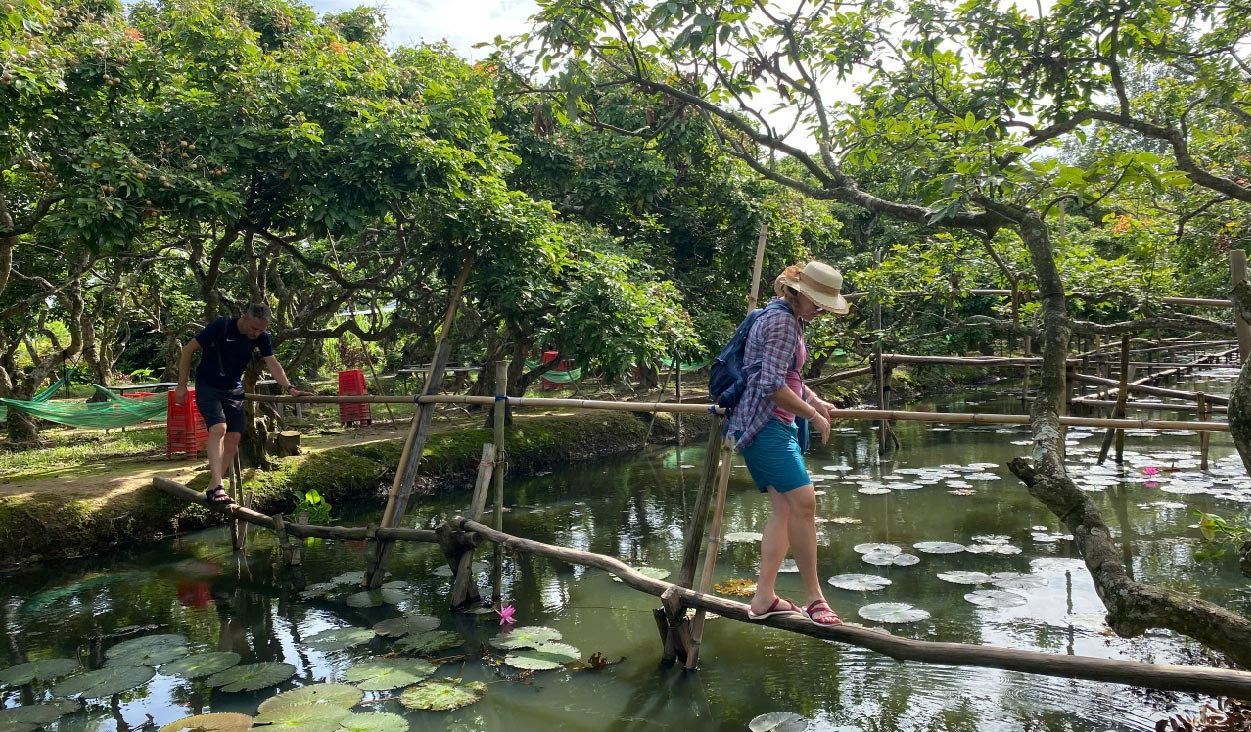
August is a distinctive month in the Mekong Delta, as the region’s flood season begins to take hold.
Typical conditions:
- Average high: 31–32°C (88–90°F)
- Average low: 24°C (75°F)
- Rainfall: High, with frequent afternoon storms
- River levels: Rising steadily as the Mekong’s annual flood pulse builds toward its peak later in the year
- Humidity: High throughout the day
What this means for your trip: Boat trips through Can Tho’s floating markets, the fruit orchards around Ben Tre, and the sam bien channels near Chau Doc remain very much on the table in August — many travelers find the lush, rain-fed greenery of the Delta at its most vivid this time of year. Early morning is the best window for floating market visits, both for cooler temperatures and to beat the daily rain. Rising water levels can also mean muddier paths in rural areas, so sturdy, quick-dry footwear is worth packing for village and orchard visits.
Phu Quoc weather in August
Vietnam’s largest island sits within the same monsoon pattern as the mainland south, with a few of its own quirks.
Typical conditions:
- Average high: 30–32°C (86–90°F)
- Average low: 24–25°C (75–77°F)
- Rainfall: High — August is one of Phu Quoc’s wettest months
- Sea conditions: The west coast (Long Beach, Duong Dong) tends to see rougher seas during the rainy season, since it faces the monsoon winds directly
What this means for your trip: August isn’t Phu Quoc’s peak beach season, and travelers focused purely on calm seas and guaranteed sun may prefer the island’s dry season from November to April instead. That said, rates are lower, crowds are thinner, and mornings frequently offer clear, swimmable conditions before afternoon storms arrive. Given the west coast’s rougher rainy-season seas, sheltered east-coast spots and boat excursions are worth checking with local operators before booking, particularly around storm warnings.
Con Dao weather in August
Con Dao, Vietnam’s remote island archipelago, follows a similar rainy-season pattern to the rest of the south.
Typical conditions:
- Average high: 29–31°C (84–88°F)
- Average low: 25°C (77°F)
- Rainfall: Moderate to high
- Sea conditions: Generally calmer than Phu Quoc’s west coast, though still subject to afternoon storms
What this means for your trip: Con Dao’s diving and snorkeling season technically runs strongest from March to September, which means August still falls within a reasonably good window despite the rain. Visibility can dip slightly after heavy storms, so scheduling dive trips for the days following clearer weather, where possible, tends to give the best underwater conditions.
Vung Tau weather in August
As Ho Chi Minh City’s closest beach getaway, Vung Tau shares the mainland’s rainy-season profile.
Typical conditions:
- Average high: 31–32°C (88–90°F)
- Average low: 25°C (77°F)
- Rainfall: High, with frequent afternoon showers
- Sea conditions: Can be choppier than the dry season, though generally manageable for swimming
What this means for your trip: Vung Tau remains a popular weekend escape from Ho Chi Minh City in August, with beach time best scheduled for the morning hours before storms build. The city’s seafood restaurants and lighthouse viewpoints make solid rainy-afternoon alternatives.
Typhoon risk: a non-issue in the far south
Unlike Central and Northern Vietnam, the far south rarely experiences direct typhoon impact. Tropical storms forming over the South China Sea typically make landfall further north, and by the time weather systems track this far south, they’ve usually weakened significantly or dissipated. This is one of the more reassuring aspects of planning an August trip to Ho Chi Minh City, the Mekong Delta, or the southern islands — the rain is a near-daily certainty, but major storm disruption is not.
Pros and cons of visiting Southern Vietnam in August
Advantages
- Lush, green scenery across the Mekong Delta’s rice paddies and orchards
- Very low typhoon risk compared to Central and Northern Vietnam
- Fewer crowds and lower rates, particularly in Phu Quoc, outside its peak dry-season months
- Predictable rain pattern — most storms are brief and confined to the afternoon and evening
Challenges
- High humidity throughout the day, even between rain showers
- Rougher seas on Phu Quoc’s west coast, limiting some boat and beach days
- Occasional street flooding in low-lying parts of Ho Chi Minh City after heavy storms
- Rising water levels in the Mekong Delta, which can affect rural path conditions
What to pack for Southern Vietnam in August
- Lightweight, quick-dry clothing
- A compact umbrella or light rain jacket — expect to use it most days
- Waterproof or quick-dry footwear for city streets and Delta villages
- A dry bag for boat trips and market visits
- Reusable water bottle — the combination of heat and humidity makes dehydration a real risk
- A light layer for air-conditioned buses, restaurants, and hotel lobbies, which run cold by contrast
How to structure your itinerary around August rain
The daily rhythm in Southern Vietnam during August is fairly consistent, which makes it easy to plan around:
- Early morning (6:00–10:00 AM): Usually the clearest window of the day. Best time for floating markets, orchard visits, and outdoor sightseeing in Ho Chi Minh City.
- Midday to afternoon (11:00 AM–4:00 PM): Highest likelihood of rain. Good time for museums, indoor markets, cooking classes, or a long lunch.
- Late afternoon to evening: Skies often clear again, making this a strong window for rooftop dining, night markets, and evening boat cruises on the Saigon River.
Is August a good time to visit Southern Vietnam? Our honest take
August rewards travelers who don’t mind planning around a predictable daily rain window and who value lush scenery and lower crowds over guaranteed dry, sunny days. It’s a particularly good fit for Ho Chi Minh City and Mekong Delta itineraries, where rain rarely disrupts plans for more than an hour or two at a time. Travelers whose primary goal is calm seas and consistent sun in Phu Quoc may prefer the island’s dry season from November to April instead — though August still works well for a lower-cost, lower-crowd visit with some flexibility built in.
Frequently asked questions
Is it safe to travel to Southern Vietnam during rainy season? Yes. The south sees very little typhoon activity, and most rain arrives as short, predictable afternoon storms rather than prolonged severe weather.
Is August a good time for the Mekong Delta? Yes — this is when the Delta’s scenery is at its greenest, though rising water levels mean some rural paths can be muddier than in the dry season.
Should I avoid Phu Quoc in August? Not necessarily, but travelers prioritizing calm seas and guaranteed sunshine may prefer Phu Quoc’s dry season (November–April). August offers lower rates and fewer crowds in exchange for a higher chance of rain and rougher west-coast seas.
How much rain should I expect in Ho Chi Minh City in August? Expect rain on most days, typically as a heavy but short downpour in the afternoon or evening. Mornings are usually dry and are the best time for outdoor sightseeing.
Do typhoons affect Ho Chi Minh City or the Mekong Delta? Rarely. Typhoons overwhelmingly affect Central and Northern Vietnam; the far south is much less exposed to direct storm impact.
Plan your August trip with TNK Travel
Southern Vietnam’s August rain follows a dependable daily pattern, which makes it entirely possible to build a smooth, rewarding itinerary around Ho Chi Minh City, the Mekong Delta, and the southern islands. Our team can help structure your days around the morning-clear, afternoon-rain rhythm typical of this season, so you get the most out of your time on the ground.
Explore our Southern Vietnam tour packages or reach out for a custom itinerary tailored to your travel dates.