
September is a genuine turning point for Northern Vietnam’s weather. The heavy heat and humidity of summer start loosening their grip, rainfall gradually tapers off, and by the back half of the month, the region begins settling into the cooler, clearer conditions that make autumn one of the most popular times to visit. That said, September isn’t uniformly dry or predictable — timing, region, and a bit of luck with typhoon season all still play a role.
Here’s what to actually expect across Northern Vietnam this month, region by region, along with how to plan around it.
The general pattern: early September vs. late September

Northern Vietnam’s September weather splits fairly cleanly into two halves.
Early September still carries the tail end of summer’s rainy season — expect warm, humid days, occasional heavy showers, and average highs in the range of 28–31°C (82–88°F). Humidity remains noticeably high, often sitting around 80–85%.
Late September is where the shift really shows. Rainfall drops off significantly, skies clear more often, humidity becomes more manageable, and evenings start cooling into the low-to-mid 20s°C (75–79°F). This is the window most travelers are picturing when they think of Northern Vietnam’s “best” autumn weather.
If your travel dates are flexible, leaning toward the second half of September generally means a better chance of clear skies and comfortable temperatures.
Ha Noi

Ha Noi in September trades summer’s intensity for something more comfortable. Daytime temperatures typically run 26–31°C (79–88°F), with evenings dropping to a pleasant 24–26°C (75–79°F). Rainfall is still present — averaging around 220–250mm for the month — but it’s noticeably lighter than the peak of summer, and showers tend to be short rather than day-long downpours.
This is also when Ha Noi’s streets fill with the scent of “hoa sữa,” or milk flower blossom, a seasonal signature many locals associate with the start of autumn. September also brings two notable events: Vietnam’s National Day on September 2nd, marked by parades and celebrations around Ba Dinh Square, and the Mid-Autumn Festival later in the month, when the Old Quarter lights up with lanterns, lion dances, and a genuinely festive evening atmosphere.
Bottom line: a good month for walking Ha Noi’s Old Quarter, exploring Hoan Kiem Lake, and enjoying the city without summer’s oppressive heat.
Ha Long Bay
Ha Long Bay is the one destination in this guide where September comes with a real caveat: typhoon risk. September sits within the region’s typhoon season, and while many days bring exactly the misty, atmospheric conditions the bay is famous for, storms can and do occasionally disrupt cruise schedules, particularly earlier in the month.
Average temperatures run 25–30°C (77–86°F), with warm water around 26°C (79°F) and rainfall averaging roughly 220mm for the month, typically falling in short afternoon showers rather than sustained rain. Conditions tend to improve as the month goes on, with the second half of September through November generally considered a more reliable window than the height of summer.
Practical tip: if you’re set on Ha Long Bay in September, build some flexibility into your itinerary and keep an eye on the forecast in the days leading up to your cruise. If a storm is tracking toward the region, Ninh Binh makes an excellent backup — its karst scenery is often compared to “Ha Long Bay on land,” and it’s far less exposed to coastal storm disruption.
Sa Pa, Ha Giang, and Mu Cang Chai

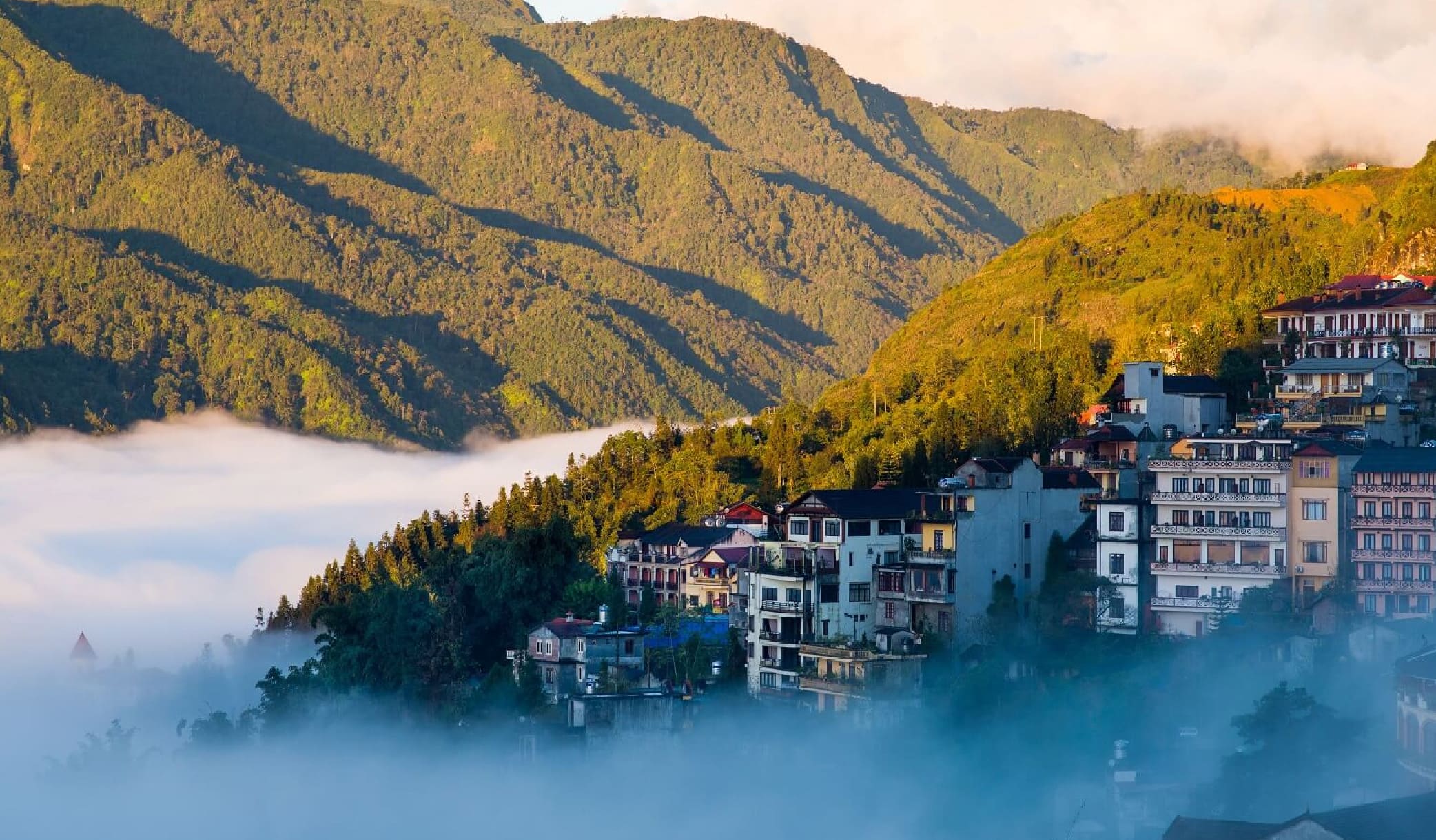
This is arguably Northern Vietnam’s best-timed region for a September visit. While the lowlands are still working through the last of summer’s humidity, the northern mountains are already shifting into clearer, cooler, and genuinely spectacular conditions.
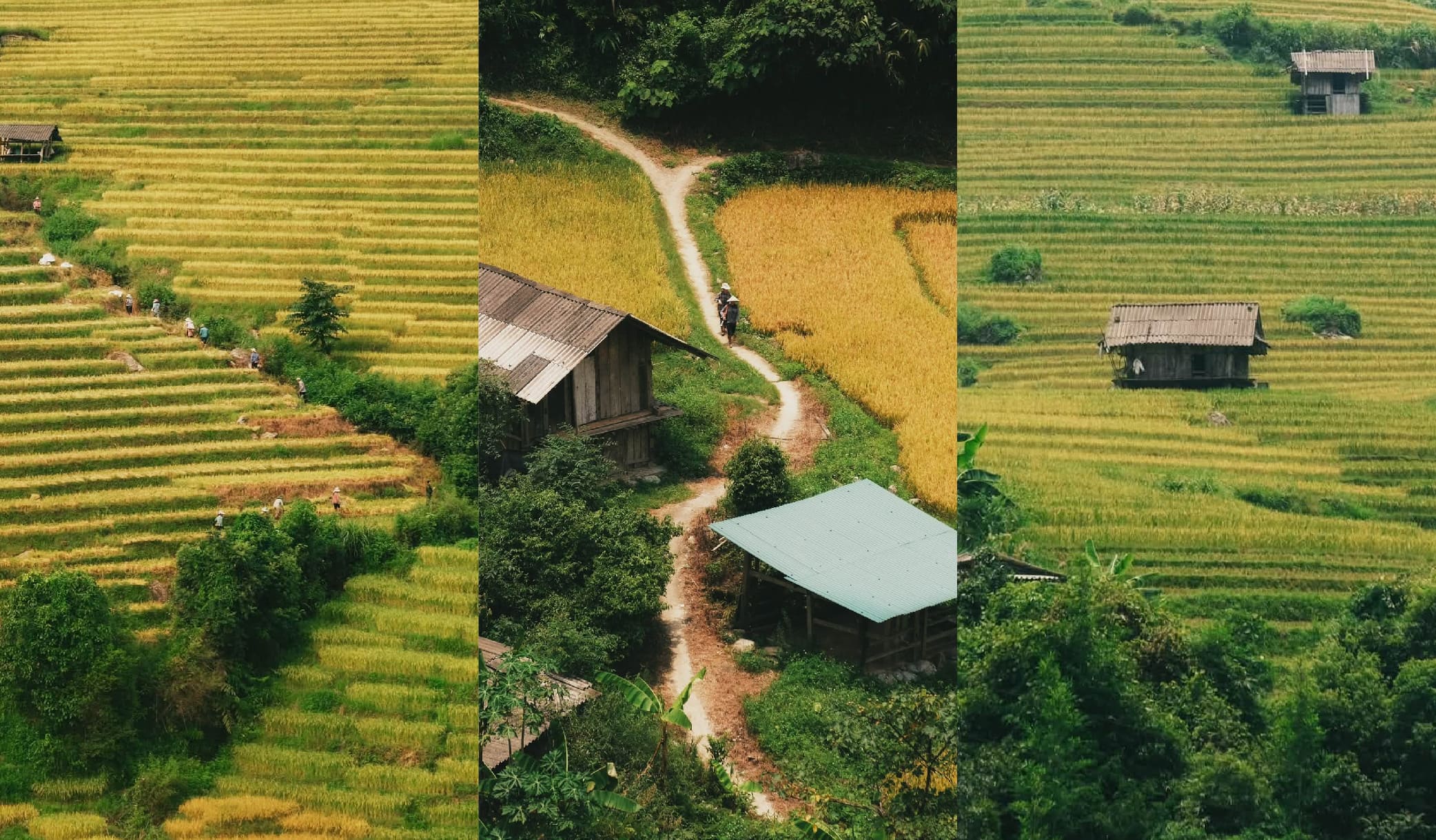
September is peak golden rice terrace season across Sa Pa, Ha Giang, and Mu Cang Chai, as the fields shift from green to gold ahead of the harvest. Average temperatures hover around 28°C during the day, cooling noticeably at night, and while some rain is still possible early in the month, trekking conditions steadily improve as September progresses. Skies tend to be clearer here than in the lowlands, making it a strong month for both trekking and photography.
Bottom line: if golden terraces and highland trekking are the priority, September — especially the back half — is one of the best windows on the calendar.
Ninh Binh
Ninh Binh runs slightly warmer and wetter than the northern mountains in September, with daytime highs around 31–32°C (88–90°F) and roughly 230mm of rainfall spread across around 14 rainy days. That said, the rain here tends to be manageable rather than disruptive — boat trips through Tam Coc or Trang An can usually work around short showers, and the lush, green landscape actually benefits from the season’s rainfall.
Ninh Binh is also worth keeping in mind as a flexible alternative if Ha Long Bay’s weather looks uncertain on a given week, since it sits further inland and is less exposed to coastal storm systems.
Typhoon season: what travelers should know

September falls within Northern Vietnam’s broader typhoon season, which generally runs from around August through October. This doesn’t mean a trip is likely to be disrupted — many September weeks pass with nothing more than routine afternoon showers — but it does mean sudden weather changes are possible, particularly along the coast around Ha Long Bay and Cat Ba.
A few honest, practical points:
- Coastal areas carry more risk than inland destinations. Ha Long Bay is more exposed than Ha Noi, Ninh Binh, or the northern highlands.
- Cruise operators do cancel or reschedule trips when storms are forecast, for safety reasons — this is standard practice, not a sign of a poorly run tour.
- Building a buffer day or two into a Ha Long Bay itinerary gives you room to shift plans if a storm is tracking through, rather than losing the experience entirely.
- Travel insurance that covers weather-related disruptions is worth having for any September trip that includes coastal Vietnam.
None of this should discourage a September trip — it’s simply worth planning with the season’s real character in mind, rather than assuming guaranteed sunshine.
What to pack for Northern Vietnam in September
- Light, breathable clothing for warm, humid days, especially early in the month
- A packable rain jacket, since short showers remain likely even as the month progresses
- A light layer for evenings, particularly in Sa Pa and the northern highlands, where nights cool down noticeably
- Comfortable trekking shoes if Sa Pa, Ha Giang, or Mu Cang Chai are on your route
- Sun protection for the clearer, sunnier days that become more frequent as September goes on
Suggested September itinerary logic
Given the regional differences, a common and effective approach is to structure a September trip around the calendar itself:
- Early September: Focus on Ha Noi and Ninh Binh, where rain is more manageable and city or river-based activities aren’t as weather-dependent as a coastal cruise.
- Mid-to-late September: Shift toward Ha Long Bay and the northern highlands (Sa Pa, Ha Giang, Mu Cang Chai), once typhoon risk typically eases and the golden rice terraces are at their peak.
This isn’t a hard rule — plenty of trips work well with a different order — but it’s a reasonable way to stack the odds in favor of good weather for the parts of your trip most dependent on it.
FAQ
Is September a good time to visit Northern Vietnam? Yes, especially the second half of the month, when rainfall decreases and temperatures become more comfortable. Early September still carries some late-summer humidity and rain.
Is Ha Long Bay safe to visit in September? Generally yes, though September falls within typhoon season, so occasional cruise disruptions are possible, particularly earlier in the month. Building flexibility into your itinerary is a sensible precaution.
Is September a good time for trekking in Sa Pa? Yes — September is one of the better trekking windows, coinciding with the golden rice terrace harvest season and generally clearer skies than the northern lowlands see at the same time.
What’s the best backup plan if Ha Long Bay weather looks bad? Ninh Binh is a strong alternative, offering similar karst scenery with less exposure to coastal storm systems.
Does it rain every day in Northern Vietnam in September? No. Rain is common, especially early in the month, but it typically comes as short showers rather than sustained all-day rain, and dry, clear days become more frequent as September progresses.
Planning your September trip
Northern Vietnam in September rewards travelers who plan around the season’s real pattern rather than expecting either guaranteed sunshine or constant rain — cooling temperatures, golden terraces in the highlands, and a genuine shift toward autumn, with a manageable amount of typhoon-season uncertainty along the coast. Structuring an itinerary with a little flexibility, especially around Ha Long Bay, is the simplest way to make the most of everything the month has to offer.





