Ho Chi Minh City is one of the most energetic destinations in Vietnam. For many travelers, it becomes their first introduction to the country’s fast-moving streets, coffee culture, local food, and daily rhythm of life.
The city can feel overwhelming at first. Motorbikes move endlessly through intersections, street food stalls appear on nearly every corner, and modern skyscrapers rise beside old French colonial buildings. But beneath the intensity is a city full of character, history, and contrast.
Whether you are visiting for a few days or planning a longer stay, Ho Chi Minh City offers far more than just famous landmarks. The experience comes from the combination of local life, food, culture, and the constant movement that defines the city.
Where to stay in Ho Chi Minh City
One of the first questions travelers ask is where they should stay.
For first-time visitors, District 1 is usually the best choice. Most major attractions, restaurants, cafés, and nightlife areas are located here, making it convenient for exploring the city.
District 3 is another excellent option. It feels slightly quieter and more local while still being close to central attractions. Tree-lined streets, cafés, and a slower atmosphere make it appealing for travelers who want balance between convenience and comfort.
If you prefer a more modern environment, areas like Thao Dien in District 2 or Phu My Hung in District 7 offer a different side of Ho Chi Minh City, with international restaurants, newer developments, and a calmer atmosphere.
Choosing the right area changes the experience significantly because traffic in the city can make short distances feel much longer.
Independence Palace
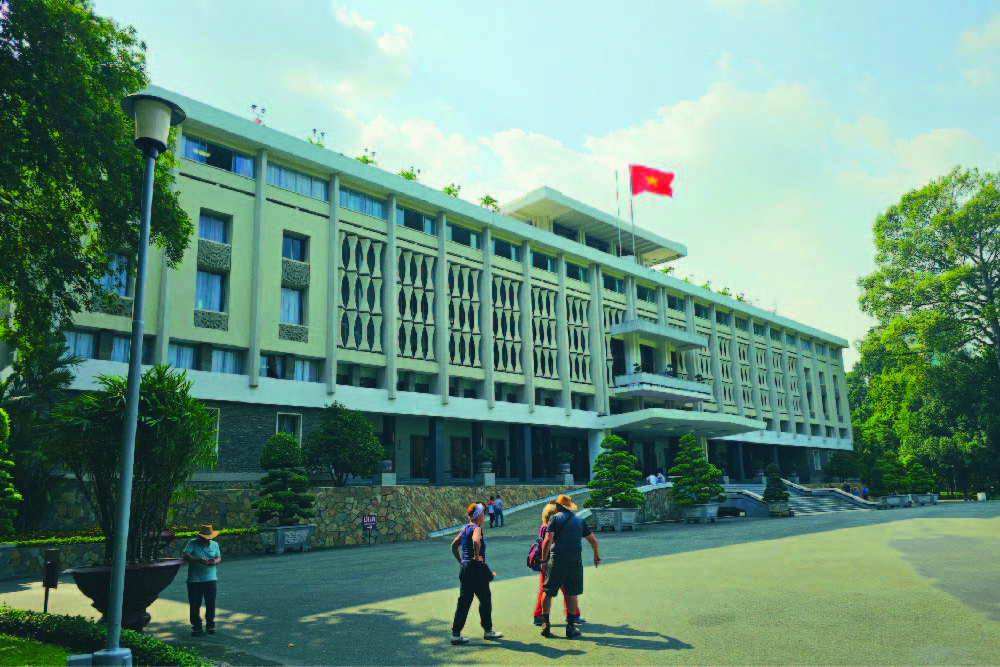
135 Nam Ky Khoi Nghia Street, Ben Thanh Ward, District 1, Ho Chi Minh City
The Independence Palace remains one of the most historically important attractions in Ho Chi Minh City.
The building became internationally recognized during the Fall of Saigon in 1975, when tanks entered through the palace gates, marking the end of the Vietnam War.
Today, visitors can explore multiple floors of the palace, including meeting rooms, reception halls, command areas, and underground bunkers. Walking through the building feels like stepping into another era, as many rooms remain preserved in their original style.
The palace grounds also contain military vehicles and open green spaces that provide a contrast to the busy streets outside.
For travelers interested in Vietnam’s modern history, this is one of the city’s essential stops.
War Remnants Museum
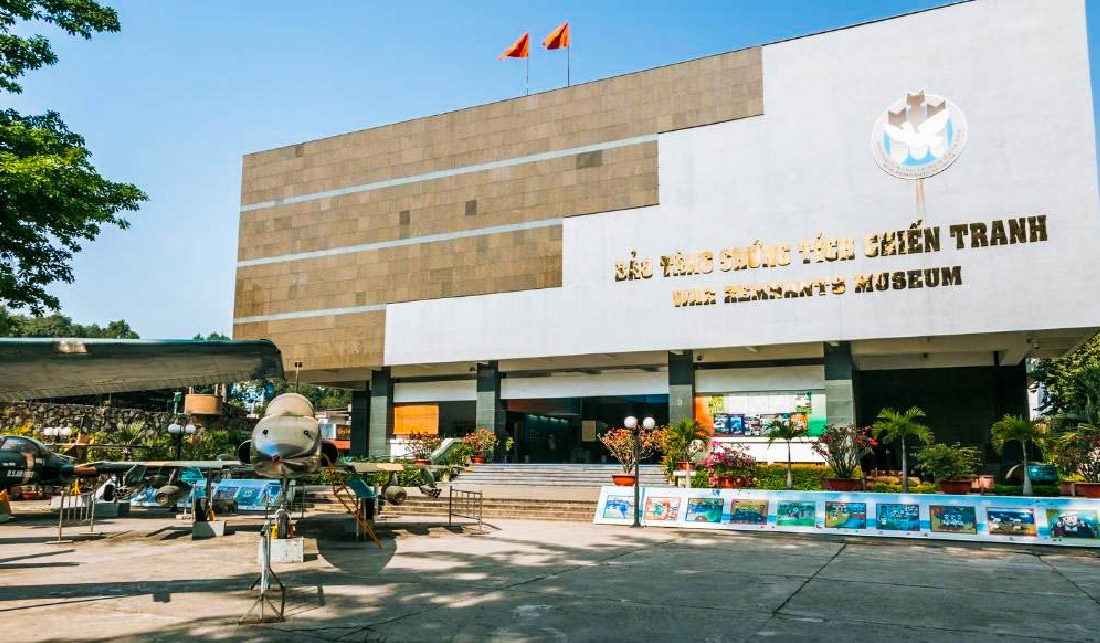
28 Vo Van Tan Street, Ward 6, District 3, Ho Chi Minh City
Located in District 3, the War Remnants Museum offers one of the most emotional experiences in Ho Chi Minh City.
The museum focuses on the Vietnam War and its long-term effects on the country and its people. Exhibits include photographs, military equipment, and historical documentation.
Some sections can be difficult to experience because they contain graphic imagery related to war and Agent Orange. However, visitors can choose which areas they wish to enter.
Outside the museum, military aircraft, tanks, and helicopters are displayed in the courtyard.
The museum becomes crowded later in the day, so visiting early in the morning usually provides a quieter experience.
Saigon Central Post Office
2 Cong Xa Paris Street, Ben Nghe Ward, District 1, Ho Chi Minh City
The Saigon Central Post Office is one of the city’s most recognizable colonial buildings.
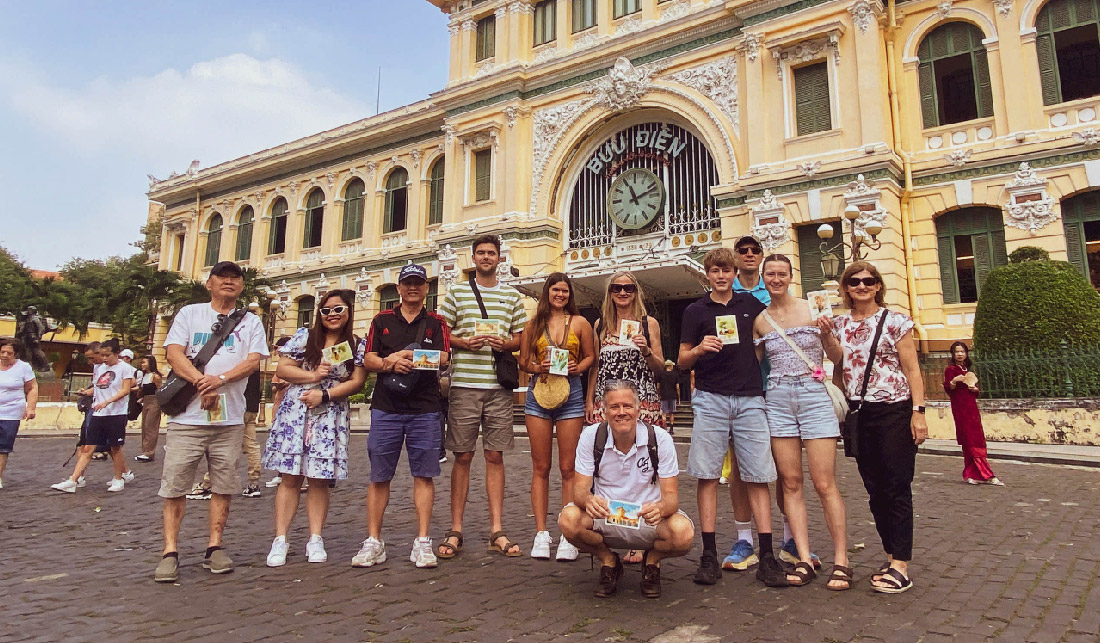
Built during the French colonial period, the post office combines European architecture with local details. The interior features high ceilings, arched windows, and a large portrait of Ho Chi Minh.
Despite its historical appearance, the building still functions as an active post office today.
Many travelers visit not only for the architecture but also to buy postcards and souvenirs. The atmosphere inside feels calmer than the busy streets outside, making it a pleasant place to slow down for a while.
The post office sits directly beside the Notre Dame Cathedral of Saigon, creating one of the city’s most iconic photo areas.
Ho Chi Minh City Book Street
1 Cong Xa Paris Street, Ben Nghe Ward, District 1, Ho Chi Minh City
Right next to the post office is Ho Chi Minh City Book Street, one of the quieter corners of District 1.
The small pedestrian street is lined with bookstores, cafés, and shaded seating areas. Compared to the constant movement elsewhere in the city, Book Street feels calm and relaxed.
Locals often come here to read, work, or enjoy coffee in the shade.
For travelers exploring nearby attractions, it provides a comfortable place to pause before continuing through the city.
Nguyen Hue Walking Street
Nguyen Van Binh Street, Ben Nghe Ward, District 1, Ho Chi Minh City
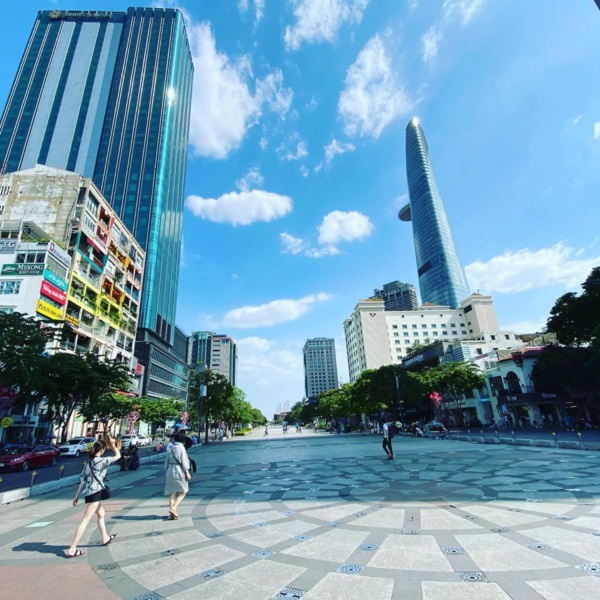
Nguyen Hue Walking Street represents a more modern side of Ho Chi Minh City.
Stretching from the Saigon River toward the Ho Chi Minh Statue, the boulevard becomes especially active during evenings and weekends.
Street performers, events, and social gatherings regularly fill the area. One of the most recognizable sights here is the Café Apartments building, where old apartments have been transformed into cafés, restaurants, and small creative spaces.
At sunset and nighttime, Nguyen Hue becomes one of the city’s most lively public spaces.
Ho Chi Minh Statue and People’s Committee Building
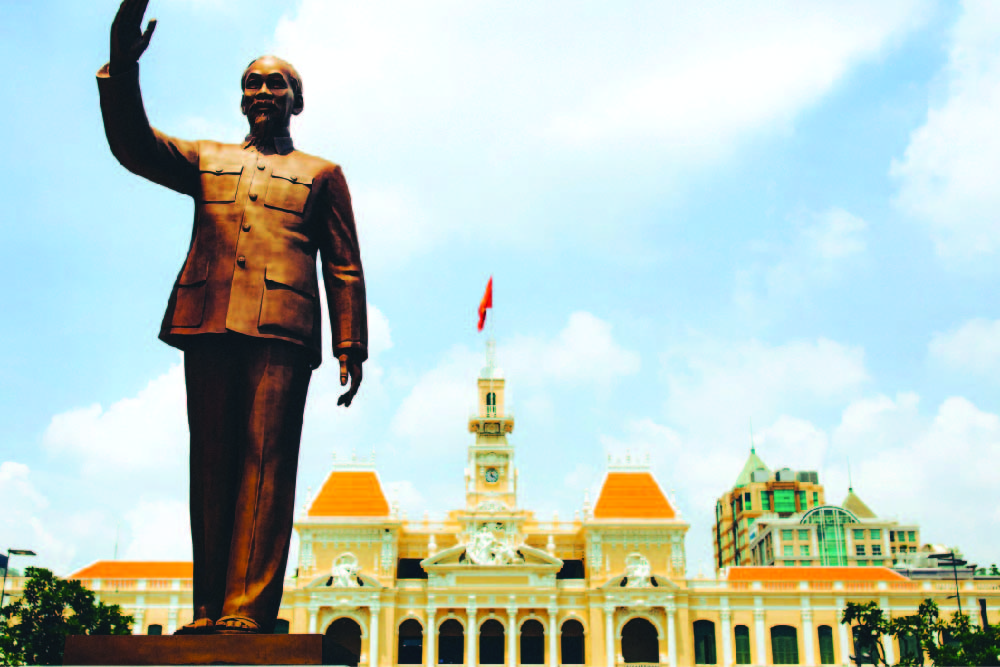
Nguyen Hue Boulevard, District 1, Ho Chi Minh City
At the end of Nguyen Hue Walking Street stands the Ho Chi Minh Statue, with the People’s Committee Building behind it.
The French colonial architecture of the building creates one of the city’s most photographed locations.
During the evening, the building lights up, creating a very different atmosphere compared to daytime.
Even travelers who are not particularly interested in architecture usually stop here because the combination of open space, lighting, and historical design makes the area visually impressive.
Ben Thanh Market
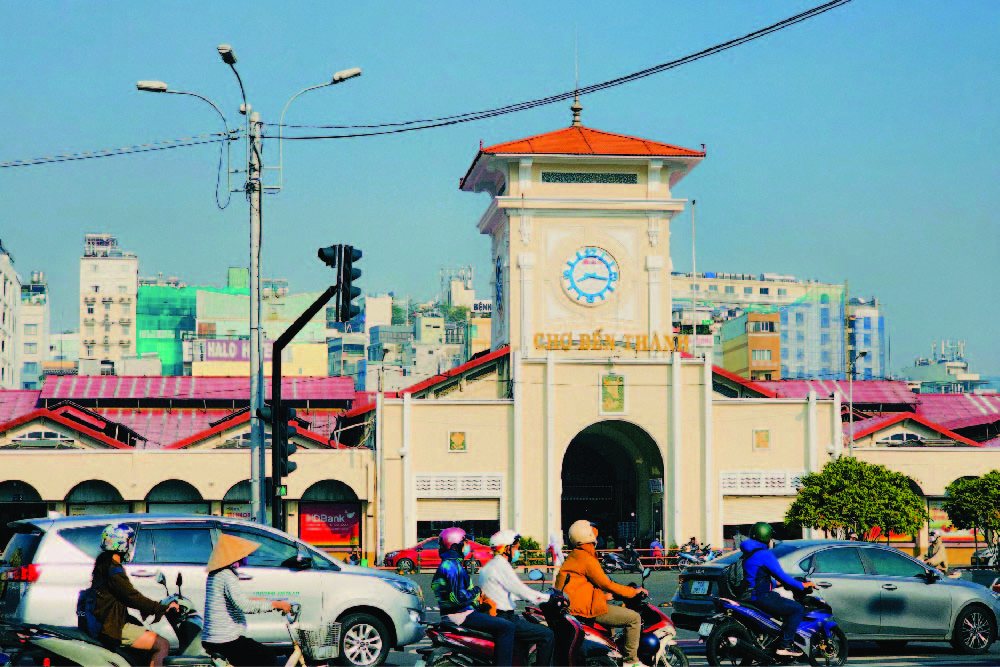
Le Loi Street, Ben Thanh Ward, District 1, Ho Chi Minh City
Ben Thanh Market remains one of Ho Chi Minh City’s most famous attractions.
Inside the market, visitors can find clothing, souvenirs, local snacks, coffee, and countless small stalls selling goods.
The market can feel crowded and chaotic, especially during peak hours, but that energy is also part of the experience.
Travelers should expect bargaining here, as many prices are initially set higher for tourists.
While some visitors come mainly for shopping, many simply visit to experience the atmosphere and local movement inside the market.
Museum of Fine Arts
97A Pho Duc Chinh Street, District 1, Ho Chi Minh City
The Ho Chi Minh City Museum of Fine Arts offers a quieter and more artistic experience.
Located near Ben Thanh Market, the museum is housed inside a beautiful colonial-era building with worn textures and old architectural details that give the space a unique atmosphere.
Inside, visitors can explore paintings, sculptures, and rotating exhibitions spread across several buildings.
The museum feels less commercial than many major attractions, making it especially enjoyable for travelers looking for a slower cultural experience.
Saigon Skydeck
36 Ho Tung Mau Street, Ben Nghe Ward, District 1, Ho Chi Minh City
For panoramic views of the city, the Saigon Skydeck inside the Bitexco Financial Tower provides one of the best perspectives in Ho Chi Minh City.
Located on the 49th floor, the observation deck overlooks the Saigon River, District 1, and the constantly expanding skyline.
The experience itself is relatively short, but it offers an interesting contrast between the dense urban environment below and the scale of the city from above.
Many travelers visit near sunset to see the city transition from daylight into nighttime.
Exploring Ho Chi Minh City by motorbike
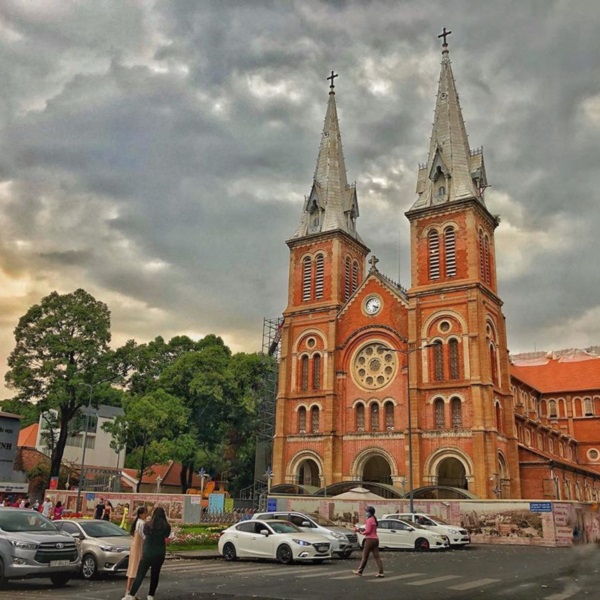
Motorbikes define the rhythm of Ho Chi Minh City.
For experienced riders, exploring the city by scooter becomes one of the most exciting ways to understand daily life.
Driving through District 1, District 3, and across bridges over the Saigon River reveals a side of the city that feels far more immersive than simply taking taxis.
At the same time, traffic can feel intense for first-time visitors, so confidence and awareness are important.
Even travelers who do not ride often find that simply observing the movement of motorbikes becomes one of the most memorable aspects of the city.
Landmark 81 and Vinhomes Central Park
41 Hoang Du Khuong Street, Ward 12, District 10, Ho Chi Minh City
Landmark 81 represents the modern and rapidly developing side of Ho Chi Minh City.
As the tallest building in Vietnam, the skyscraper dominates the skyline and contains shopping areas, restaurants, cafés, apartments, and observation spaces.
Beside the tower is Vinhomes Central Park, one of the city’s most pleasant green spaces.
Locals regularly come here for exercise, picnics, or evening walks along the river.
The contrast between green park space and the massive skyscraper behind it reflects the changing identity of modern Ho Chi Minh City.
Vietnamese egg coffee
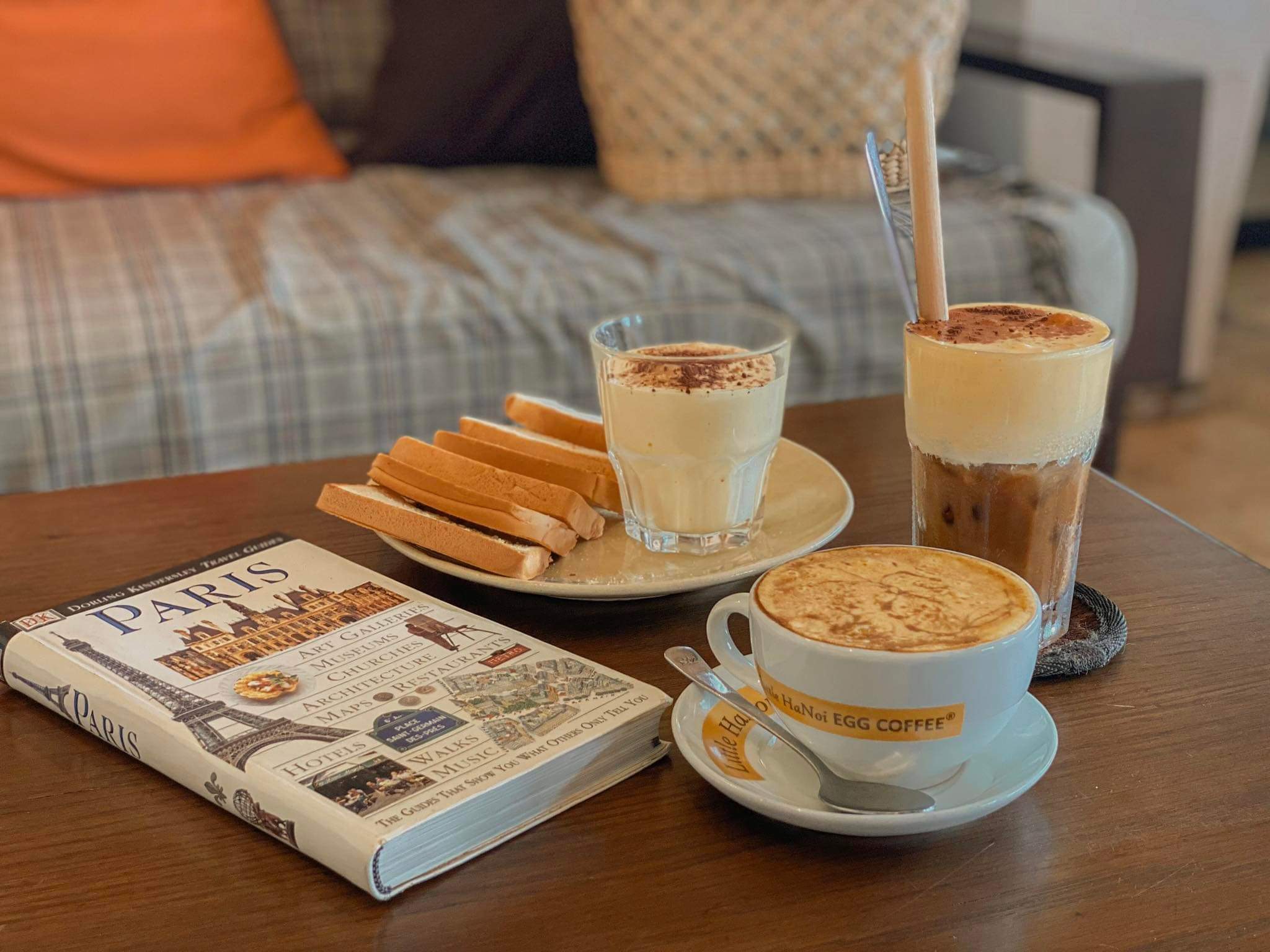
Coffee culture is deeply connected to life in Ho Chi Minh City.
One of the most interesting drinks for travelers to try is Vietnamese egg coffee.
Despite the name, the drink does not taste strongly of egg. Instead, whipped egg yolk and condensed milk create a rich, creamy topping over strong Vietnamese coffee.
The result feels somewhere between dessert and coffee.
Egg coffee reflects how Vietnamese café culture combines creativity with tradition.
Japan Town and ramen culture
Japan Town in District 1 offers another side of the city’s food scene.
The area is filled with Japanese restaurants, bars, and ramen shops hidden inside small alleyways and narrow streets.
Many ramen restaurants prepare noodles in-house and offer different broth styles and flavor strengths.
For travelers spending more time in the city, Japan Town provides a break from traditional Vietnamese cuisine while still remaining part of Ho Chi Minh City’s multicultural identity.
Eating pho in Ho Chi Minh City
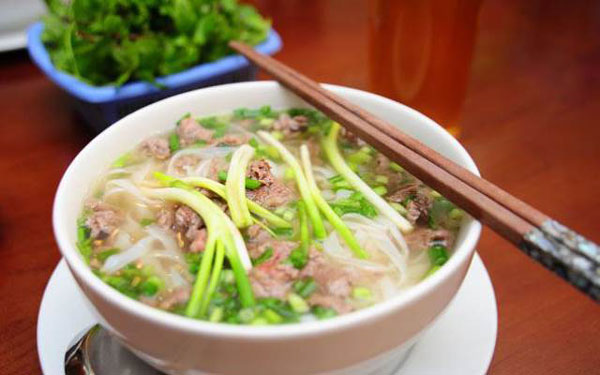
Pho remains one of Vietnam’s most recognizable dishes, and Ho Chi Minh City has countless places serving it.
Different restaurants specialize in different styles, from lighter northern-inspired broth to richer southern variations.
Eating pho in the morning is especially common among locals.
What makes the experience memorable is not only the dish itself, but the atmosphere surrounding it. Sitting at a small table, watching the city slowly wake up around you, becomes part of the ritual.
Museum of Traditional Vietnamese Medicine
For travelers looking for something less touristy, the Museum of Traditional Vietnamese Medicine offers a unique experience.
Located away from central tourist areas, the museum contains thousands of artifacts related to traditional medicine, herbs, tools, and historical practices.
The dark wooden architecture inside creates an atmosphere that feels very different from most museums in the city.
The experience feels more unusual and personal compared to major attractions.
Bui Vien Walking Street
Bui Vien Street, Pham Ngu Lao Ward, District 1, Ho Chi Minh City
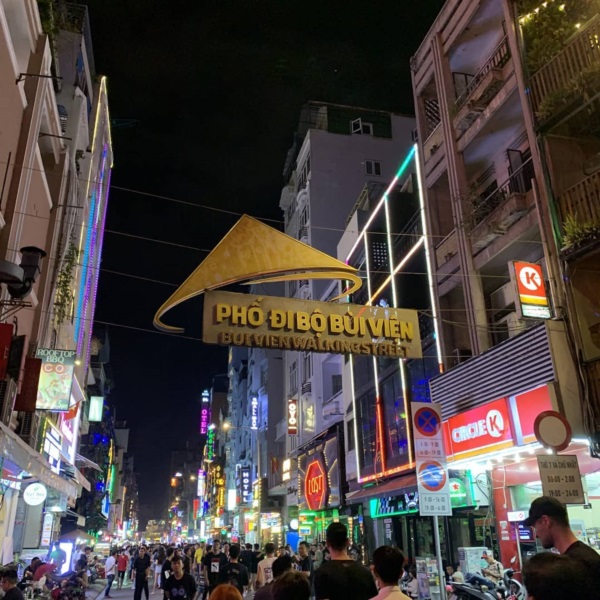
Bui Vien Walking Street is known as Ho Chi Minh City’s backpacker nightlife area.
At night, the street becomes crowded with bars, music, lights, and tourists.
Some travelers enjoy the energy, while others find it too chaotic.
Although it may not represent the most authentic side of the city, many visitors still stop by at least once to experience the atmosphere.
During daytime, the area feels much quieter and completely different from its nighttime version.
History Museum of Ho Chi Minh City
2 Nguyen Binh Khiem Street, Ben Nghe Ward, District 1, Ho Chi Minh City
The History Museum provides a calmer cultural experience compared to the War Remnants Museum.
Located beside the Saigon Zoo, the museum contains sculptures, historical artifacts, and exhibitions related to Vietnam’s long history.
The architecture itself is also part of the attraction, with open courtyards and old buildings surrounding the museum grounds.
Because it receives fewer visitors, the atmosphere feels more relaxed and reflective.
Southern Women’s Museum
202 Vo Thi Sau Street, Ward 7, District 3, Ho Chi Minh City
The Southern Women’s Museum focuses on the role of women in southern Vietnam’s history and culture.
The museum contains clothing, letters, photographs, tools, and personal artifacts connected to women’s experiences throughout different historical periods.
Compared to larger museums, it feels quieter and more personal.
For travelers interested in cultural history rather than major tourist attractions, this museum offers a meaningful perspective on Vietnamese society.
Final thoughts on visiting Ho Chi Minh City
Ho Chi Minh City is not a place that reveals itself immediately.
At first, it feels intense, noisy, and fast-moving. But over time, patterns begin to appear.
You start noticing the rhythm behind the traffic, the importance of café culture, the balance between old and new architecture, and the way daily life unfolds on the streets.
The city becomes less about landmarks and more about atmosphere.
From historical museums and colonial buildings to hidden cafés and late-night food stalls, Ho Chi Minh City offers experiences that go beyond traditional sightseeing.
For many travelers, the most memorable part of the city is not a single attraction.
It is the feeling of movement, energy, and constant life that exists everywhere around you.