Here’s something most travelers get wrong about Vietnam: they cross off the rainy season entirely and book for the “safe” dry months. That’s a mistake. Travel during the wet season and you get cheaper flights, half-price hotels, thinner crowds at places like Hoi An and Ha Long, and rice terraces so green they barely look real. The rain is real too — but it’s rarely the all-day washout people imagine. In most of the country it arrives as a hard afternoon burst, soaks everything for an hour, then clears to sunshine.
The trick is knowing what you’re walking into and packing for it. Get that right and a rainy-season trip can be the best-value adventure you’ll ever take — especially on two wheels.
First, know when (and where) it actually rains

Vietnam is over 1,600 km long, so it almost never rains across the whole country at once. The wet season runs on three different clocks:
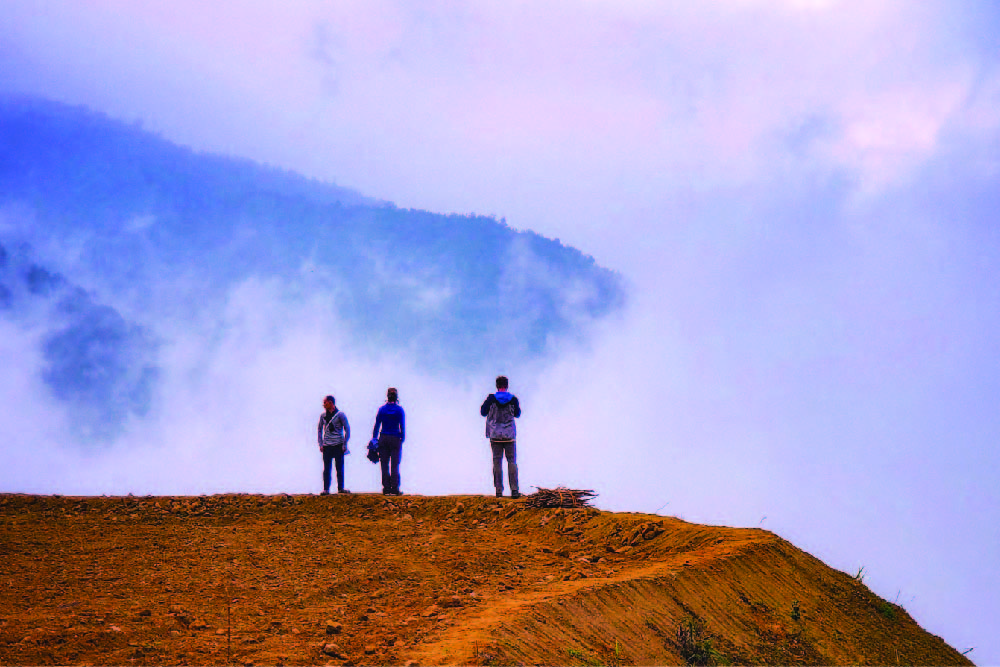
The North (Hanoi, Sapa, Ha Giang, Ha Long): Roughly May to September, with July and August the wettest. Expect afternoon downpours and steamy mornings. In the mountains around Sapa and Ha Giang, the rain brings fog, slick trails, and a real landslide risk — beautiful for photos, riskier for trekking and riding. Ha Long Bay cruises are most likely to be disrupted by storms in July and August.
The Centre (Hue, Hoi An, Da Nang): This is the outlier. The wet season lands later, around September to December, peaking in October and November when typhoons can roll in off the coast. Hue is one of the wettest spots in the country. If you’re heading central in autumn, build in flexible days — flooding in Hoi An’s old town is common.
The South (Ho Chi Minh City, Mekong Delta, Phu Quoc): May to November, but gentler than it sounds. Showers are short and sharp — a heavy hour in the afternoon, then clear skies. City life barely slows down, and the Mekong Delta is at its lush, fruit-heavy best.
The takeaway: if one region is drowning, another is usually dry. Smart routing beats avoiding the season altogether.
Riding in the rain: read the sky first
Before the packing list, the single most important rule if you’re on a motorbike. Light rain and gentle wind? Ease off the throttle and ride on — wet roads just mean more caution and more space for braking. But when the sky truly opens up, don’t push it. Pull over, duck under an awning, order a cà phê sữa đá, and wait it out. Vietnamese downpours are intense but short, and no photo or schedule is worth riding through a flash flood or zero-visibility wall of water. Locals do exactly this, and so should you.
The packing list: start with the essentials
1. Mosquito repellent. Standing rainwater is a mosquito factory, and the wet season raises the risk of dengue (and malaria in some rural areas). Pack a repellent with DEET — it’s still the most effective option — and reapply, especially at dawn and dusk. If you’re sensitive to DEET, picaridin-based repellents work well as an alternative.
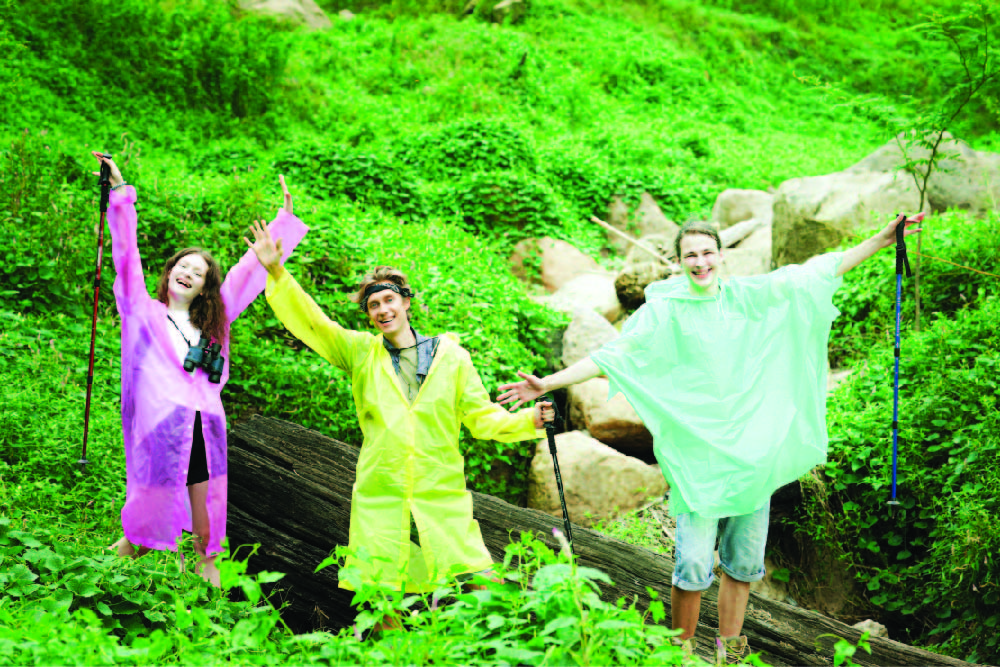
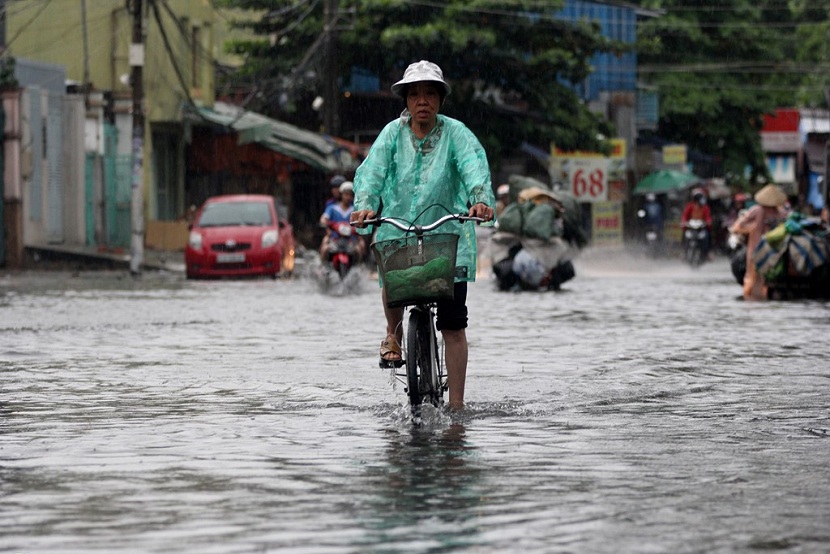
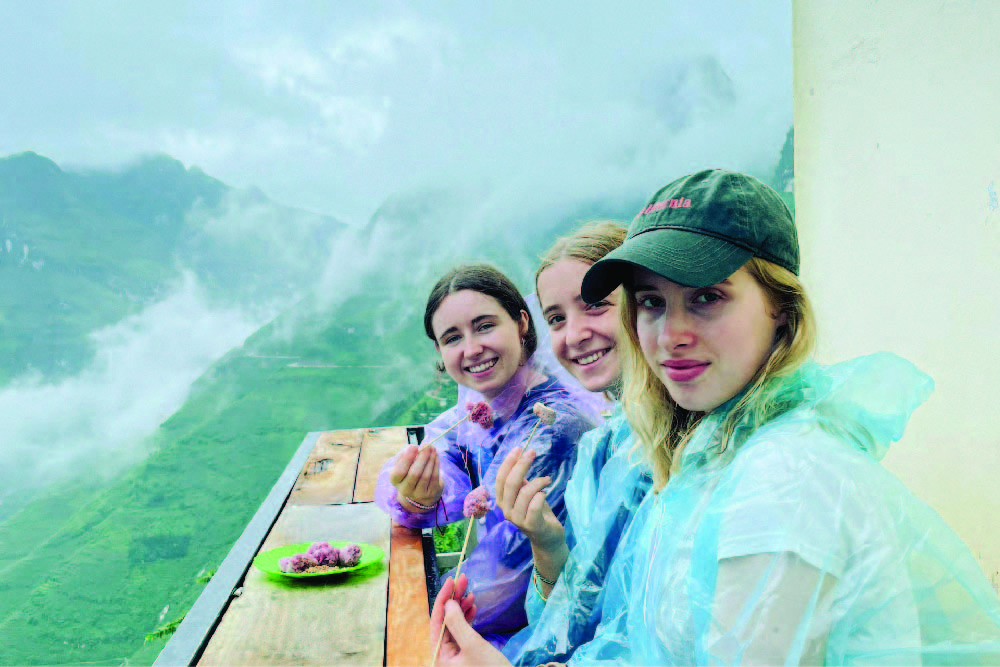
2. A proper rain layer. Skip the regular windbreaker; it’ll soak through in minutes. You don’t need an expensive technical jacket either. A simple PVC poncho or raincoat is light, cheap, packs down to nothing, and won’t cook you in the humidity — keep one rolled on your backpack or stashed under your bike seat. A compact travel umbrella is a good backup, but when it really pours, you’ll want both.
3. Quick-dry clothing. Leave the denim and heavy cotton at home — they soak up water and stay damp for hours in the humidity. Polyester or synthetic blends feel cool, dry fast, and pack smaller. If you’re out for the day in closed shoes, throw a spare shirt and dry socks in your bag. One minute you’re sipping coffee streetside, the next you’re sprinting for cover — that’s just part of the fun.
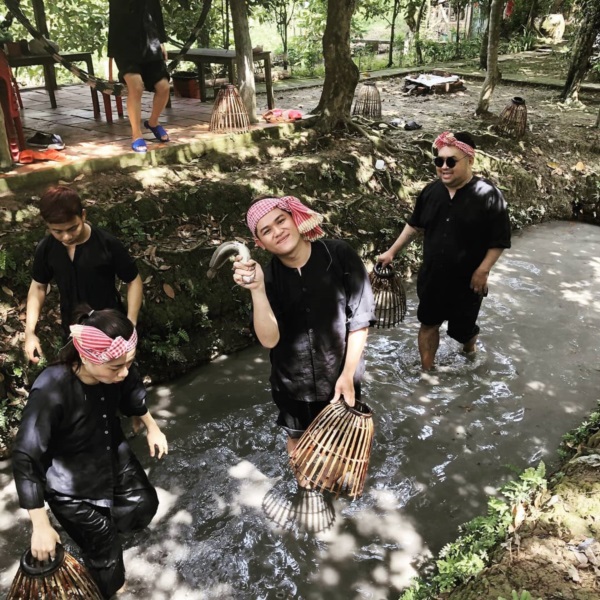
4. The right footwear. Forget leather shoes — wet roads will wreck them. Fully waterproof boots sound smart but they’re heavy, useless in a real flood, and they trap sweat (and smell) once water gets in over the top. Sandals are the better call: they handle puddles, dry fast, and you can clip them to your backpack and switch on the fly when the weather turns. Just dry your feet properly back at the hotel, and skip the sandals if you’ve got any cuts or broken skin on your feet — wet streets and open wounds are a bad mix.
5. Hygiene and germ protection. Damp surfaces and standing water raise the odds of picking up something nasty. Carry hand sanitizer and use it after touching wet rails, seats, and counters. If your drinking water looks questionable in a rural area, a portable purifier like a SteriPen or a filter bottle is cheap insurance against stomach bugs. Stick to bottled or purified water and you’ll dodge most of the trouble.
6. Silica gel packets. Humidity gets into everything — your clothes go clammy and, more importantly, your camera and electronics are at real risk. Toss a few silica gel packets into your camera bag and electronics pouch. They quietly soak up moisture and keep things dry even when the air is thick. They cost almost nothing and weigh nothing.
7. Dry bags and waterproof covers. Rain here is unpredictable — clear skies can turn to a downpour in minutes, and dark clouds aren’t always a reliable warning. A waterproof backpack cover and a couple of dry bags for your passport, phone, and electronics are non-negotiable. They’re compact, durable, and reusable, so they earn their place in your luggage many times over. If you’re riding, a dry bag bungeed to the back of the bike keeps your gear safe no matter what the sky does.
Rain days aren’t lost days
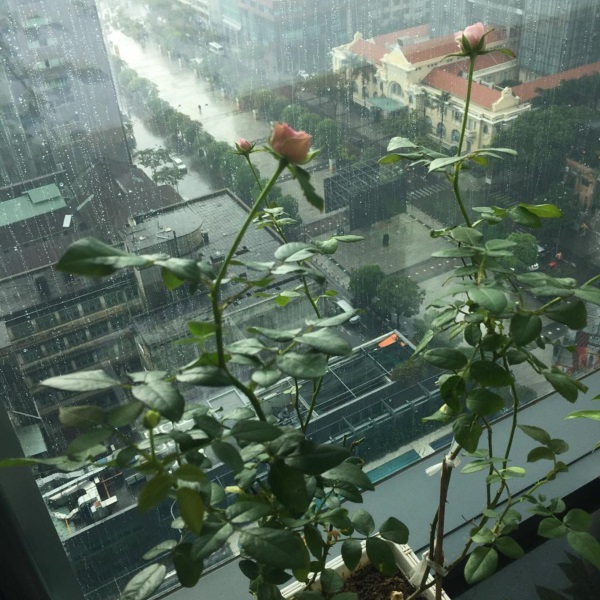
The biggest mistake is treating a wet afternoon as a write-off. Vietnam is full of things that are better indoors or in the rain:
- The Centre’s heritage is made for grey skies — the royal tombs and citadel in Hue, the museums of Da Nang, or simply Hoi An’s lantern-lit lanes, which look their most atmospheric when wet and reflective.
- In Ho Chi Minh City, the War Remnants Museum, Ben Thanh Market, and a long, lazy coffee crawl easily fill a stormy day.
- The Mekong Delta comes alive in the wet season — the Cai Rang floating market is busy, and it’s peak season for durian, mangosteen, and rambutan straight off the boat.
- Anywhere, a sudden downpour is the perfect excuse for the thing Vietnam does best: pull up a plastic stool, order a coffee or a bowl of phở, and watch the street steam.
The bottom line
The rainy season scares off the crowds, not the experience. With the right gear — repellent, a poncho, quick-dry clothes, sandals, and dry bags for your electronics — you stay comfortable while everyone else stays home. Pick your region by the calendar, ride with your eyes on the sky, and let the heavy showers buy you a coffee break instead of ruining your day.
Come prepared, stay flexible, and a wet-season trip through Vietnam might just be the best-value adventure you’ll have.
Frequently asked questions
When is the rainy season in Vietnam? It depends on the region, since the country spans three different climate zones. The North (Hanoi, Sapa, Ha Long) is wettest from May to September, peaking in July and August. The Centre (Hue, Hoi An, Da Nang) runs later, around September to December, with the heaviest rain and typhoon risk in October and November. The South (Ho Chi Minh City, Mekong Delta) sees showers from May to November, usually short afternoon bursts.
Is it worth visiting Vietnam in the rainy season? Yes. You get cheaper flights and hotels, far fewer crowds at popular spots, and the greenest landscapes of the year. The rain rarely lasts all day — in most regions it’s a heavy hour in the afternoon followed by sun. As long as you pack smart and stay flexible with your route, it can be the best-value time to go.
Does it rain all day during Vietnam’s wet season? No, and this is the biggest myth. In the North and South, rain usually comes as short, intense downpours lasting one to two hours, often in the afternoon, with dry mornings and evenings. Central Vietnam is the exception — October and November can bring prolonged rain and flooding, especially around Hue and Hoi An.
Which part of Vietnam is driest during the rainy season? Because the regions are on different clocks, there’s almost always somewhere dry. When the North is soaked in July and August, the Centre is still hot and dry. When the Centre floods in October and November, the North is clearing up. Routing your trip around this is smarter than avoiding the season entirely.
Can you ride a motorbike in Vietnam during the rainy season? Yes, with caution. Light rain just means slowing down and leaving more room to brake. But in heavy downpours, pull over and wait it out — Vietnamese storms are intense but short, and flash flooding and poor visibility aren’t worth the risk. Pack a poncho, use dry bags for your gear, and keep your eyes on the sky.
What should you avoid doing in Vietnam during the wet season? Skip Ha Long Bay cruises in July and August when storms cause cancellations, trekking in Sapa and Ha Giang during the wettest weeks when trails get slippery and landslides are a risk, and diving or snorkelling around Phu Quoc when the water turns murky. Save those for the shoulder months.
What’s the best month to avoid rain across all of Vietnam? February to April is the sweet spot — it’s dry in all three regions at once, which makes it ideal for a full north-to-south itinerary without fighting the monsoon or typhoon season.