You can visit Ho Chi Minh City for the food, coffee, nightlife, or rooftop bars and sooner or later, almost every traveler ends up hearing about the Cu Chi Tunnels.
Yes, the site is touristy. Yes, thousands of visitors every week. But despite that, the experience still feels surprisingly intense.
Because once you actually stand there, looking at a tiny hole in the ground that people once lived inside for years during wartime, the tunnels stop feeling like just another attraction.
Located around 1.5 to 2 hours from Ho Chi Minh City, the Cu Chi Tunnels are one of the most famous historical sites in Vietnam and one of the most popular day trips from the city. The underground network stretches for hundreds of kilometers and played a major role during the Vietnam War.
For many visitors, this is not simply a sightseeing tour. It becomes a deeper look into survival, resilience, and the realities of war.
Here is what visiting the Cu Chi Tunnels actually feels like.
The history behind the Cu Chi Tunnels
Before visiting the tunnels, it may help to understand firsthand why they exist in the first place.
The Cu Chi Tunnels are located in the Cu Chi district northwest of Ho Chi Minh City. Construction first began during the late 1940s when Vietnamese resistance fighters were battling French colonial forces. Over time, the tunnel system expanded dramatically during the Vietnam War.
The underground network became:
Living quarters
Supply routes
Communication lines
Storage areas
Field hospitals
Escape routes
At its peak, the tunnel system stretched for more than 250 kilometers, connecting areas around southern Vietnam and even routes toward Cambodia.
The tunnels allowed Viet Cong soldiers to move secretly, launch surprise attacks, avoid air strikes, and survive in areas heavily targeted during the war.
What surprises many travelers is that entire communities lived underground for extended periods — including women and children.
Getting to the Cu Chi Tunnels from Ho Chi Minh City
The Cu Chi Tunnels are one of the easiest historical day trips from Ho Chi Minh City.
Most travelers visit through:
Half-day guided tours
Full-day tours
Small group tours
Private transfers
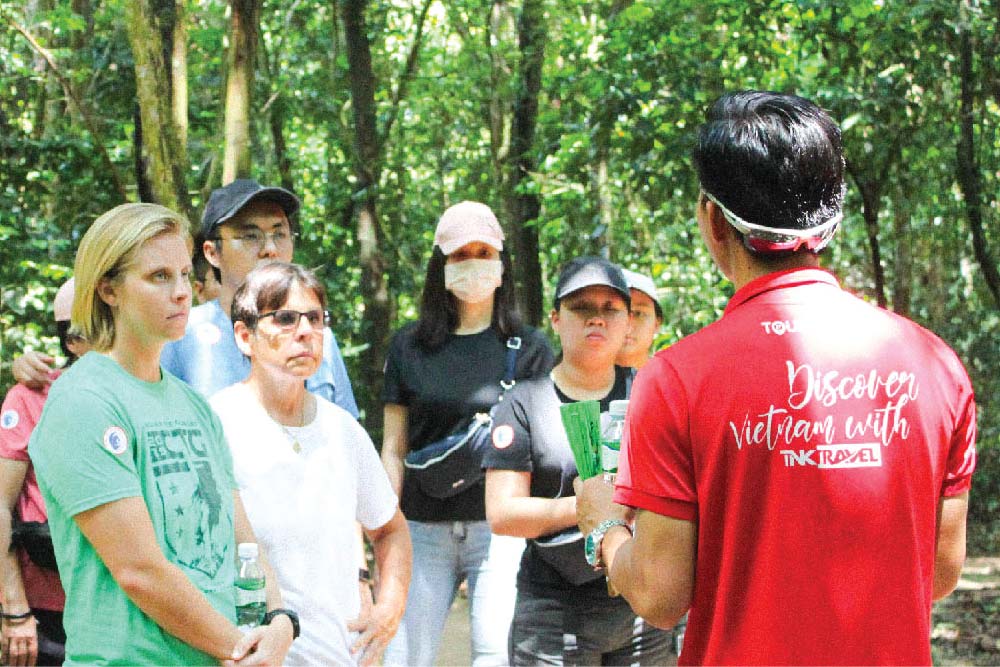
While it is technically possible to visit independently by motorbike or car, most visitors choose a guided tour because the historical explanations make a huge difference to the experience.
Without context, the tunnels are simply holes in the ground.
With a good guide, the site becomes much more immersive and emotional.
The drive itself can feel longer than expected because of Ho Chi Minh City traffic, especially in the morning.
First impressions of the site
The first thing many people notice is how peaceful the area feels.
There are trees everywhere, birds in the background, and shaded walking paths through the forest. If you did not know the history of the place, it would almost feel calm.
That contrast is what makes the experience strange.
Because beneath the quiet forest lies an underground world built for survival during one of the most brutal conflicts in modern history.
Most tours begin with:
A short introduction
Historical explanations
Maps of the tunnel system
Demonstrations of tunnel structure
Once guides begin explaining how people lived underground, the scale of the system becomes difficult to imagine.
The hidden entrances are shockingly small
One of the most famous moments during the tour is seeing the original tunnel entrances.
At first glance, they are nearly invisible.
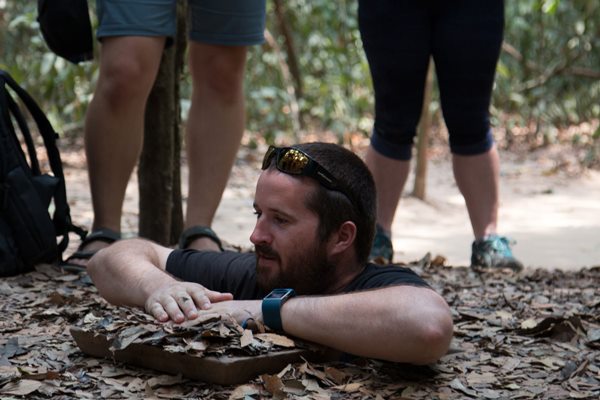
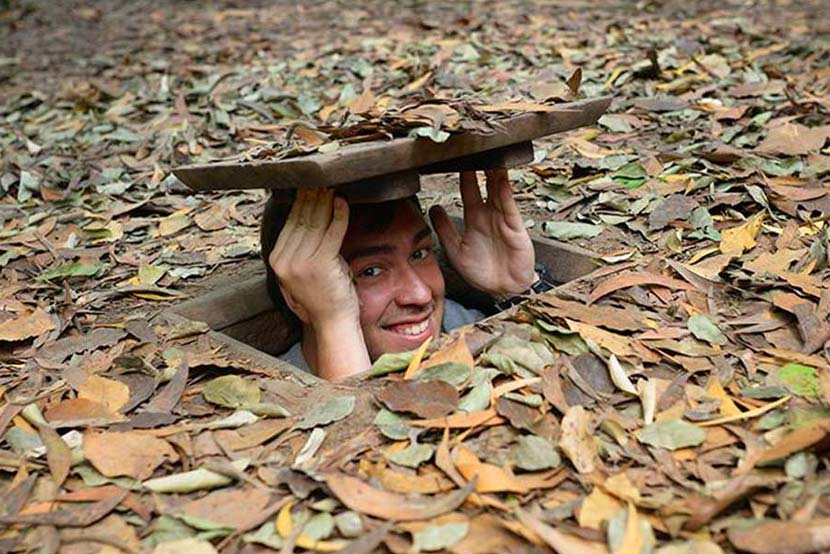
The openings are small rectangular holes hidden beneath removable covers and covered with leaves or dirt camouflage. Many visitors are shocked by how tiny they actually are.
For smaller travelers, squeezing inside is possible.
For taller or larger visitors, it suddenly becomes obvious why the tunnels were so difficult for foreign soldiers to enter during the war.
Seeing these entrances in person changes your understanding of the tunnels immediately.
Photos never fully capture how unbelievably narrow they are.
The booby traps are disturbing
Another major section of the Cu Chi Tunnels tour focuses on wartime traps.
Guides demonstrate different trap systems used during the war, including:
Spike traps
Hidden pits
Swing traps
Foot traps
Some visitors find this section fascinating from a historical perspective, while others find it uncomfortable or disturbing.
The demonstrations reveal how guerrilla warfare relied heavily on strategy, terrain, and psychological pressure rather than direct military strength alone.
One detail many guides explain is that some traps were designed to wound rather than kill immediately, making rescue attempts more dangerous for opposing soldiers.
It becomes very clear that the war inside these forests was physically and mentally brutal.
Life underground must have been unbearable
One of the most powerful parts of the experience is learning how people actually survived underground.
The tunnels were:
Hot
Humid
Dark
Cramped
Poorly ventilated
Yet people still cooked, rested, stored supplies, and lived there for extended periods.
Visitors often see recreated underground rooms showing:
Kitchens
Sleeping spaces
Weapon workshops
Storage rooms
Guides also explain how smoke from cooking was redirected through hidden ventilation systems to avoid detection from above.
The level of engineering and adaptation is genuinely impressive considering the limited tools available at the time.
Crawling through the tunnels is the hardest part
For most visitors, the highlight of the trip is entering the tunnels themselves.
Modern tunnel sections for tourists have been widened slightly and include:
Dim lighting
Reinforced walls
Ventilation
Exit points
Even with those modifications, the experience is still physically intense.
Inside, you must crouch low while moving through narrow underground passages. In some sections, taller visitors nearly crawl.
After only a few minutes, many people begin sweating heavily from the heat and lack of space.
This is usually the moment when travelers realize how difficult life inside the tunnels must have been during wartime.
For people with claustrophobia, the tunnels can feel overwhelming very quickly.
Fortunately, there are exit points throughout the route, and entering the tunnels is always optional.
The shooting range surprises many travelers
Firing a real gun at Cu Chi Tunnels
One part of the site often catches visitors off guard: the live firing range.
Guests can pay to fire historical weapons such as:
AK-47
M16
The loud gunfire echoes across the forest and creates a strange atmosphere compared to the otherwise educational and reflective tone of the site.
Some travelers enjoy the experience, while others prefer to skip it entirely.
Either way, hearing constant gunfire while walking through the historical site adds another layer to the experience.
Tapioca and tea at the end of the tour
At the end of many Cu Chi tours, visitors are served boiled tapioca and tea.
This simple snack has symbolic meaning because tapioca was one of the staple survival foods eaten during wartime.
After crawling through the tunnels and hearing stories about underground life, even this small tasting experience feels more meaningful than expected.
It is a simple moment, but one that often stays with visitors.
The Cu Chi Tunnels are not just another tourist attraction near Ho Chi Minh City. They are one of the most important historical sites in Vietnam and one of the most eye-opening experiences travelers can have during their trip.
The visit helps people understand:
The realities of war
Vietnamese history
Human resilience
Guerrilla warfare strategies
Survival under extreme conditions
While the site can feel crowded at times, the experience itself remains powerful.
For many travelers, visiting the Cu Chi Tunnels becomes one of the most memorable parts of visiting southern Vietnam.
Final thoughts
The Cu Chi Tunnels are an uncomfortable but also fascinating experience for any traveler that dare to choose it. You leave the site with a completely different understanding of what life during the Vietnam War may have felt like underground.
And perhaps that is what makes the experience unforgettable, not merely because of the names but the history behind it.
But because for a brief moment, crawling through those dark narrow passages forces you to imagine what survival once looked like beneath the forests of Vietnam.