Tour snapshot
Overview
The only dedicated full-day tour from Ho Chi Minh City to the sites of Australia’s most significant engagement of the Vietnam War — the Battle of Long Tan, 18 August 1966.
On the afternoon of 18 August 1966, in a rubber plantation 4 kilometres east of their base at Nui Dat, 108 men of D Company, 6th Battalion, Royal Australian Regiment (6 RAR), made contact with what turned out to be a combined force of between 1,500 and 2,500 Viet Cong and North Vietnamese Army soldiers. For three and a half hours, in driving monsoon rain, they held their position through repeated frontal assaults, supported by artillery fire from the Nui Dat base. When a relief force broke through at last light, 18 Australians were dead and 24 wounded. At least 245 enemy dead were counted on the battlefield the following morning. Long Tan has since become the defining event of Australia’s Vietnam War — and 18 August is now observed annually as Vietnam Veterans’ Day in Australia.
This full-day tour from Ho Chi Minh City visits the key sites associated with the 1st Australian Task Force’s five-year presence in Phước Tùy Province: the former Task Force Base at Nui Dat, the Long Tan Cross Memorial standing in the rubber plantation where the battle was fought, the Long Phuoc Tunnels used by Viet Cong forces operating against the base, and the Horseshoe Fire Support Base. A travel permit to the restricted battle sites is arranged and included by TNK.
The tour is designed for travellers with a personal, family, or historical connection to Australia’s involvement in Vietnam — as well as anyone interested in understanding the Vietnam War from a perspective not covered by Cu Chi or Saigon’s city museums. The private format means the vehicle, guide, and schedule belong entirely to your group.
Why TNK Travel for this tour
- Travel permits arranged and included: access to the Long Tan Cross Memorial and the former Nui Dat base area requires official travel permits from local authorities. TNK handles the permit process at Ba Ria on the day — guests do not need to arrange anything in advance.
- The only tour that covers all four sites: Nui Dat, Long Tan Cross, Long Phuoc Tunnels, and the Horseshoe FSB in a single day from Ho Chi Minh City. Most operators run this as a half-day from Vung Tau only.
- Private vehicle and guide throughout: no shared van, no combined group. The guide accompanies your group from pickup to drop-off and adjusts pace at each site based on the group’s interests and connections.
- Trusted operator since 2000: TNK Travel is ranked #3 on TripAdvisor with over 24,000 verified reviews.
Tour highlights
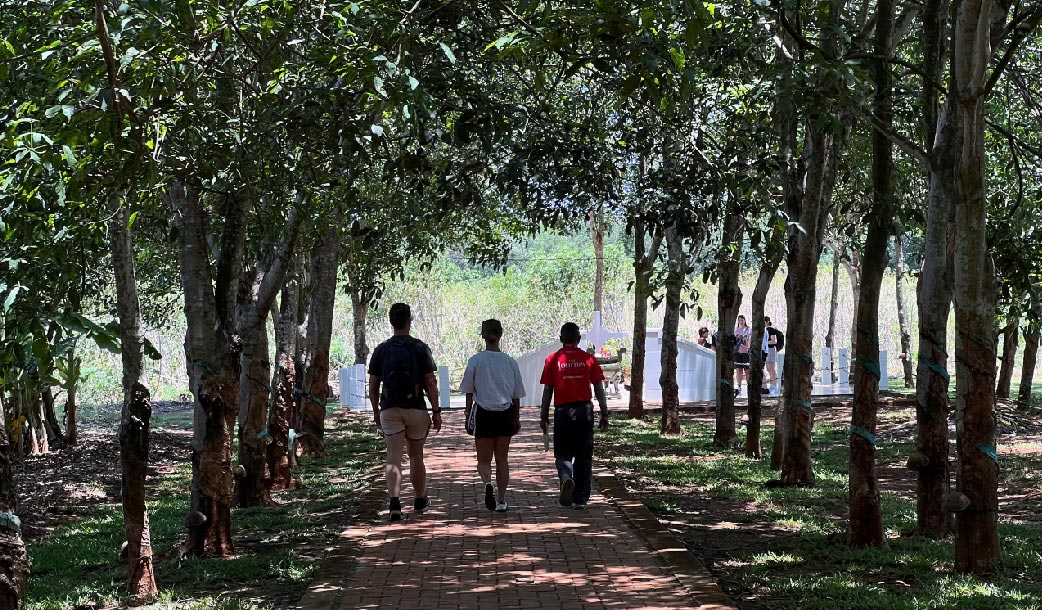
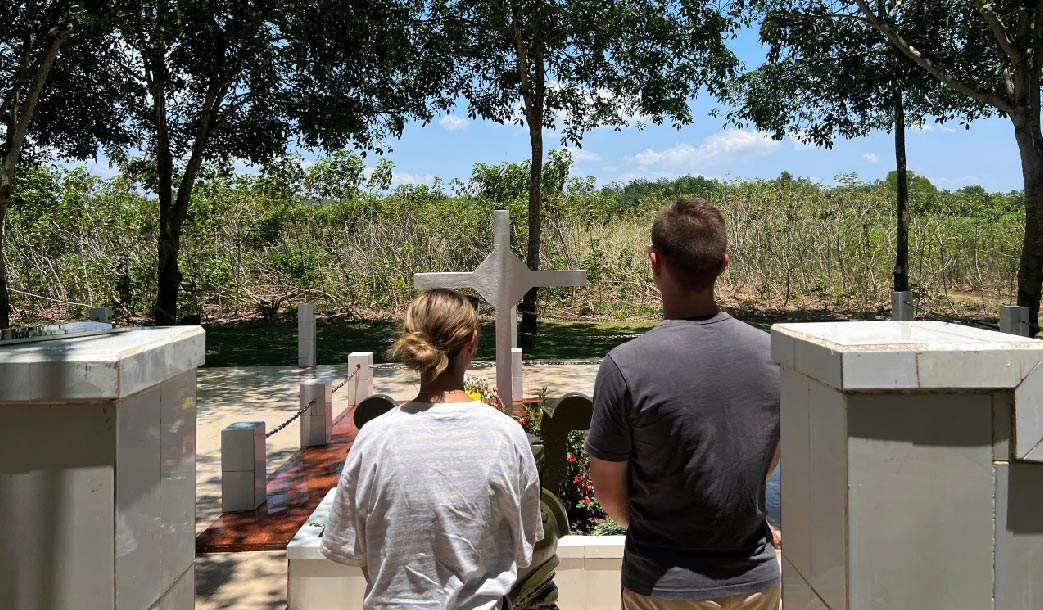
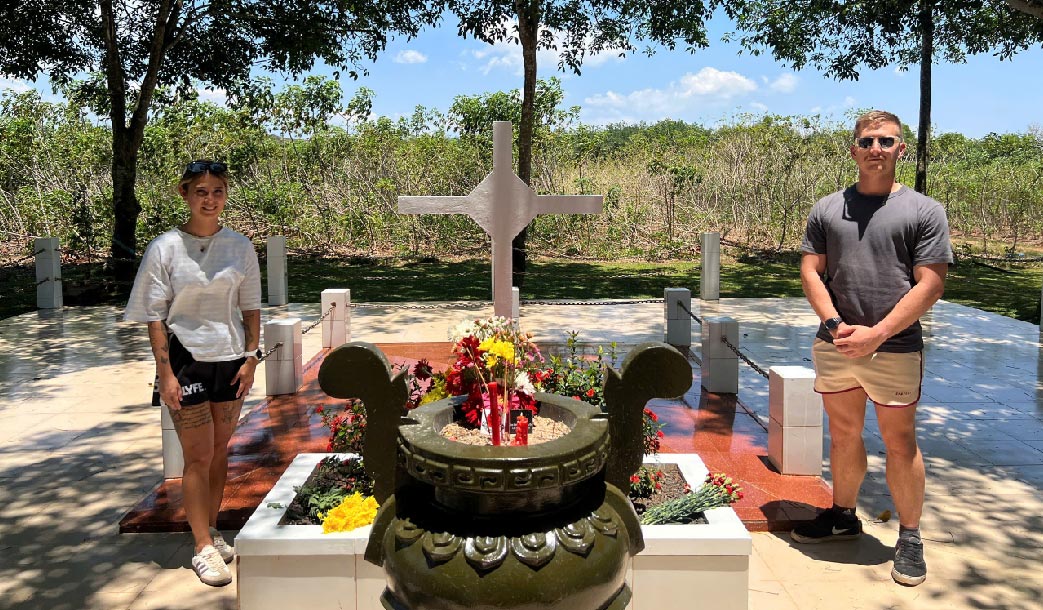
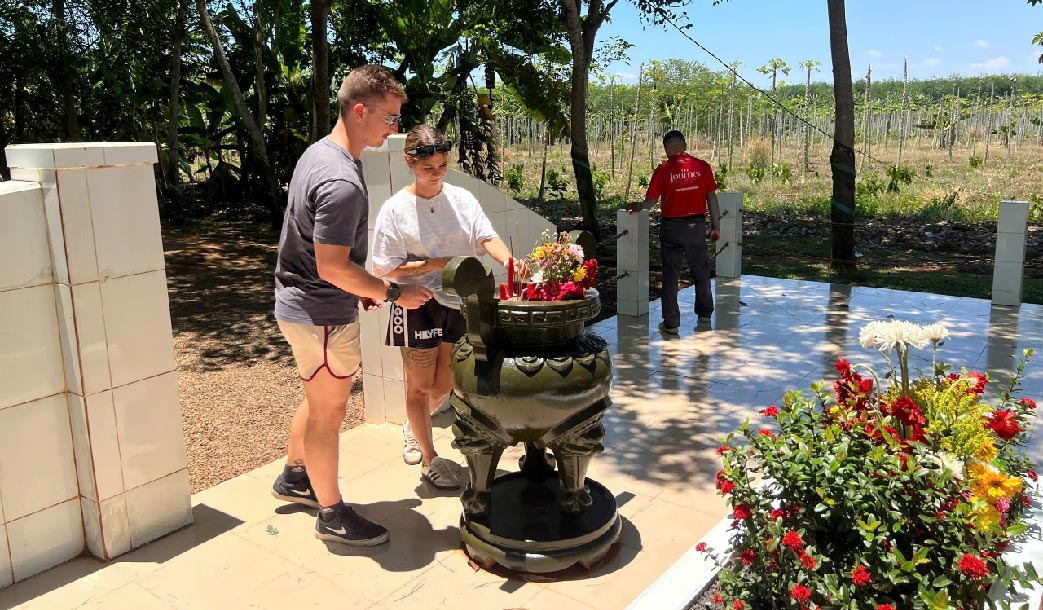
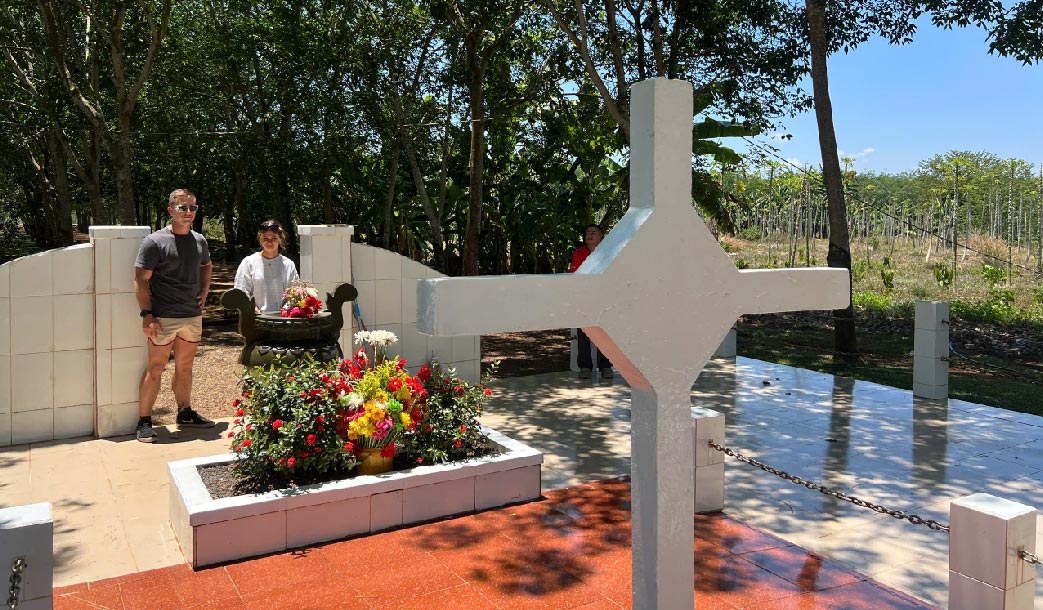
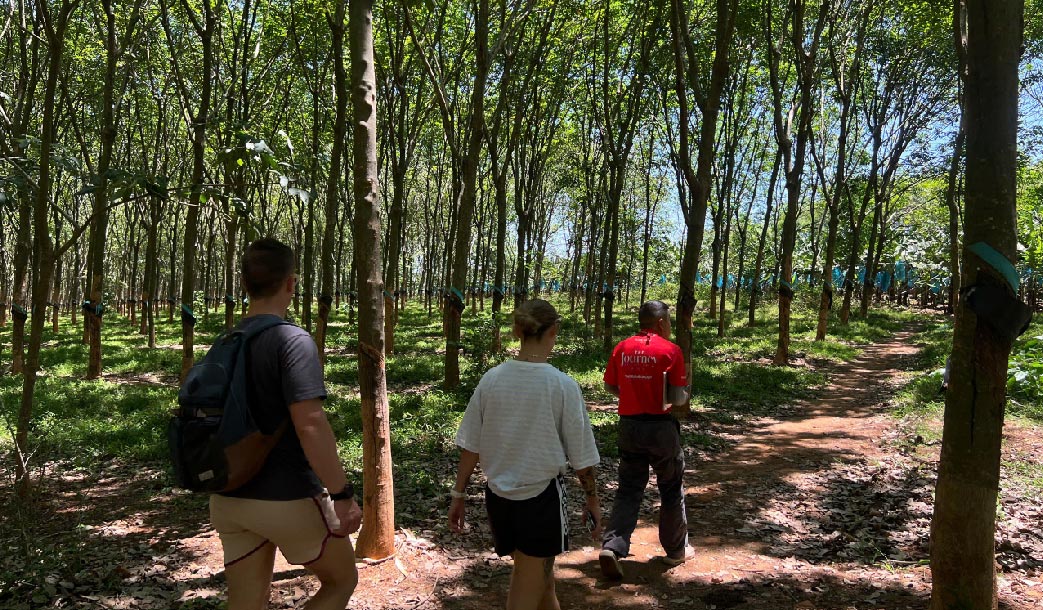
- Long Tan Cross Memorial — the site of the battle: a replica cross erected by Australian veterans stands in the rubber plantation where D Company 6 RAR fought on 18 August 1966. One of the most significant Commonwealth war memorials in Southeast Asia.
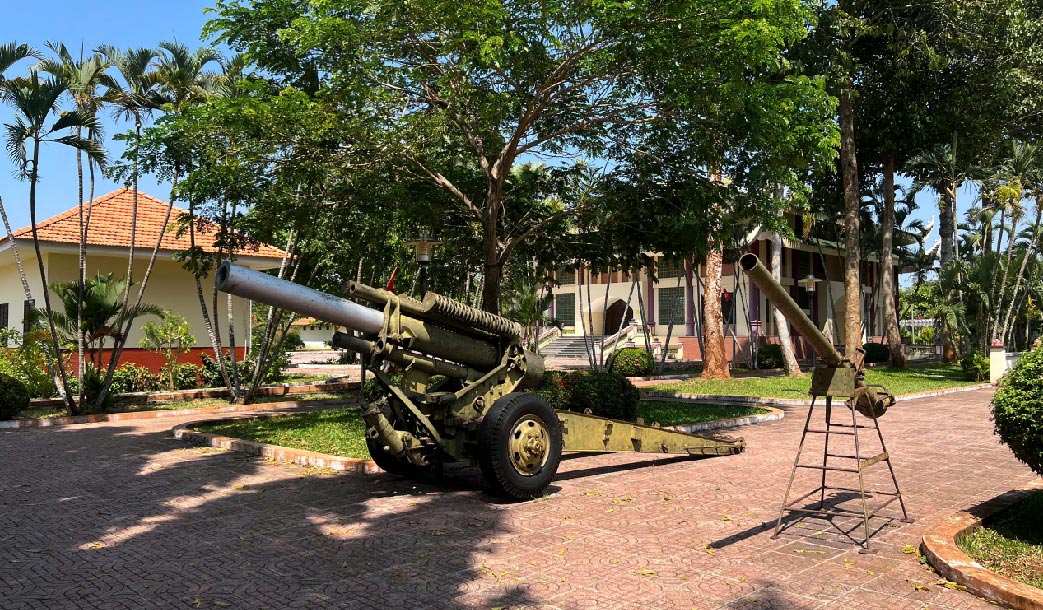
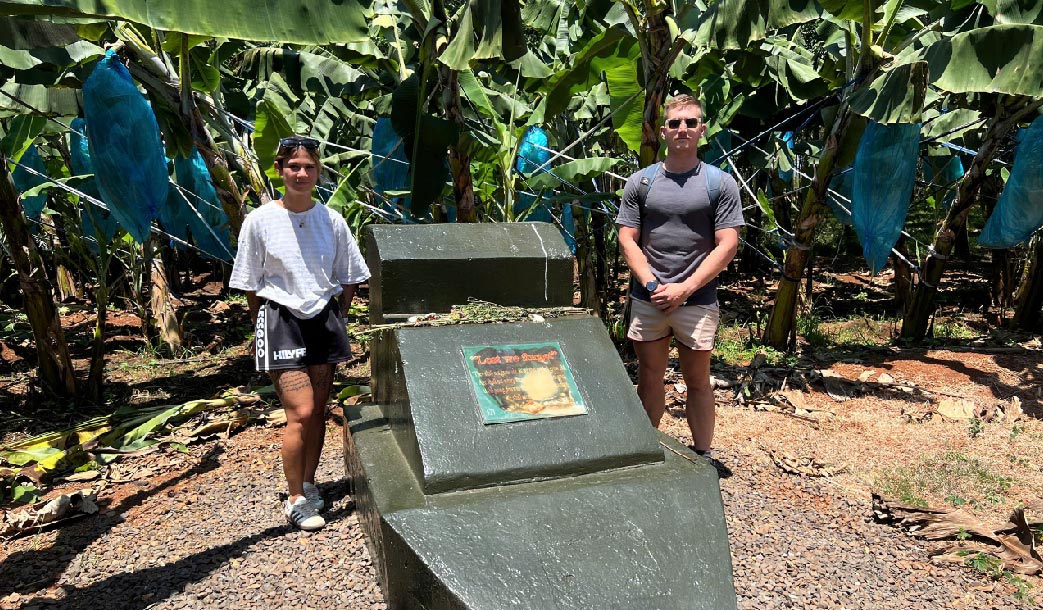
- Nui Dat Task Force Base — where the 1 ATF lived for five years: the former base perimeter, Kangaroo Pad helicopter strip, SAS Hill, Luscombe Field airstrip, and the school built by Australians for the local community.
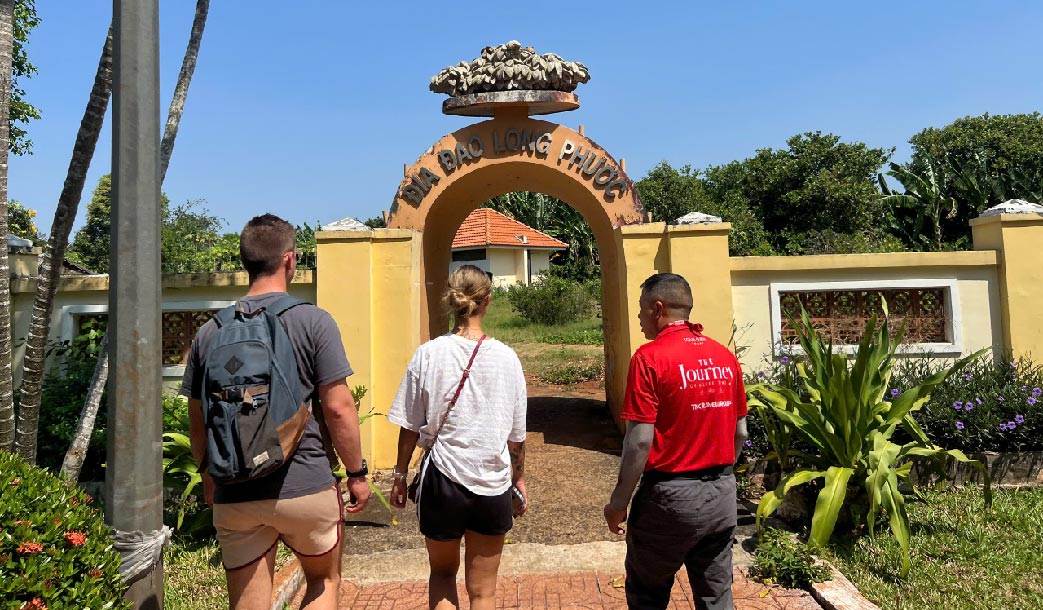
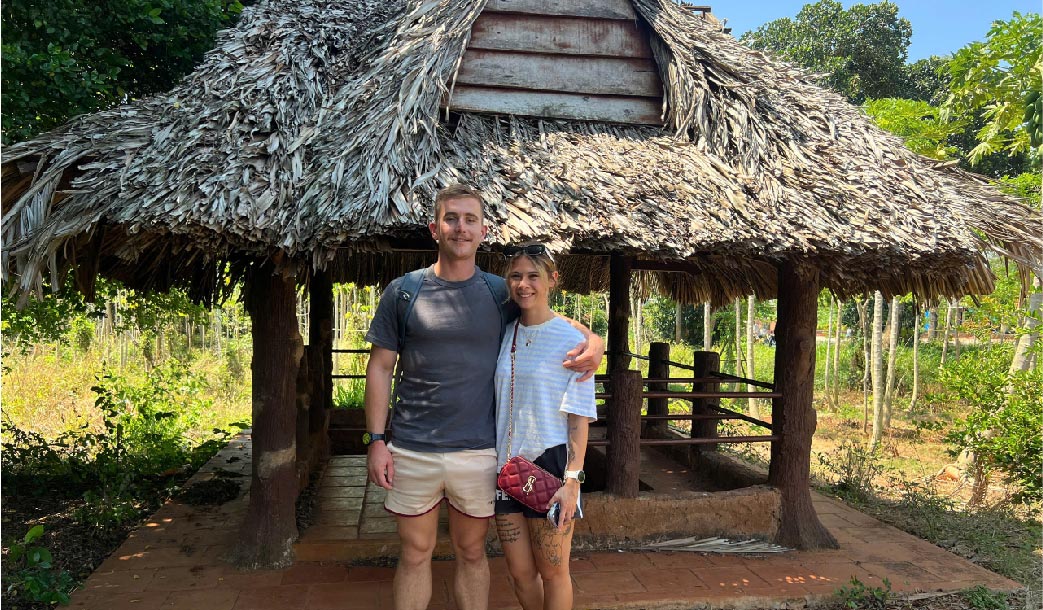
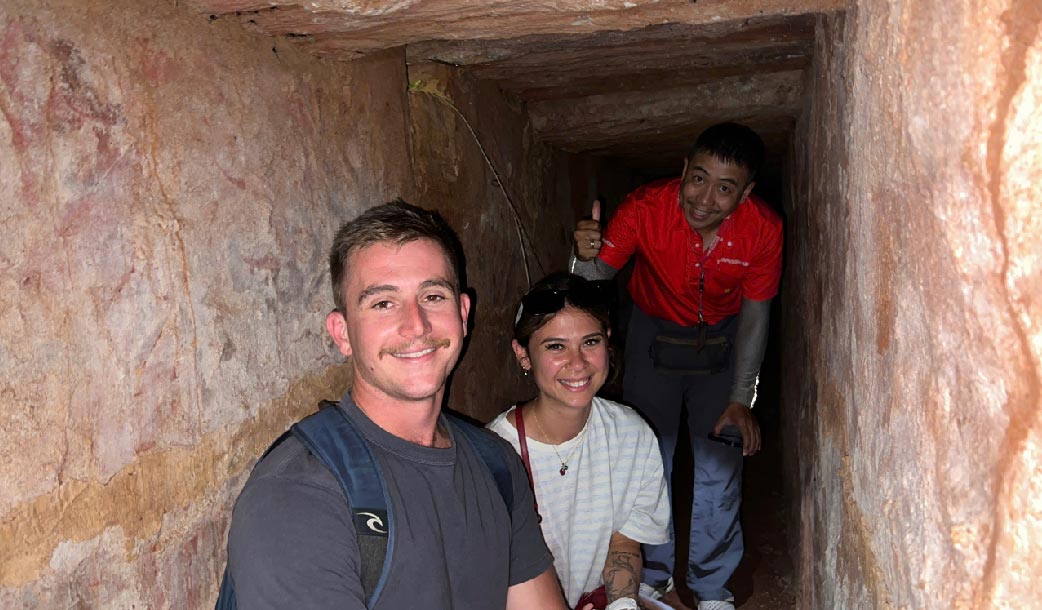
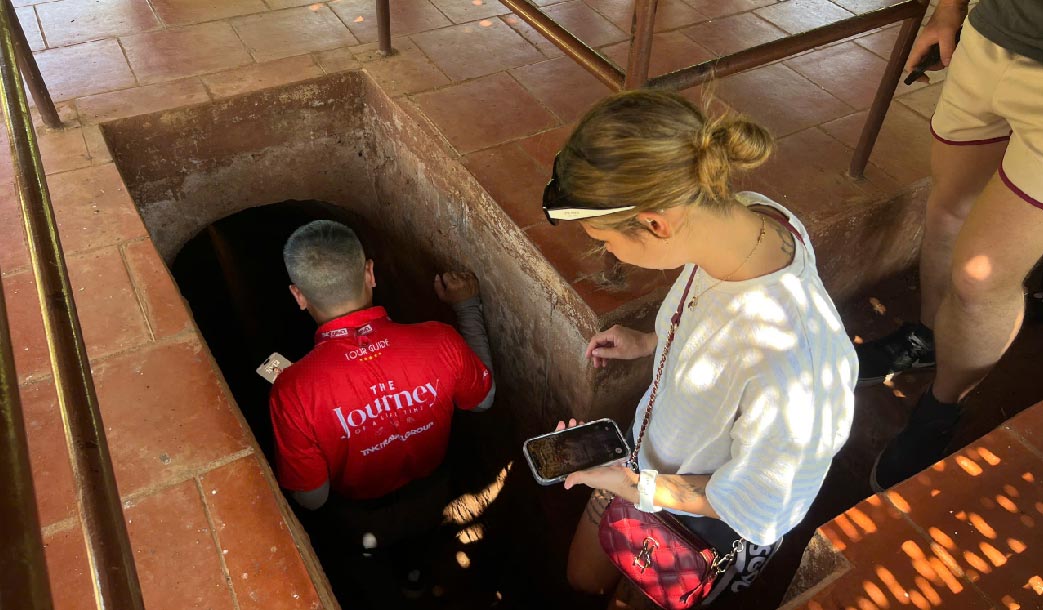
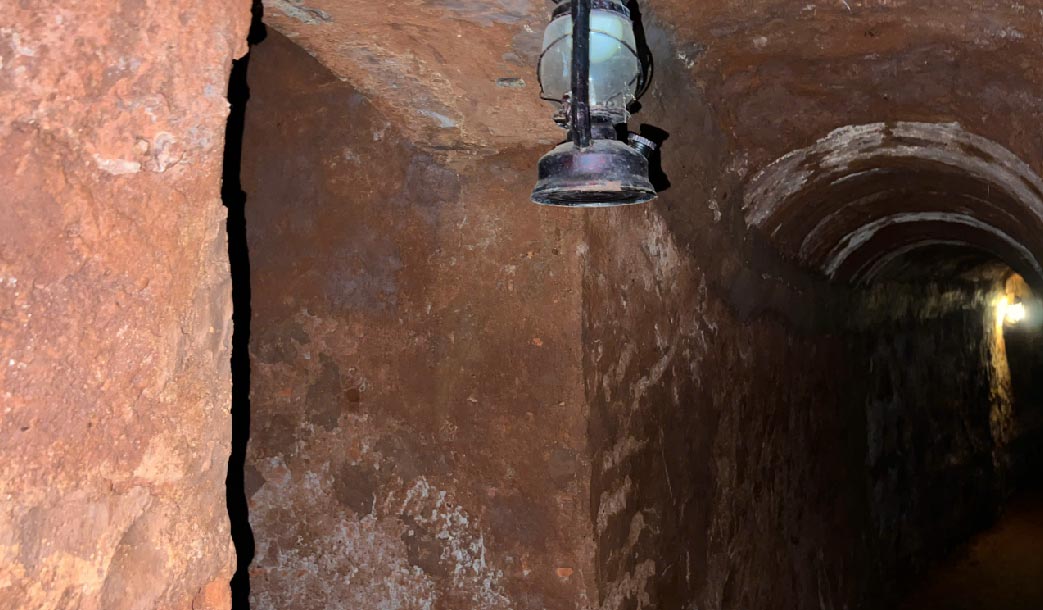
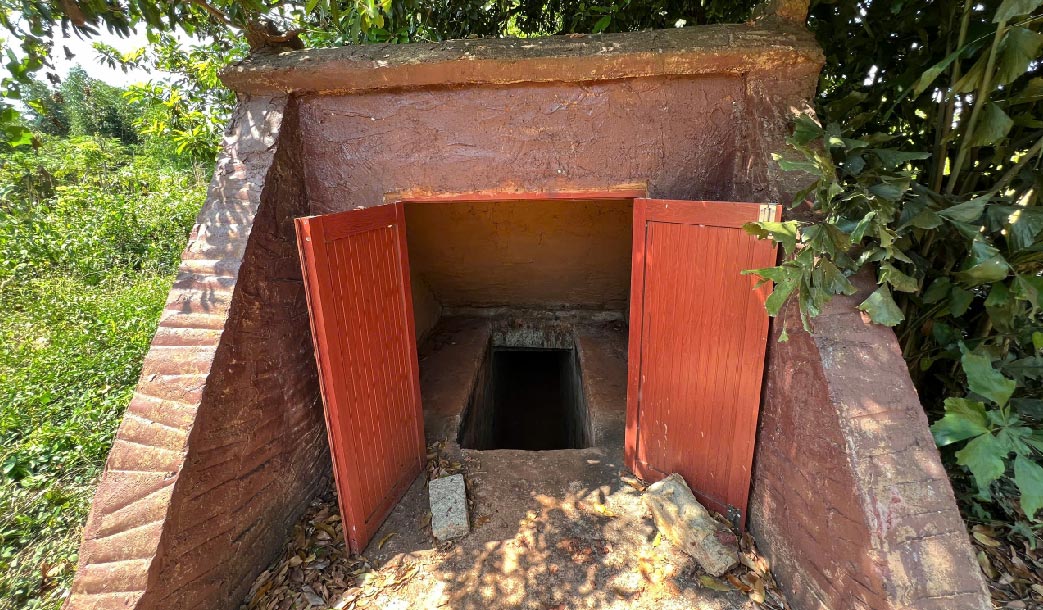
- Long Phuoc Tunnels — the Viet Cong underground: a network of tunnels and fighting positions used by VC forces against the Australian base, with a small museum on site.
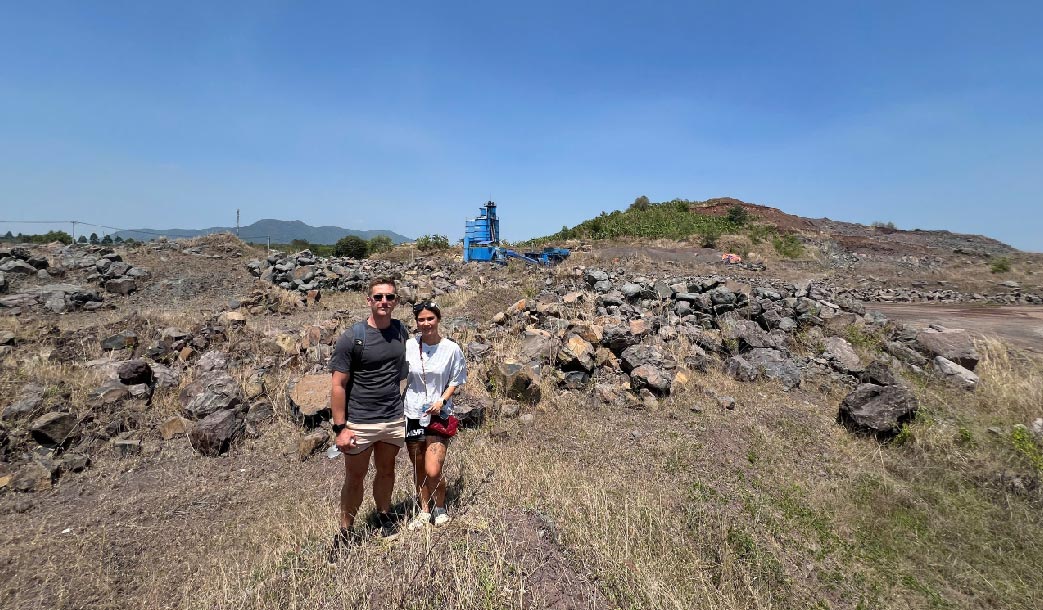
- Horseshoe FSB (drive-by) — the artillery anchor point: the fire support base that covered Nui Dat from the Long Hai hills; now quarried, but visible from the road with guide explanation.
- 18 August — Vietnam Veterans’ Day: the date the Battle of Long Tan is commemorated annually in Australia. The tour provides the full context of why this single afternoon in a rubber plantation became a defining national memory.
Important information
Meeting point & departure
- Hotel pickup in Ho Chi Minh City, District 1 and District 3. Departure at 8:00 AM — exact pickup time confirmed by WhatsApp or email 24 hours before departure.
- Please wait in your hotel lobby. The guide will collect you directly. For hotels outside the standard pickup zone, the meeting point is TNK Travel, 112 Trần Hưng Đạo Street, District 1 — 7:45 AM.
- Ba Ria – Vũng Tàu Province is approximately 90 kilometres from Ho Chi Minh City (around 1.5 hours by road). The tour makes a brief stop in Ba Ria town to collect the travel permits before proceeding to the sites. Return to Ho Chi Minh City: approximately 6:00–7:00 PM.
Travel permits
- Access to the Long Tan Cross Memorial and the former Nui Dat base area is governed by Vietnamese local authorities. Visitors must hold a valid travel permit issued in Ba Ria.
- TNK Travel arranges all necessary permits for the group as part of the tour. No paperwork is required from guests before the tour. The guide handles permit collection at Ba Ria on the day.
- Permits are issued per group for the specific visit date. They are non-transferable and cannot be used for self-guided or independent access.
The Long Tan Cross Memorial — visitor guidelines
- The Long Tan Cross is a place of active remembrance for Australian and New Zealand veterans and their families. Respectful, quiet conduct is expected at the memorial.
- Photography at the memorial is permitted. The guide will advise on appropriate conduct, particularly during times when veterans or family groups may be present.
- Formal commemorative ceremonies (ANZAC Day, 18 August Vietnam Veterans’ Day) at the Long Tan site are no longer permitted by Vietnamese authorities as of 2017. Private visits and individual remembrance remain fully open.
- Modest dress is appropriate for the memorial visit. No specific dress code is required, but visitors are asked to treat the site as they would any military war memorial.
Physical requirements
- The tour involves moderate walking at each site. The Nui Dat base area and the Long Tan rubber plantation are visited on foot on uneven ground and grass paths. Closed-toe shoes are recommended.
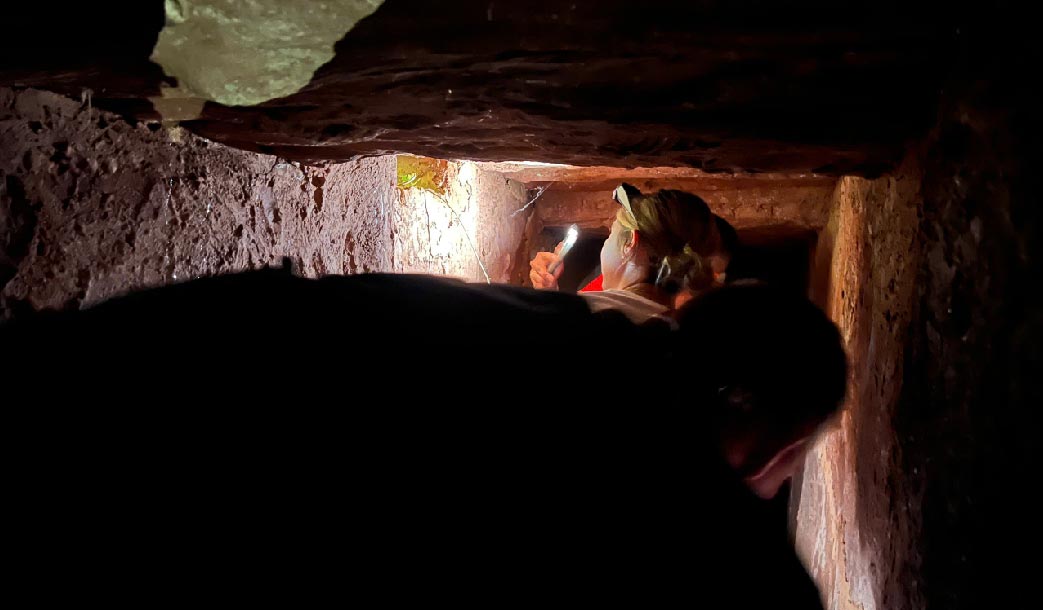
- The Long Phuoc Tunnels are accessible to most visitors but involve steps and low-ceiling sections. Guests with serious mobility limitations should advise at booking.
- The Horseshoe FSB no longer has interior access (quarrying activity) and is observed from the road or roadside — no physical challenge involved.
- The tour is suitable for adults and older children with a genuine interest in the history. The subject matter — detailed wartime history, a military memorial — is not recommended for very young children.
Weather
- The tour operates year-round. The battle sites involve significant outdoor walking — a light rain jacket is useful in the wet season (May–October). The rubber plantation at Long Tan provides shade throughout the year.
- If TNK Travel cancels due to severe weather, guests receive a full refund or the option to reschedule.
Related tours
- Cu Chi Tunnels half day tour (CC): small group morning or afternoon tour from Ho Chi Minh City to the most famous wartime tunnel system in Vietnam
- Cu Chi Tunnels & Cao Dai Temple private full day (CD-CC): two of Southern Vietnam’s most visited historical sites in one day — the Cao Dai Great Holy See in Tay Ninh and the Cu Chi tunnel network at Ben Duoc
- Ho Chi Minh City & Cu Chi Tunnels full day (PGT-CTCC): Saigon city highlights in the morning (Reunification Palace, Notre Dame Cathedral, War Remnants Museum) + Cu Chi in the afternoon
- Ba Den Mountain day tour (TN-BD): private full-day tour to the highest peak in Southern Vietnam — Sun World cable car, Ba Den Pagoda, buffet lunch
Itinerary
Price & Bookings
Grade tour
Price & bookings
All rates are per person in USD. Private tour — vehicle and guide exclusively for your group. Lunch and all travel permits included. Per-person price decreases with group size.
| Tour type | 2 pax | 3–4 pax |
| Private tour | $120 | $140 |
Public holidays — holiday pricing applies
If your departure date falls on or within any of the periods below, the holiday price applies automatically at booking.
| Holiday | Dates |
| New Year’s Day | 1 January 2027 |
| Lunar New Year (Tết Nguyên Đán) | 15 February – 3 March 2026 |
| Hung Kings’ Festival | 26 April 2026 |
| Reunification Day & International Labour Day | 30 April – 1 May 2026 |
| Vietnam National Day | 1 – 2 September 2026 |
Children’s pricing
| Age | Rate | Notes |
| Under 4 years | Free | Shares seat with parents. |
| 4–10 years | 75% of adult rate | Standard children’s rate. |
| 11 years and above | Adult rate | Full adult rate applies. |
Children aged 4–10 pay 75% of the applicable adult rate. Children under 4 travel free and share a seat with their parents.
What’s included
- Private air-conditioned vehicle for hotel pickup and drop-off in Ho Chi Minh City
- Professional English-speaking guide for the full day
- Official travel permits for all restricted battle sites (Long Tan, Nui Dat)
- Entrance fees — Long Phuoc Tunnels
- Guided visits to Nui Dat Task Force Base, Long Tan Cross Memorial, Long Phuoc Tunnels, and Horseshoe FSB (drive-by)
- Flower for the Long Tan Cross Memorial
- Lunch at a local restaurant
- 1 bottle of mineral water per person
- All taxes and service charges
What’s not included
- Travel insurance (recommended)
- Additional food and beverages beyond included lunch
- Personal purchases and souvenirs
- Tips for guide and driver (optional, appreciated)
Why TNK Travel
TNK Travel is a Vietnam-based inbound tour operator licensed since 2000. We run daily departures from Ho Chi Minh City and have taken over 1,000,000 travellers on tours across Vietnam, Cambodia, and Laos.
- Ranked #3 on TripAdvisor among Ho Chi Minh City tour operators
- 24,000+ verified reviews across TripAdvisor, Viator, and Klook
- Viator Top-Rated Operator badge
- 94% of travellers recommend our tours
- Licensed operator: International Tour Operator Licence No. 79-102/2010/TCDL-GP LHQT
Frequently asked questions
Who was D Company, 6 RAR, and why does Long Tan matter to Australians?
D Company, 6th Battalion, Royal Australian Regiment was a rifle company of approximately 108 men — mostly young national servicemen on their first overseas deployment. On 18 August 1966, three and a half hours before last light, they encountered a combined Viet Cong and North Vietnamese Army force later estimated at between 1,500 and 2,500 soldiers in a rubber plantation outside Long Tan village. Outnumbered by more than ten to one, they held their position in driving rain through repeated frontal assaults until a relief force arrived. 18 Australians were killed and 24 wounded. At least 245 enemy dead were found on the battlefield the next morning.
Long Tan was not the largest or most strategically decisive battle of Australia’s Vietnam War. But it became the defining event of that war in Australian national memory — partly because of the scale of the mismatch, partly because the company held despite the odds, and partly because the young men who fought it were conscripts, not regular soldiers. 18 August is now observed in Australia as Vietnam Veterans’ Day.
Is there anything still to see at Nui Dat? The original page says very little remains.
The physical traces of the Nui Dat base are sparse — the guide’s knowledge of the site is what makes the visit meaningful, not the ruins. What remains: the main gate columns (the only standing structure), the layout of the former base perimeter as traced through the village streets and fields, the former airstrip (Luscombe Field, now a village road), the former helicopter pad (now a football field), SAS Hill (still an identifiable elevated feature), and the Nui Dat Kindergarten built by Australian veterans in 2002.
The guide reads the landscape as it stands today against the documented layout of the original base — pointing out where the battalion lines were, where the artillery positions sat, where the concert venue called Luscombe Bowl was located. For visitors with family connections to Nui Dat, this orientation of past against present is the core of the site visit.
Why is a travel permit required for Long Tan?
The Long Tan Cross Memorial and the former Nui Dat base area are within zones that require an official travel permit from Ba Ria – Vũng Tàu provincial authorities. This has been a requirement since the early years of tourism to the site and reflects the sensitivity around foreign visitor access to former war sites in the province. TNK arranges the permits as part of the tour — guests do not need to apply themselves or prepare any documents. The permit stop in Ba Ria adds approximately 20 minutes to the day.
Can we still hold a ceremony at the Long Tan Cross on 18 August?
Formal group ceremonies and official commemorations at the Long Tan site are no longer permitted by Vietnamese authorities. This restriction has been in place since 2017, following a dispute over a planned commemoration event that was cancelled at short notice by Vietnamese officials. The restriction applies to formal ceremonies — organised services, official delegations, staged commemorative events. Private visits, individual remembrance, the laying of flowers, and quiet reflection at the memorial remain fully permitted and welcome. TNK’s tour visits the site in exactly this spirit.
What is the Horseshoe, and why can’t we go inside?
The Horseshoe (Hòn Đất) is an extinct volcanic cone approximately 5 kilometres south of Long Tan that was used by Australian forces from 1967 as a fire support base covering the approaches to Nui Dat from the Long Hải hills. It was also the northern end of the Barrier Minefield — an 11-kilometre anti-personnel minefield laid to deny Viet Cong access to the coastal approaches. The minefield was eventually compromised and removed. The Horseshoe is now an active stone quarry, which makes interior access unsafe and unavailable to visitors. The guide explains the site, the Barrier Mine story, and its strategic role from the road.
How do the Long Phuoc Tunnels compare to Cu Chi?
The Long Phuớc Tunnels are a genuine wartime tunnel system, not a reconstructed tourist site. They are smaller, less developed, and visited by far fewer people than Cu Chi. There is no widened ‘tourist crawl’ section, no weapons display, no cassava tasting. What they offer instead is a direct connection to the specific conflict that the tour covers — the Viet Cong operations inside the Australian security zone. The small museum at the site contains photographs and artefacts related specifically to the Long Phuớc and Phước Tùy campaign, which cannot be found at Cu Chi.
Is this tour suitable for Australian veterans or their families?
Yes — this is the primary audience the tour was designed for, alongside travellers with a serious interest in the Australian Vietnam War experience. The private format means the guide can work around the specific unit, service dates, or family connections of the group, rather than following a fixed script. If you are travelling with a veteran who served at Nui Dat or in Phước Tùy Province, or with family members of those who did, please advise at booking so the guide can prepare appropriately. TNK will do its best to support a personally meaningful visit.
Book your Long Tan & Nui Dat battlefield private tour
Private full-day tour from Ho Chi Minh City. Hotel pickup and drop-off included. Travel permits, lunch, and flower for the Long Tan memorial included. Your group only — no shared departures.
- Online: tnktravel.com — booking form on this page
- WhatsApp: +84 938 195 445
- Email: booking@tnktravel.com
- Walk in: 90 Bui Vien Street, District 1, Ho Chi Minh City
International Tour Operator Licence No: 79-102/2010/TCDL-GP LHQT
Reservations
Reviews
There is no review for this tour. Be the first to review this tour !!
Share your thoughts with other customers.
Share your thoughts with other customers.