Tour snapshot
Tour code:
PR MK2S
PR MK2S
Length:
2 days / 1 night
2 days / 1 night
Start From
Ho Chi Minh city
Ho Chi Minh city
Tour type
Mekong Delta Tours
Mekong Delta Tours
Overview
Ben Tre’s coconut waterways on Day 1. Tra Vinh’s Khmer heritage, the Wax Apple Coconut Museum, and Con Chim Island on Day 2. Two provinces, two very different sides of the Mekong Delta.
This private two-day tour covers two provinces that most Mekong Delta itineraries skip entirely. Ben Tre is the first stop — known as the ‘Coconut Kingdom’ for the density of coconut palms lining every waterway and the concentration of coconut-processing industries that have operated here for generations. The day on the water is centred on the Chḹt Sậy River and the narrow canals of the Ben Tre island system, moving by motorboat, xe lửi (motorised rickshaw), and hand-rowed sampan through a landscape that is genuinely off the main tourist circuit.
The overnight stop is in Tra Vinh, a province in the lower Mekong Delta with one of the largest Khmer minority populations in southern Vietnam. Roughly 30 percent of Tra Vinh’s residents are ethnic Khmer, and the province has 141 Khmer Buddhist temples — more per square kilometre than anywhere else in the delta. Day 2 is built around this heritage: the Angkorajaborey Pagoda, Ba Om Pond, the Khmer Ethnic Culture Museum, the Bảo Tàng Dừa Sáp (Wax Apple Coconut Museum), and the Con Chim community island where guests cycle through a working village.
This is a private tour — the vehicle and guide are exclusively for your group throughout both days. The pace can be adjusted to suit your group. The accommodation is a 3-star local hotel in Tra Vinh city.
Why TNK Travel for this tour
- Two provinces rarely combined: Ben Tre and Tra Vinh are adjacent but very different. Most tours spend a day in Ben Tre or a day in Tra Vinh, not both. This itinerary gives each province the time it deserves and connects them logically: the first day is about water and craft, the second about cultural heritage and community.
- Private tour, your pace: the vehicle and guide are yours for both days. If your group wants to slow down at the Khmer museum or spend longer cycling Con Chim Island, that is possible. There are no other guests to coordinate around.
- Genuine off-circuit destinations: neither Ben Tre’s Chḹt Sậy River and xe lửi lanes nor Tra Vinh’s Wax Apple Coconut Museum and Con Chim Island feature on standard group day tours. These are places where local life is not organised around tourism.
- 3-star local hotel: accommodation in Tra Vinh is at a 3-star local hotel in the city centre — clean, comfortable, and with good access to the Day 2 sites. Single supplement available for solo travellers.
- Expert English guide: one guide accompanies the group for both days, providing continuity and the ability to build on context introduced on Day 1 when visiting the cultural sites on Day 2.
- Trusted operator since 2000: TNK Travel is ranked #3 on TripAdvisor with over 24,000 verified reviews.
Tour highlights
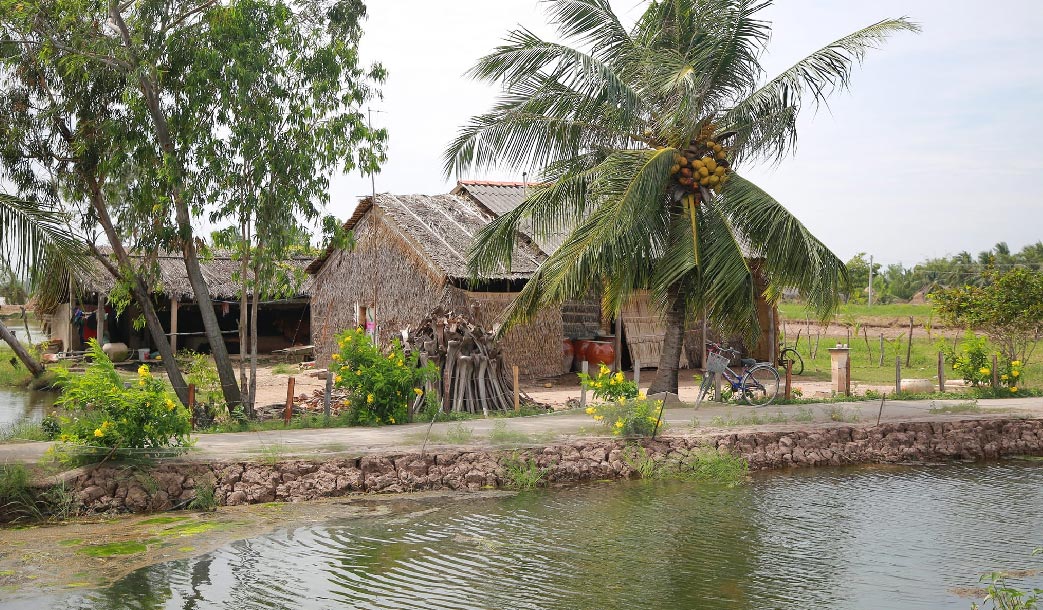
- Chẹt Sậy River boat cruise, Ben Tre: a short motorboat cruise on the Chḹt Sậy River near Phòng Nam Bridge — one of the quieter tributaries of the Ben Tre waterway system. The river is narrow enough that the daily life on both banks is visible from the boat: riverside houses, small docks, fishing gear, and the constant presence of coconut palms.
- Coconut processing workshops: Ben Tre’s coconut industry covers the full range of the fruit: coir from the husk, activated charcoal from the shell, candy and oil from the flesh, fresh water and fermented toddy from the liquid. The workshops visited are family operations that have been running for decades. Each one covers a different part of the process and the visits are practical rather than staged — production is ongoing and the artisans explain their work in their own way through the guide.
- Xe lửa ride through village lanes: a xe lửi is a motorised three-wheel vehicle — an adapted bicycle rickshaw with a small engine. It is the standard short-distance transport in rural Ben Tre. The ride takes the group through village lanes that are not accessible by standard vehicle, past family homes, small orchards, and the everyday activity of a working delta village.
- Home-style lunch and hammock rest: lunch is served at a local family home using fresh, locally sourced ingredients. After eating, guests can rest in hammocks in the garden before the sampan section of the afternoon.
- Sampan ride through the canals: hand-rowed wooden sampan boats through the narrow inner canals of Ben Tre — waterways too small for the motorboat, shaded by coconut palms, with stilted houses and garden plots on both banks. About 30–40 minutes at a slow pace.
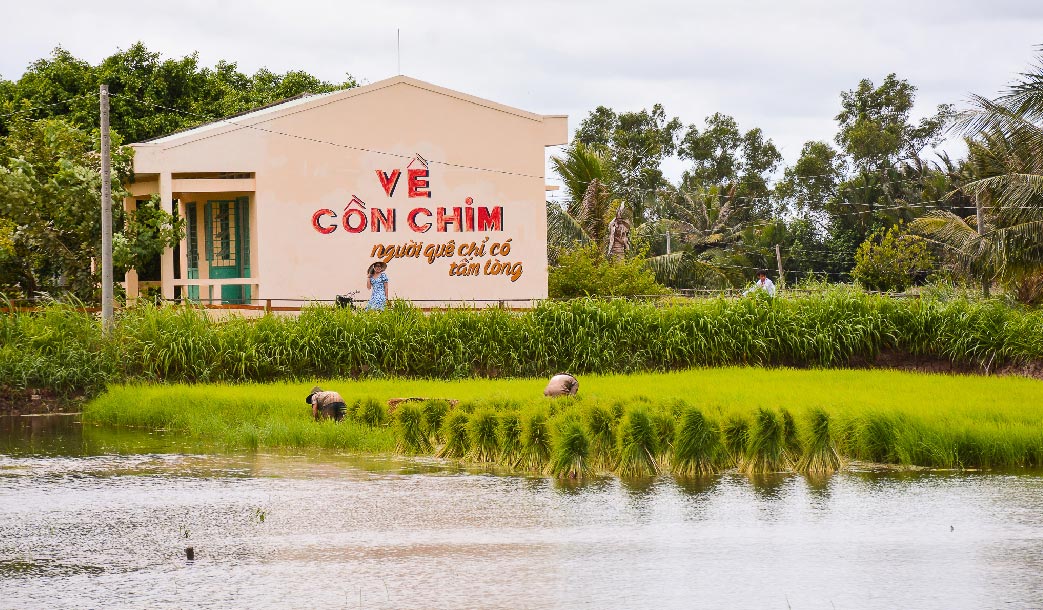
- Con Chim Island cycling, Tra Vinh: Con Chim is a community tourism site on a river island in Tra Vinh. The island’s residents manage their own tourism programme and the cycling route runs through orchards, past traditional houses, and along paths beside the water. The pace is gentle and the guide facilitates conversations with residents where possible.
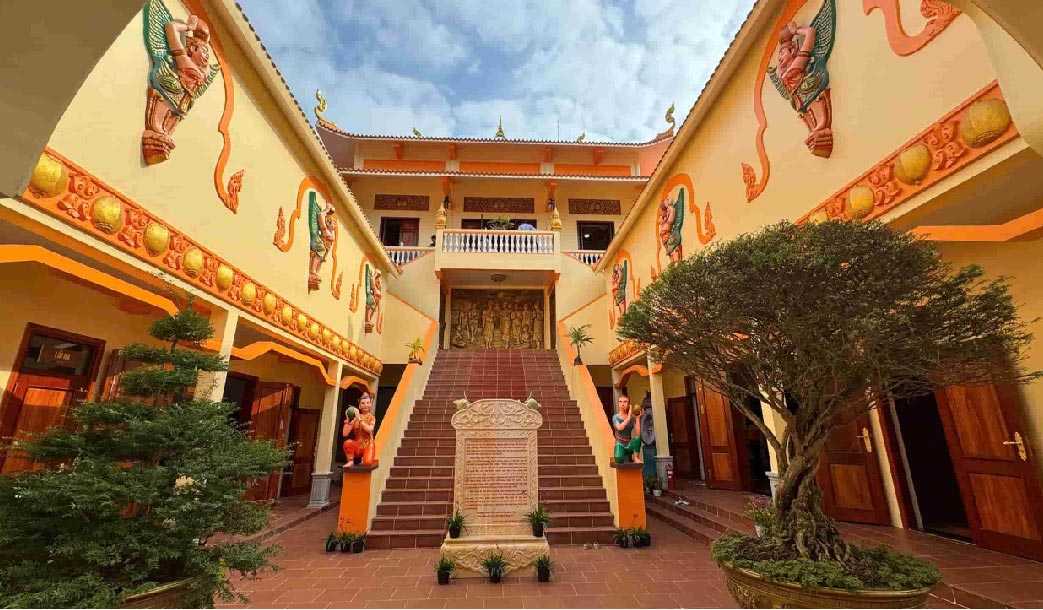
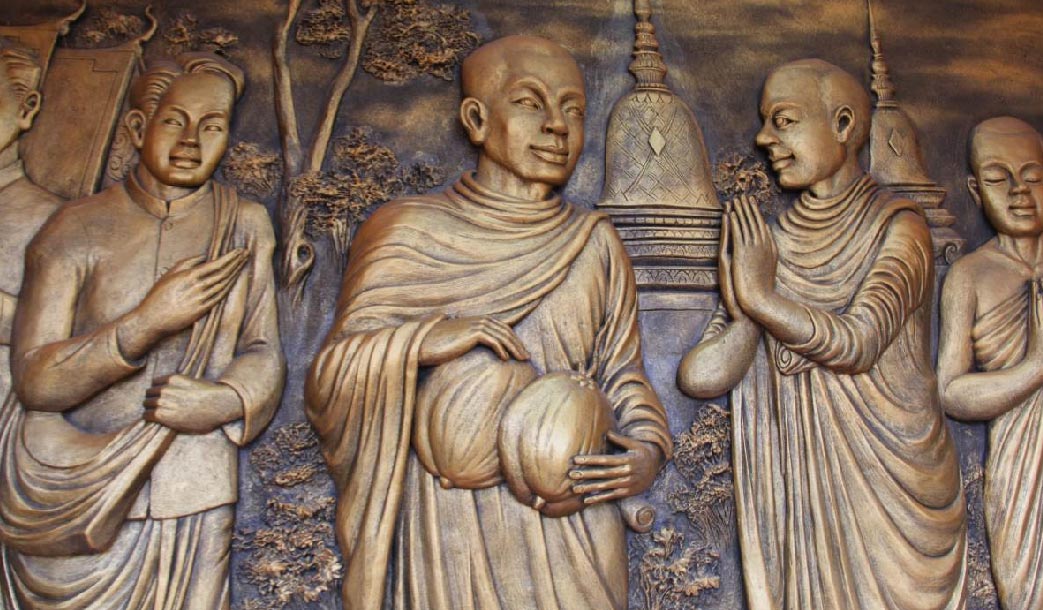
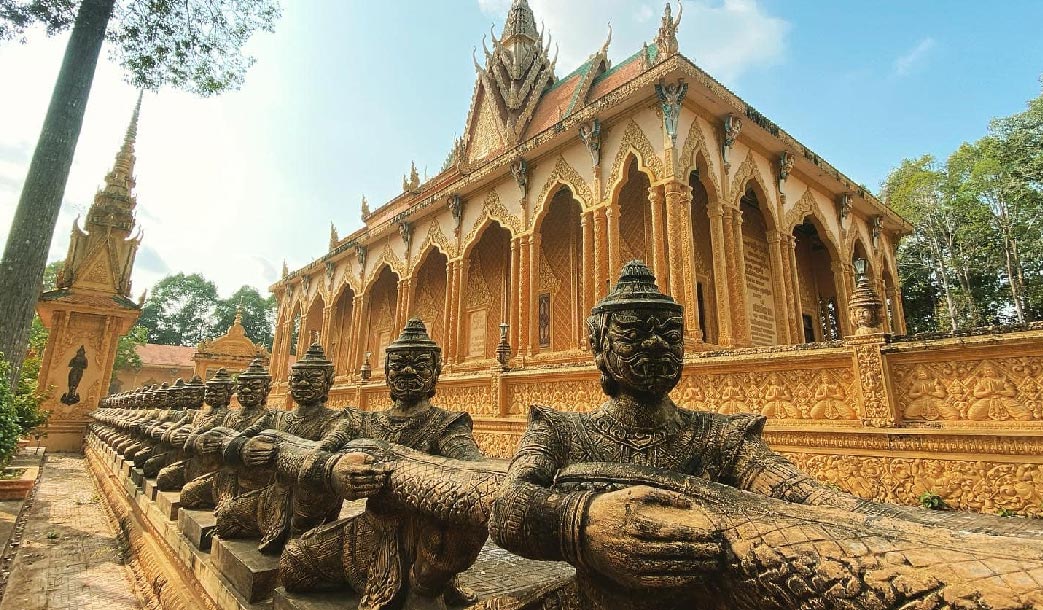
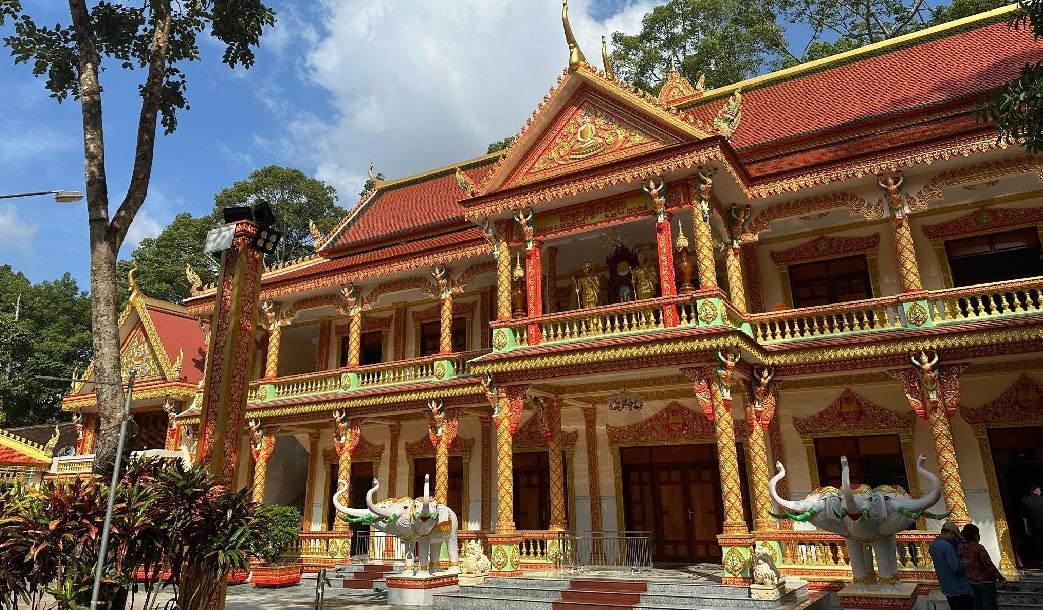
- Angkorajaborey Pagoda (Chùa Âng): one of 141 Khmer Buddhist temples in Tra Vinh and among the most architecturally significant. The name ‘Angkorajaborey’ refers to Angkor, the Khmer imperial capital, and the pagoda’s design reflects Angkorian influence adapted to the local context over centuries. The compound includes intricate carved decorations, bright orange and red paintwork typical of Khmer Buddhist architecture in the delta, and a resident monk community. The pagoda is active and central to the spiritual life of the local Khmer community.
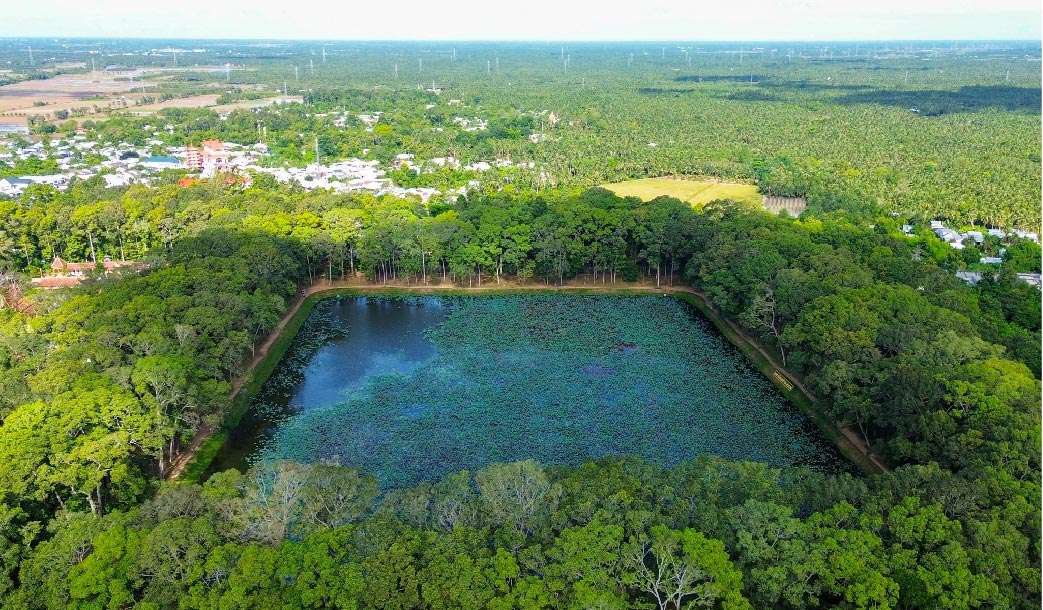
- Ba Om Pond (Hồ Ba Om): a rectangular body of water measuring approximately 300 by 500 metres, surrounded by ancient trees whose root systems have grown over decades into the bank, creating dense, tangled formations around the waterline. The pond is sacred to the local Khmer community and has been a site of cultural and religious significance for centuries. Lotus and water lily plants cover parts of the surface. The surrounding area is quiet and the scale of the ancient trees makes it one of the most distinctive natural sites in the province.
- Tra Vinh Museum of Khmer Ethnic Culture: the province’s dedicated museum for Khmer cultural heritage, covering traditional arts, religious practices, festival customs, and the history of the Khmer community in the Mekong Delta. The collection includes ceremonial objects, traditional costumes, agricultural tools, and documentation of the Khmer communities’ relationship with the land and water of the delta. The museum provides the historical context that makes the pagoda and pond visits more legible.
- Bảo Tàng Dừa Sáp (Wax Apple Coconut Museum): a museum dedicated to the dừa sáp — the ‘wax coconut’ or sticky coconut, a variety of coconut grown almost exclusively in Trà Cú district of Tra Vinh. The dừa sáp has a gel-like, slightly translucent flesh that is dense and sticky rather than the firm white flesh of a standard coconut — a genetic mutation that was cultivated and preserved by local farmers over generations. The museum documents the origins of the variety, the farming techniques, the economic significance to the community, and the products made from it. A tasting of fresh dừa sáp is included where available by season.
- Coconut nectar production visit: a stop at a facility producing coconut nectar — a sweet sap tapped directly from the flower buds of the coconut palm before they open. The sap is collected twice daily, processed into sugar, syrup, or fermented into a mild alcoholic drink. The visit demonstrates the harvesting and processing method and includes a tasting of the fresh nectar and its processed forms.
Important information
Pickup
- Available from hotels in District 1, Ho Chi Minh City (excluding Sài Gòn Ward and Tân Định Ward)
- Pickup time: 7:30–7:45 AM. Please wait in your hotel lobby.
- Exact pickup time confirmed by email or WhatsApp 24 hours before departure
- Hotels outside the pickup zone: meet at TNK Travel, 112 Trần Hưng Đạo Street, Ben Thanh Ward, District 1 by 7:30 AM
Accommodation
- 1 night at a 3-star local hotel in Tra Vinh city
- Rooms on twin or double sharing basis
- Single supplement available for solo travellers — see price table
- Check-in: approximately 5:30–6:00 PM on Day 1
- Checkout: after breakfast on Day 2
Dress code
- Modest attire required for the Angkorajaborey Pagoda and Ba Om Pond: shoulders and knees covered. A light scarf or wrap is useful.
- Shoes must be removed before entering the main hall of the pagoda.
- Light, breathable clothing for the rest of the tour.
What to wear & bring
- Footwear: comfortable walking shoes or trainers for Day 2 walking and cycling. Sandals are fine for the boat rides and indoor visits.
- Sun protection: hat and sunscreen for the river cruise, xe lửi ride, and cycling sections.
- Insect repellent: recommended for the canal sections and Con Chim Island.
- Small overnight bag: pack a change of clothes, toiletries, and personal items for the overnight in Tra Vinh.
- Camera: the Chḹt Sậy River, Ba Om Pond tree roots, and the Angkorajaborey Pagoda facade are all frequently photographed.
- Cash: Vietnamese dong for optional purchases at workshops and the coconut museum. Tipping guide and driver is optional but appreciated.
Physical requirements
- Moderate activity level across both days. Getting in and out of boats, xe lửi, and sampan on Day 1; walking at temple and museum sites and cycling on Con Chim Island on Day 2.
- Cycling on Con Chim Island is on flat paths at a relaxed pace. Guests who prefer not to cycle can walk the same route or rest at the island dock.
- The Angkorajaborey Pagoda compound and Ba Om Pond involve flat walking on paved and compacted earth paths.
- Not recommended for guests with serious mobility limitations that prevent boat boarding or extended walking.
- Pregnant guests should consult their doctor before booking.
Weather
- The tour operates year-round.
- Dry season (December–April): more comfortable conditions for cycling and walking. Lower water levels in the canals.
- Wet season (May–November): lush vegetation, higher canal water levels, and more active bird life around Ba Om Pond. Afternoon rain is common; bring a light raincoat.
- If TNK Travel cancels due to severe weather, guests receive a full refund or can reschedule.
Related tours
- Mekong Delta 2 days 1 night (GT-MK2): Cai Be floating market, overnight Can Tho, Cai Rang floating market at dawn — a different route and a different delta experience
- Mekong Delta 3 days 2 nights (MK3): Cai Be → Can Tho → Tra Su Forest → Chau Doc, with optional Phnom Penh speed boat connection
- Mekong Delta day tour — My Tho & Ben Tre (MK1): a single-day version of the Ben Tre waterways and island circuit
- Mekong Delta nature tour — Dong Thap (PRI-DT): private tour to the Plain of Reeds wetlands, melaleuca forest, and Truc Lam Zen Monastery
- Mekong Life & Local Secrets — Ben Luc (BL1): a half-day introduction to a quiet Mekong community 45 minutes from Ho Chi Minh City
Itinerary
Tra Vinh - Ho Chi Minh City
7:00–8:00 AM Breakfast at hotel
Breakfast at the hotel. Checkout before departure.
9:00–10:00 AM Angkorajaborey Pagoda (Chùa Âng) & Ba Om Pond
The Angkorajaborey Pagoda — locally known as Chùa Âng — is one of the most significant Khmer Buddhist temples in the Mekong Delta. Its name references Angkor, the 9th–15th century Khmer empire centred in what is now Cambodia, and the pagoda’s design draws on Angkorian architectural traditions: tiered rooflines, carved nagas (serpent figures) on the roof ridges, ornate painted facades in orange and red, and a compound layout centred on the main prayer hall. The pagoda has been continuously maintained by the local Khmer community and monks are in residence. The visit takes about 30 minutes and covers the main hall, the compound buildings, and the architectural details that your guide will explain in context. Ba Om Pond is a short walk or drive from the pagoda.
The rectangular body of water — approximately 300 by 500 metres — is encircled by ancient trees whose root systems have grown over decades into dense formations along the bank. The pond is sacred in Khmer tradition and the surrounding grove of trees is among the most visually distinctive natural sites in the province. Lotus and water lily plants cover sections of the water surface. The area is quiet and the light through the tree canopy makes it one of the most photographed sites in Tra Vinh.
10:00–11:00 AM Tra Vinh Museum of Khmer Ethnic Culture
The province’s dedicated museum for the Khmer community’s cultural heritage. The collection covers traditional arts and crafts, religious ceremonies, agricultural tools, festival customs, and the historical relationship between the Khmer and Vietnamese communities in the delta. Exhibits include ceremonial costumes worn during the Ok Om Bok (moon worship) festival, traditional musical instruments, and documentation of the construction methods used in Khmer pagodas across the province. The museum provides the historical and cultural framework that gives the pagoda and pond visits their full meaning.
11:00 AM–12:00 PM Bảo Tàng Dừa Sáp — Wax Apple Coconut Museum
The Bảo Tàng Dừa Sáp is a museum dedicated to the dừa sáp — the ‘wax coconut’, a variety found almost exclusively in Trà Cú district of Tra Vinh Province. The dừa sáp is genetically distinct from standard coconut varieties: its flesh is dense, sticky, and slightly translucent — more gel-like than the firm white flesh of a standard coconut — and the flavour is richer and more concentrated. The variety was developed and preserved by local farming families over generations and is now considered a regional specialty with protected geographical significance.
The museum documents the origins of the variety, the farming and cultivation techniques used to maintain it in the acidic delta soil, the seasonal harvesting calendar, and the range of products made from the fruit. Exhibits include preserved specimens, farming tools, and product samples. A tasting of fresh dừa sáp is included where available by season. Products made from the wax coconut — candy, oil, dried flesh — are available to purchase.
12:00–1:00 PM Coconut nectar production visit
A stop at a local producer of coconut nectar (mật hoa dừa). Coconut nectar is harvested by tapping the flower buds of the coconut palm before they open — the sap drips into a collection vessel tied to the bud and is gathered twice daily. The fresh sap is naturally sweet and slightly effervescent. It can be reduced to a thick syrup, crystallised into sugar, or fermented into a mildly alcoholic drink called rượu dừa. The visit demonstrates the tapping process, the daily collection routine, and the processing stages. Tasting of fresh nectar, syrup, and sugar is included.
1:00–2:00 PM Lunch
Lunch at a local restaurant in Tra Vinh featuring Khmer and Vietnamese delta cuisine. The meal typically includes bún nước lèo or another regional noodle dish, a freshwater fish preparation, seasonal vegetables, and fresh fruit. The restaurant is chosen for its use of local ingredients and its connection to the provincial culinary tradition.
2:00 PM Drive back to Ho Chi Minh City
The vehicle departs Tra Vinh for the return drive to Ho Chi Minh City, approximately 130 kilometres. The drive takes about 2.5–3 hours depending on traffic.
5:00–5:30 PM Hotel drop-off, Ho Chi Minh City — end of tour
Drop-off at your hotel in District 1.
Breakfast at the hotel. Checkout before departure.
9:00–10:00 AM Angkorajaborey Pagoda (Chùa Âng) & Ba Om Pond
The Angkorajaborey Pagoda — locally known as Chùa Âng — is one of the most significant Khmer Buddhist temples in the Mekong Delta. Its name references Angkor, the 9th–15th century Khmer empire centred in what is now Cambodia, and the pagoda’s design draws on Angkorian architectural traditions: tiered rooflines, carved nagas (serpent figures) on the roof ridges, ornate painted facades in orange and red, and a compound layout centred on the main prayer hall. The pagoda has been continuously maintained by the local Khmer community and monks are in residence. The visit takes about 30 minutes and covers the main hall, the compound buildings, and the architectural details that your guide will explain in context. Ba Om Pond is a short walk or drive from the pagoda.
The rectangular body of water — approximately 300 by 500 metres — is encircled by ancient trees whose root systems have grown over decades into dense formations along the bank. The pond is sacred in Khmer tradition and the surrounding grove of trees is among the most visually distinctive natural sites in the province. Lotus and water lily plants cover sections of the water surface. The area is quiet and the light through the tree canopy makes it one of the most photographed sites in Tra Vinh.
10:00–11:00 AM Tra Vinh Museum of Khmer Ethnic Culture
The province’s dedicated museum for the Khmer community’s cultural heritage. The collection covers traditional arts and crafts, religious ceremonies, agricultural tools, festival customs, and the historical relationship between the Khmer and Vietnamese communities in the delta. Exhibits include ceremonial costumes worn during the Ok Om Bok (moon worship) festival, traditional musical instruments, and documentation of the construction methods used in Khmer pagodas across the province. The museum provides the historical and cultural framework that gives the pagoda and pond visits their full meaning.
11:00 AM–12:00 PM Bảo Tàng Dừa Sáp — Wax Apple Coconut Museum
The Bảo Tàng Dừa Sáp is a museum dedicated to the dừa sáp — the ‘wax coconut’, a variety found almost exclusively in Trà Cú district of Tra Vinh Province. The dừa sáp is genetically distinct from standard coconut varieties: its flesh is dense, sticky, and slightly translucent — more gel-like than the firm white flesh of a standard coconut — and the flavour is richer and more concentrated. The variety was developed and preserved by local farming families over generations and is now considered a regional specialty with protected geographical significance.
The museum documents the origins of the variety, the farming and cultivation techniques used to maintain it in the acidic delta soil, the seasonal harvesting calendar, and the range of products made from the fruit. Exhibits include preserved specimens, farming tools, and product samples. A tasting of fresh dừa sáp is included where available by season. Products made from the wax coconut — candy, oil, dried flesh — are available to purchase.
12:00–1:00 PM Coconut nectar production visit
A stop at a local producer of coconut nectar (mật hoa dừa). Coconut nectar is harvested by tapping the flower buds of the coconut palm before they open — the sap drips into a collection vessel tied to the bud and is gathered twice daily. The fresh sap is naturally sweet and slightly effervescent. It can be reduced to a thick syrup, crystallised into sugar, or fermented into a mildly alcoholic drink called rượu dừa. The visit demonstrates the tapping process, the daily collection routine, and the processing stages. Tasting of fresh nectar, syrup, and sugar is included.
1:00–2:00 PM Lunch
Lunch at a local restaurant in Tra Vinh featuring Khmer and Vietnamese delta cuisine. The meal typically includes bún nước lèo or another regional noodle dish, a freshwater fish preparation, seasonal vegetables, and fresh fruit. The restaurant is chosen for its use of local ingredients and its connection to the provincial culinary tradition.
2:00 PM Drive back to Ho Chi Minh City
The vehicle departs Tra Vinh for the return drive to Ho Chi Minh City, approximately 130 kilometres. The drive takes about 2.5–3 hours depending on traffic.
5:00–5:30 PM Hotel drop-off, Ho Chi Minh City — end of tour
Drop-off at your hotel in District 1.
Price & Bookings
Grade tour
Reservations
Reviews
There is no review for this tour. Be the first to review this tour !!
Share your thoughts with other customers.
Share your thoughts with other customers.