Tour snapshot
Overview
Dong Thap’s flooded wetlands, melaleuca forest, pineapple farms, and a Zen monastery — a private day tour to one of the Mekong Delta’s least-visited provinces.
Most Mekong Delta tours from Ho Chi Minh City go to My Tho and Ben Tre — a 70-kilometre drive south that has been well-covered for decades. This tour goes in a different direction. Dong Thap Province is roughly 150 kilometres southwest of the city, a two-hour drive that takes you past Tiền Giang and deep into the upper delta floodplain. The province sits in the Dong Thap Muoi (Plain of Reeds) region — a vast low-lying wetland that floods seasonally and supports an ecosystem you will not find on any mainstream delta circuit.
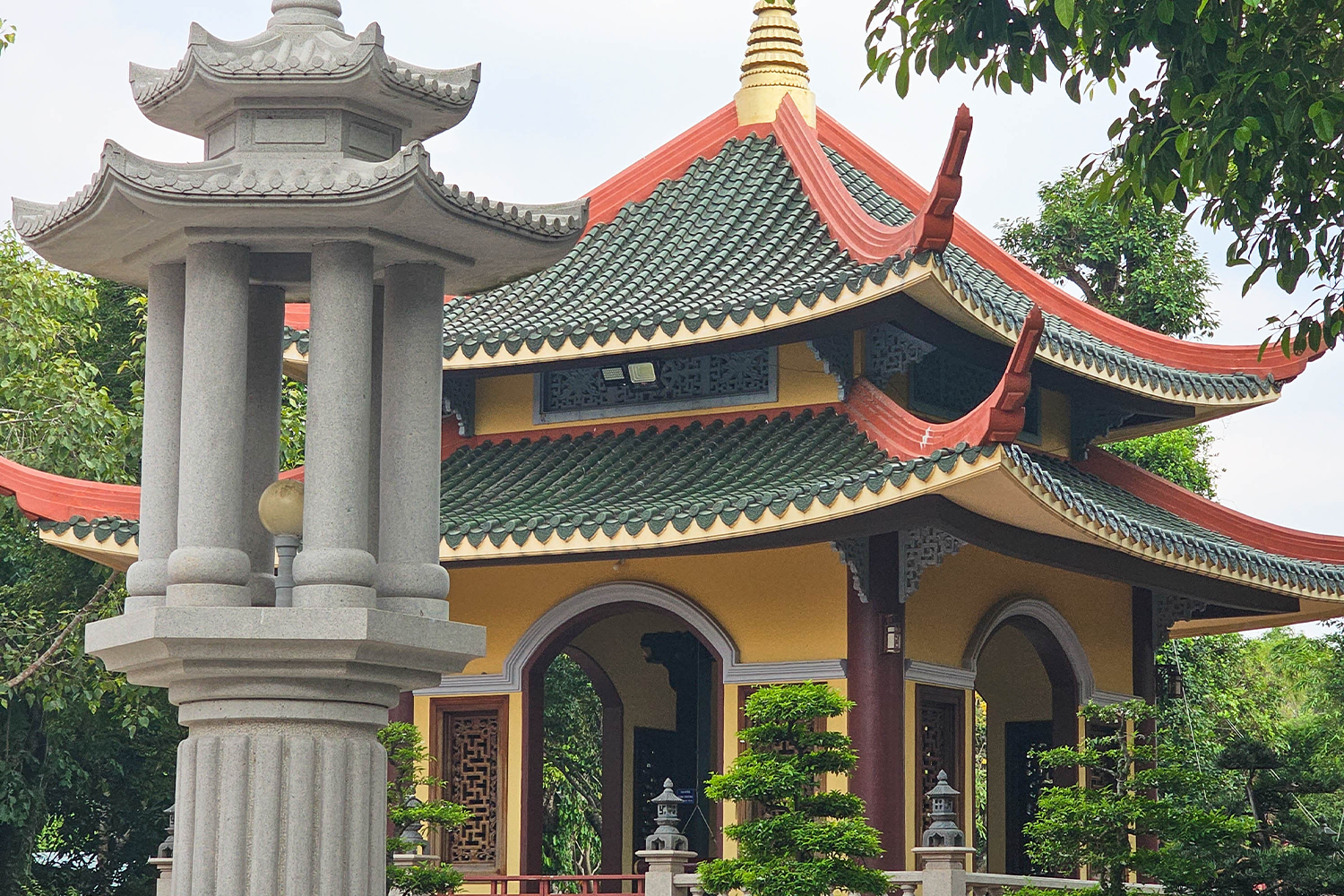
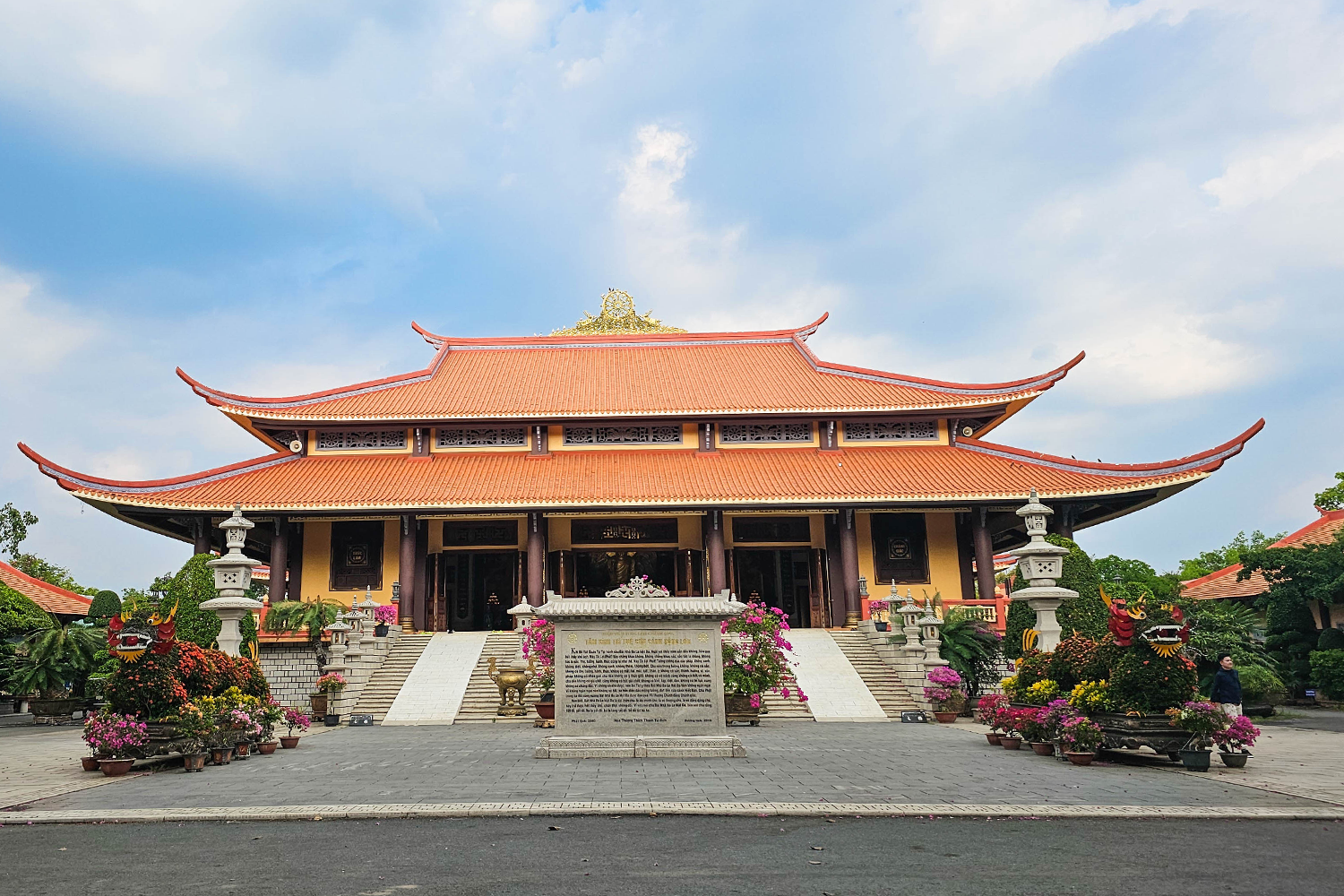
The tour focuses on three things that are specific to this area: the Dong Thap Muoi Ecological Reserve and its melaleuca forest waterways, the pineapple farming communities that have developed methods for cultivating in highly acidic floodplain soils, and the Truc Lam Chanh Giac Zen Monastery, a contemporary Buddhist complex built in the countryside with architectural references to sacred sites in India and Nepal.
This is a private tour. The vehicle, guide, and itinerary are yours for the day — there are no other groups in the vehicle and the pace can be adjusted to what your group prefers. The tour is priced per person based on group size: the larger the group, the lower the per-person cost.
Why TNK Travel for this tour
- Off the standard delta circuit: Dong Thap is not on the itinerary of typical Mekong Delta group tours. The journey here takes longer and the sites are not designed around high-volume visitors. TNK has been running this route for guests who specifically want a delta experience that is different from My Tho and Ben Tre.
- Private tour, your group only: the vehicle and guide are exclusively for your group. No other guests, no fixed group departure time pressure. If your group wants to spend more time at the melaleuca forest or less time at a particular stop, the guide can accommodate this.
- Seasonal flexibility: Dong Thap Muoi looks and feels different depending on the season. The dry season (December–April) gives firm ground and easy walking in the reserve. The wet season (May–November) floods the plain and changes the landscape entirely — the waterways widen, the vegetation is dense and green, and the bird life is more active. Both seasons are worth visiting; they are genuinely different experiences. Your guide will explain what to expect based on when you visit.
- English-speaking guide: a professional English-speaking guide accompanies the group for the full day. The guide provides context on the wetland ecology, the farming practices, and the monastery’s history and architecture.
- Trusted operator since 2000: TNK Travel is ranked #3 on TripAdvisor with over 24,000 verified reviews.
Tour highlights
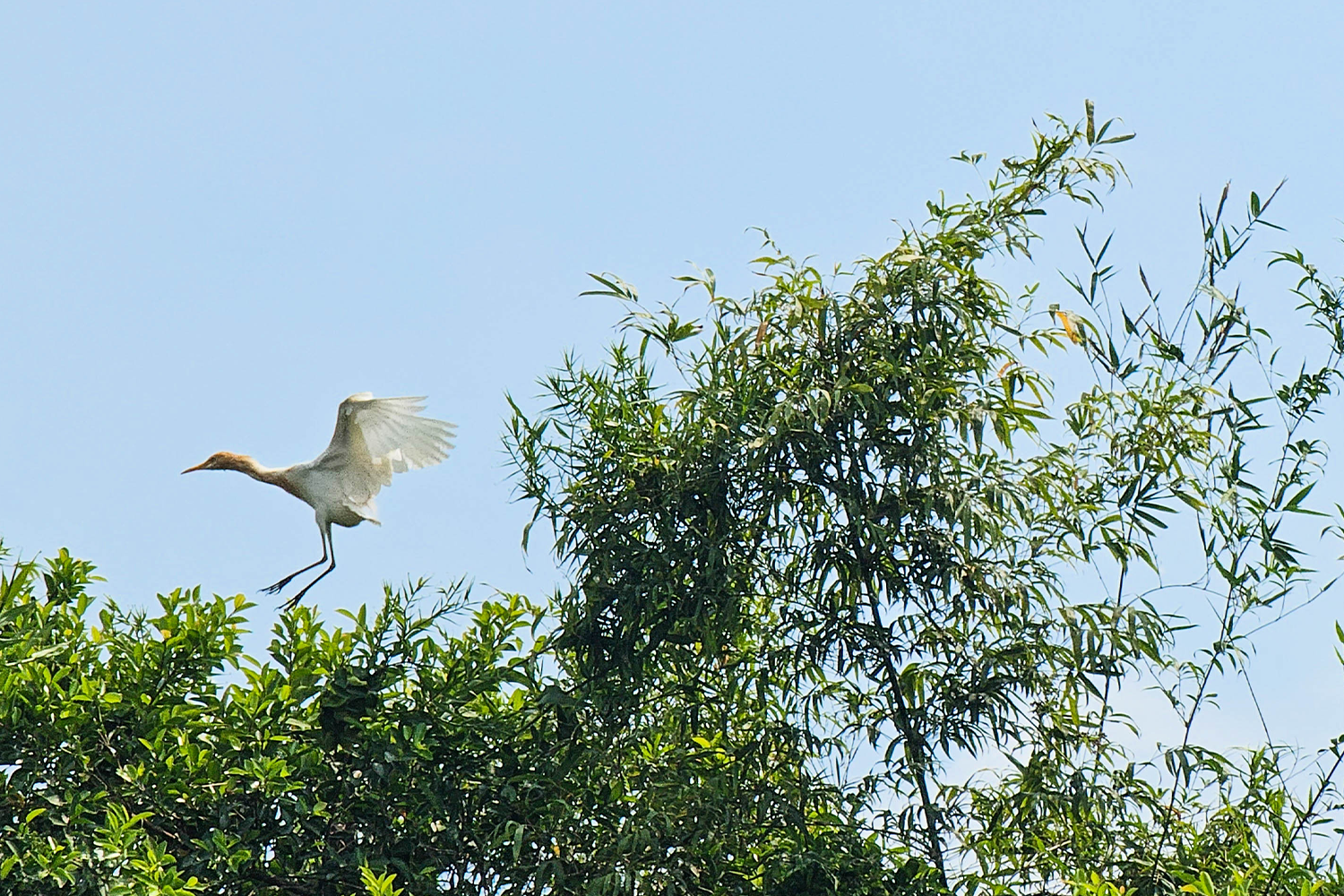
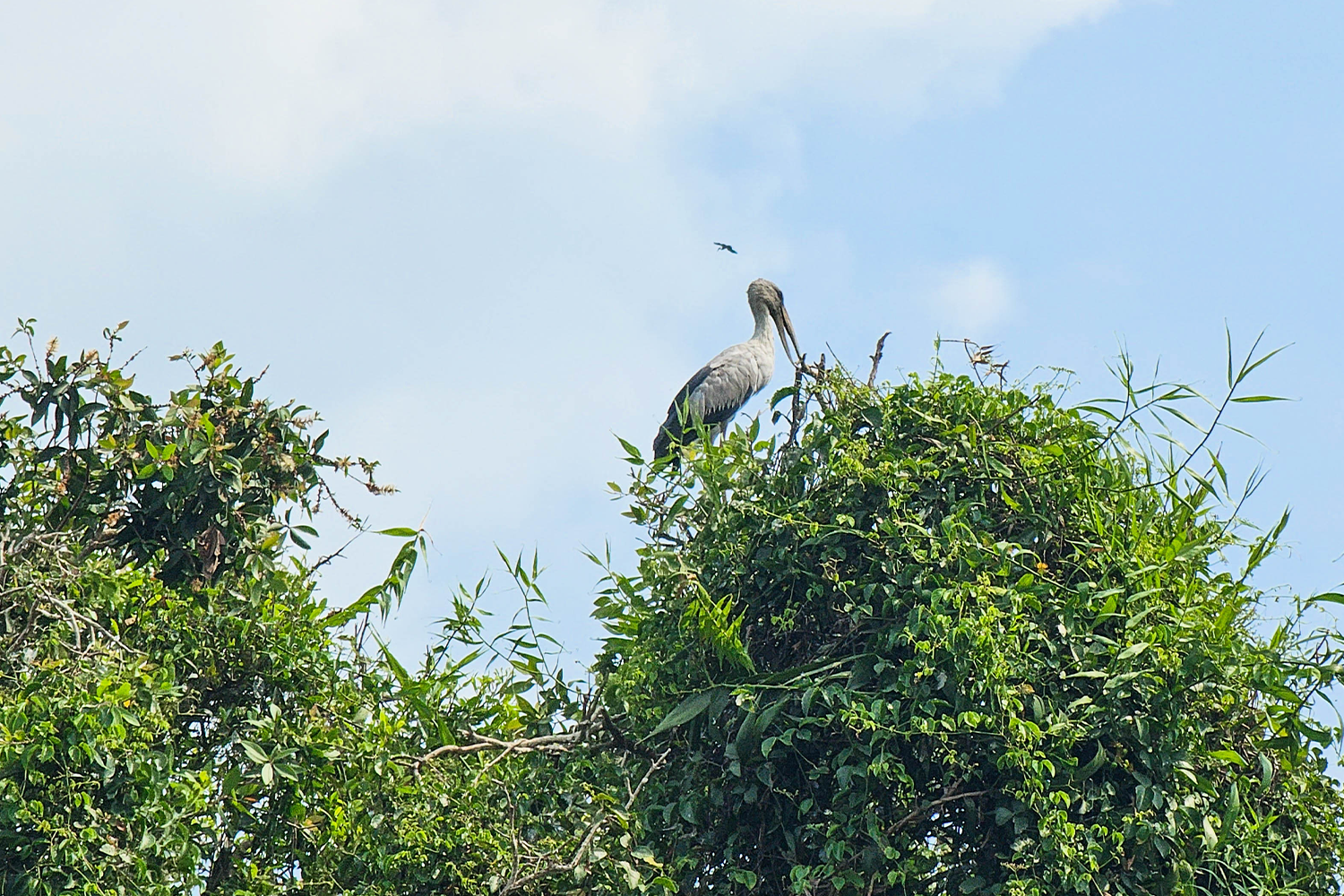
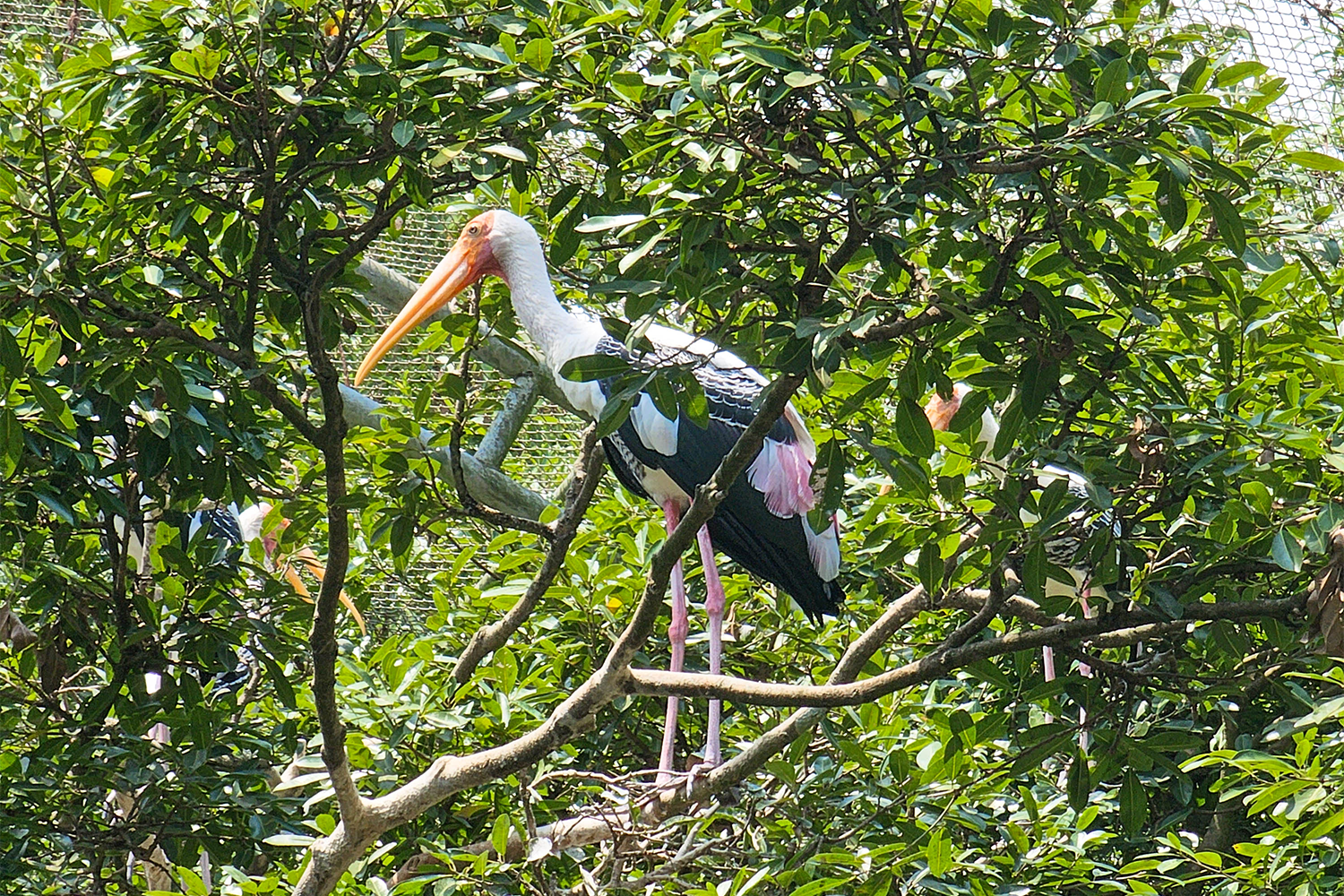
- Dong Thap Muoi Ecological Reserve: the reserve covers over 100 hectares of seasonally flooded wetland in the Plain of Reeds. The landscape is defined by melaleuca (tràm) trees — tall, straight-trunked trees with papery bark that grow in standing water and give the flooded forest its characteristic appearance. The reserve is home to a range of waterbirds including herons, egrets, and cormorants, as well as freshwater fish species, lotus fields, and the water hyacinth that spreads across the open water in season. The visit involves a boat ride through the forest canals and a walk on elevated paths through the reserve.
A note on wildlife: bird life in the reserve is most active in the early morning and late afternoon. The tour’s arrival time at the reserve is typically mid-morning. You will see birds but the density of sightings varies by season and time of day. Your guide will set realistic expectations based on conditions on the day.
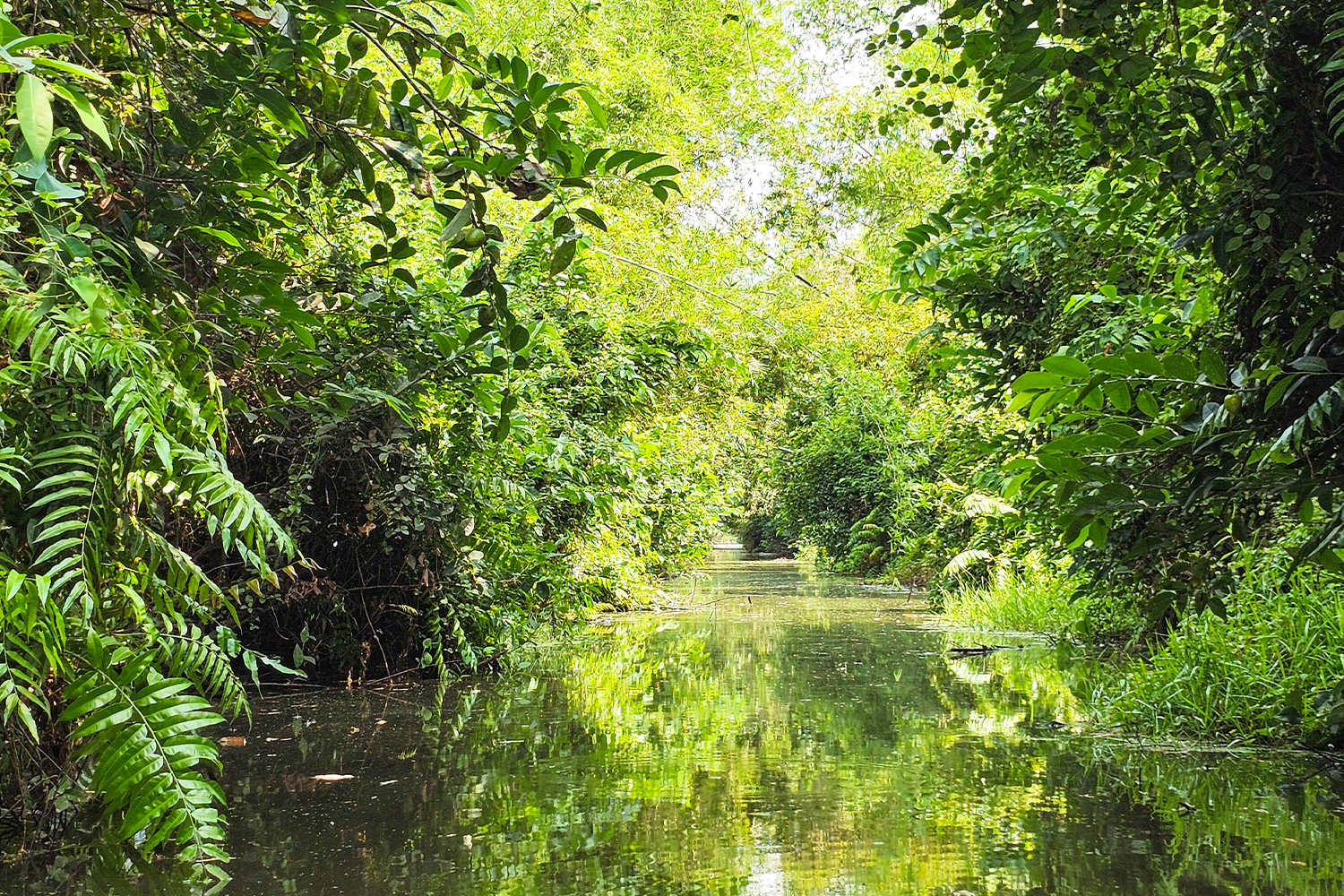
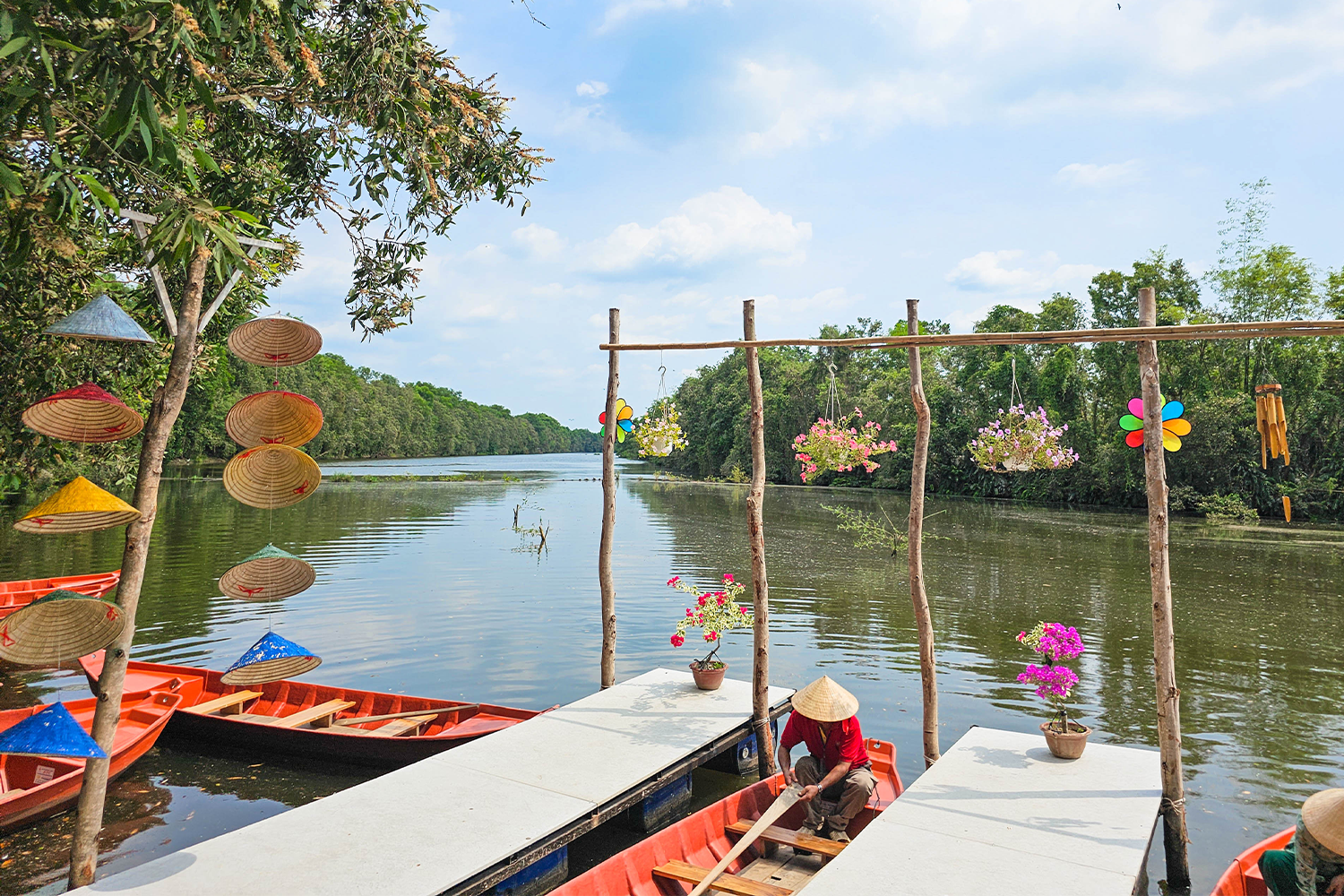
- Melaleuca forest boat ride: a flat-bottomed wooden boat takes the group through the interior waterways of the reserve — channels between the melaleuca trees where the water is still and the tree canopy filters the light. The boat ride is the most direct way to experience the scale of the flooded forest. It takes about 30–40 minutes.
- Pineapple farming community: Dong Thap’s floodplain soils are highly acidic — a challenge for most crops but one that local farmers have turned into a specialisation. The province has developed pineapple cultivation methods that work with the soil chemistry rather than against it, producing fruit with a flavour profile that is noticeably different from pineapple grown on neutral soils. The visit covers the cultivation methods, the raised-bed farming technique used to manage flooding, and a tasting of the fruit. Your guide explains the agricultural context and the economics of the farming community.
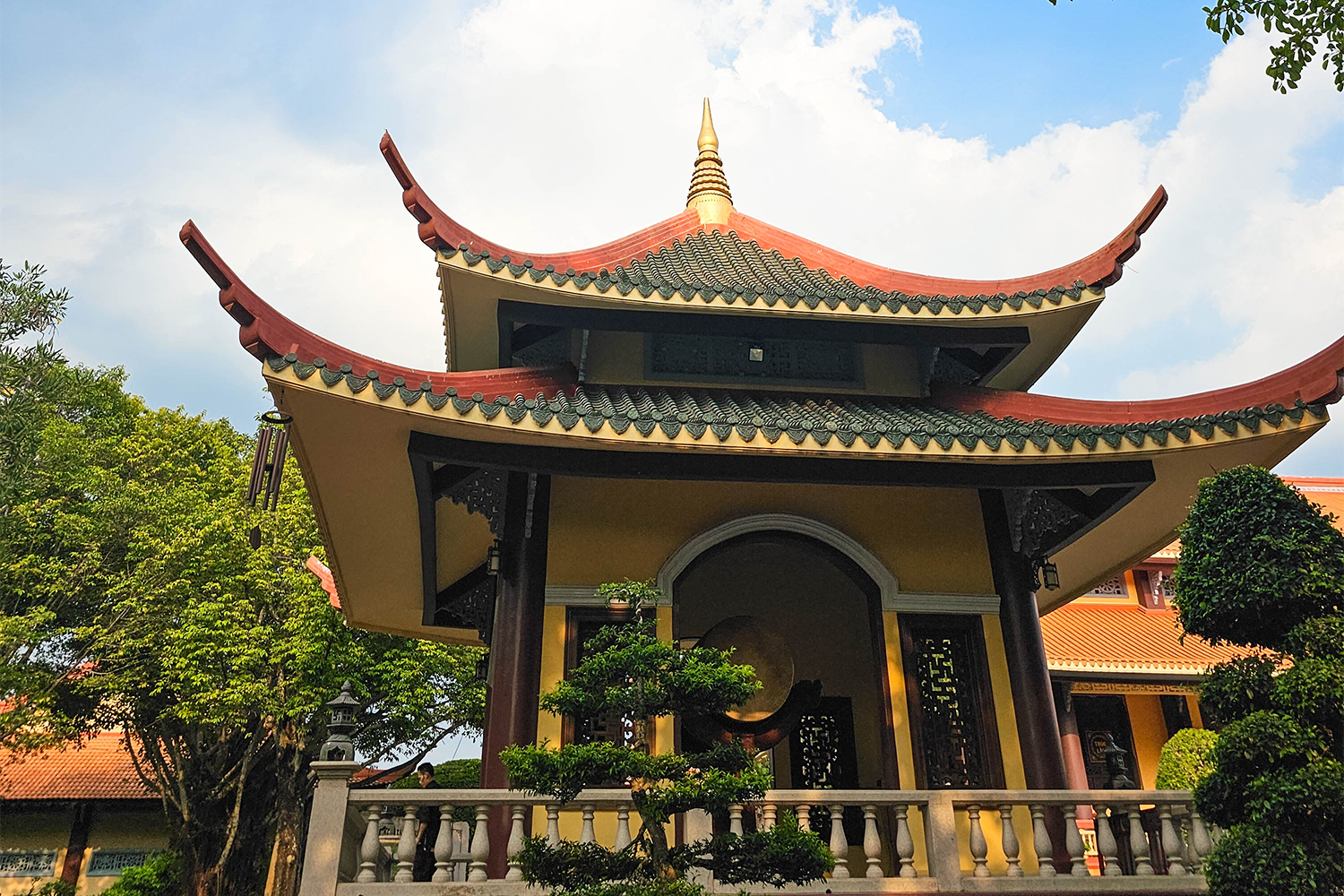
- Truc Lam Chanh Giac Zen Monastery (Thiền viện Trúc Lâm Chánh Giác): a contemporary Zen Buddhist monastery built in the Dong Thap countryside, part of the Truc Lam school of Vietnamese Buddhism founded in the 13th century by Emperor Trần Nhân Tông. The complex is notable for its architectural references to Buddhist sacred sites outside Vietnam — elements drawn from monastery and stupa architecture in India and Nepal sit alongside Vietnamese Buddhist design. The monastery is set in formal gardens with lotus ponds and ornamental trees. Monks are in residence. The visit takes about 45 minutes. Modest dress is required: shoulders and knees covered, shoes removed before entering the main hall.
- Authentic Mekong Delta lunch: lunch at a local restaurant in Dong Thap, using ingredients from the surrounding farming communities. The menu features dishes typical of the upper delta — freshwater fish from the wetlands, seasonal vegetables, and rice. Vegetarian options available if requested at booking.
Important information
Pickup
- Available from hotels in District 1, Ho Chi Minh City (excluding Sài Gòn Ward and Tân Định Ward)
- Pickup time: 7:00–7:15 AM. Please wait in your hotel lobby.
- Exact pickup time confirmed by email or WhatsApp 24 hours before departure
- Hotels outside the pickup zone: meet at TNK Travel, 112 Trần Hưng Đạo Street, Ben Thanh Ward, District 1 by 7:00 AM
Dress code
- Modest attire is required for the monastery visit: shoulders and knees covered for all guests. A light scarf or wrap is useful if you are wearing a sleeveless top.
- Shoes must be removed before entering the main hall and pagoda buildings. Slip-on shoes or sandals make this easier.
- Light, breathable clothing is recommended for the rest of the day, especially during the wetland walk and boat sections.
What to wear & bring
- Footwear: comfortable walking shoes for the reserve trail. The ground in the reserve can be soft or damp in the wet season. Sandals are adequate for the monastery and lunch; not ideal for the wetland sections.
- Sun protection: hat and sunscreen. The boat ride and open sections of the reserve involve full sun exposure.
- Insect repellent: recommended for the wetland reserve, particularly in the wet season.
- Camera: the melaleuca forest waterways and lotus fields are among the most photographed landscapes in the Mekong Delta outside the main tourist circuit. A wide-angle lens or smartphone is sufficient; the light in the forest canals is best in the morning.
- Cash: small Vietnamese dong for optional purchases at the pineapple farm and personal items. Tipping your guide and driver is optional but appreciated.
Physical requirements
- Moderate activity level. Walking on reserve paths (which may be uneven or damp), getting in and out of a flat-bottomed boat, and walking through the monastery grounds.
- The reserve paths are elevated boardwalks in some sections and compacted earth in others. Guests with significant mobility limitations should advise TNK at booking.
- Not recommended for guests who cannot walk on uneven ground for 30–45 minutes.
- Pregnant guests should consult their doctor before booking.
Best season
- Dry season (December–April): comfortable walking conditions, lower water levels in the canals, easier ground access in the reserve. Bird activity moderate.
- Wet season (May–November): the plain floods and the landscape transforms — the melaleuca forest is fully inundated, the lotus fields are at their peak, and bird life is significantly more active. The reserve boat ride is longer and more open. Ground walking may be limited to boardwalks. A more dramatic and photogenic experience for most guests.
Weather
- The tour operates year-round including light rain.
- In the event of severe weather, TNK Travel may adjust the itinerary while maintaining all major activities.
- If TNK Travel cancels due to severe weather, guests receive a full refund or can reschedule.
Related tours
- Mekong Delta day tour — My Tho & Ben Tre (MK1): the standard Mekong Delta circuit with river cruise, sampan canals, and village cycling — a very different experience from Dong Thap
- Mekong Life & Local Secrets — Ben Luc (BL1): a quiet, off-circuit Mekong community 45 minutes from Ho Chi Minh City
- A day as a Mekong fisherman & farmer (BL2): canal fishing, duck herding, and cooking class in Ben Luc
- Mekong Delta 2 days 1 night (GT-MK2): Cai Be, overnight Can Tho, Cai Rang floating market at dawn
- Mekong Delta 3 days 2 nights (MK3): Cai Be → Can Tho → Tra Su Forest → Chau Doc, with optional Phnom Penh speed boat connection
Itinerary
Price & Bookings
All rates are per person in USD. This is a private tour — the vehicle and guide are exclusively for your group. The per-person price decreases with group size.
| Tour type | 2–3 pax | 4–5 pax | 6–9 pax | Holiday 2–3 pax | Holiday 4–5 pax | Holiday 6–9 pax |
| Private tour | 120$ | 80$ | 55$ | 135$ | 95$ | 70$ |
Public holidays — holiday pricing applies
If your departure date falls on or within any of the periods below, the holiday price applies automatically at booking.
| Holiday | Dates |
| New Year’s Day | 1 January 2027 |
| Lunar New Year (Tết Nguyên Đán) | 15 February – 3 March 2026 |
| Hung Kings’ Festival (Giỗ Tổ Hùng Vương) | 26 April 2026 |
| Reunification Day & International Labour Day | 30 April – 1 May 2026 |
| Vietnam National Day (Quốc Khánh) | 1 – 2 September 2026 |
Children’s pricing
| Age | Rate | Notes |
| Under 4 years | Free | Shares seat with parents. No separate seat provided. |
| 4–10 years | 75% of adult rate | Standard children’s rate. |
| 11 years and above | Adult rate | Full adult rate applies. |
This is a day tour with no overnight stay. Children aged 4–10 pay 75% of the applicable adult rate for their group size. Children under 4 travel free and share a seat with their parents.
What’s included
- Private round-trip transportation in air-conditioned vehicle (car for 2–3 guests / minivan for larger groups)
- Professional English-speaking guide for the full day
- Dong Thap Muoi Ecological Reserve entrance fee
- Melaleuca forest boat ride
- Guided reserve walk
- Pineapple farm visit with tasting
- Truc Lam Chanh Giac Zen Monastery visit
- Vietnamese lunch at a local restaurant
- Bottled water throughout the day
- Hotel pickup and drop-off in District 1
- All taxes and service charges
What’s not included
- Travel insurance (recommended)
- Additional food and drinks beyond lunch
- Optional purchases at the farm (dried pineapple, jams, honey products)
- Personal shopping and expenses
- Tips for guide and driver (optional, appreciated)
Why TNK Travel
TNK Travel is a Vietnam-based inbound tour operator licensed since 2000. We run daily departures from Ho Chi Minh City and have taken over 1,000,000 travellers on tours across Vietnam, Cambodia, and Laos.
- Ranked #3 on TripAdvisor among Ho Chi Minh City tour operators
- 24,000+ verified reviews across TripAdvisor, Viator, and Klook
- Viator Top-Rated Operator badge
- 94% of travellers recommend our tours
- Licensed operator: International Tour Operator Licence No. 79-102/2010/TCDL-GP LHQT
Frequently asked questions
What makes this tour different from the standard Mekong Delta tours?
Most Mekong Delta day tours from Ho Chi Minh City go to My Tho and Ben Tre — a 70-kilometre drive south with a well-established circuit of floating market visits, island workshops, and sampan canals. This tour goes to Dong Thap Province, roughly 150 kilometres southwest and a two-hour drive. The sites are different: a flooded melaleuca forest reserve, pineapple farms on acidic floodplain soils, and a Zen monastery with unusual architecture. There are no floating markets or coconut candy workshops. If you have already done the My Tho / Ben Tre circuit and want to see a different part of the delta, or if you are specifically interested in wetland ecology and are not looking for a commercialised experience, this tour is the better choice.
What is the Dong Thap Muoi?
Dong Thap Muoi — often translated as the Plain of Reeds — is a large low-lying wetland region in the upper Mekong Delta covering parts of Dong Thap, Long An, and Tiền Giang provinces. It floods seasonally when the Mekong rises and drains as the dry season progresses. The ecosystem is characterised by melaleuca forests, lotus fields, water hyacinth, and an abundance of freshwater birds and fish. It has also been historically significant as a base for resistance movements — both during the French colonial period and the American War — because the flooded terrain made large-scale military incursion difficult. The Ecological Reserve on this tour protects a section of this landscape.
What is a melaleuca tree?
Melaleuca (cây tràm in Vietnamese) is a genus of tree native to Australia and Southeast Asia that grows in waterlogged or seasonally flooded soils. In the Mekong Delta, melaleuca forests are characteristic of the Dong Thap Muoi wetlands — the trees stand in standing water for much of the year and their root systems stabilise the soft soil. They have distinctive papery white bark and narrow crowns. The forest formed by mature melaleuca trees growing in flooded conditions is one of the most visually distinctive landscapes in the delta.
Is the boat ride inside the reserve on a motorboat or hand-rowed?
The boat used for the melaleuca forest canal section is a flat-bottomed wooden motorboat. The channels inside the reserve are navigated at slow speed. The experience is quieter than a Mekong River motorboat cruise but not as silent as a hand-rowed sampan — there is a small engine running. The focus is on the forest environment rather than on the method of propulsion.
What is the Truc Lam school of Buddhism?
Trúc Lâm (Bamboo Grove) is a school of Zen Buddhism founded in Vietnam in the 13th century by Emperor Trần Nhân Tông, who abdicated the throne, renounced his titles, and went to live as a monk. He developed a school of Buddhist practice that drew on Chinese Chan Buddhism but adapted it to Vietnamese culture and conditions. The Truc Lam school declined after the Trần dynasty ended but was revived in the 20th century and now has monasteries across Vietnam. The Chanh Giac monastery in Dong Thap is one of the newer foundations in the southern school.
Is this tour suitable for children?
Yes, with some considerations. The boat ride and wetland walk are generally interesting for children, and the pineapple tasting is popular. The monastery visit requires modest dress and quiet, respectful behaviour — young children who find it difficult to stay still for 30–45 minutes may find this section less engaging. The drive each way is about two hours; for young children this is the most challenging part of the day. Let TNK know the ages of children in your group at booking so the guide can plan accordingly.
Can vegetarians join this tour?
Yes. Please indicate dietary requirements at booking. The lunch restaurant can prepare vegetarian dishes. The pineapple tasting is naturally vegetarian.
What is the best time of year to visit Dong Thap Muoi?
Both seasons offer genuinely different experiences. The dry season (December–April) gives comfortable walking conditions and lower water levels in the canals. The wet season (May–November) floods the plain and the melaleuca forest is fully inundated — the boat ride covers more water and the lotus fields are at their peak. Bird life is significantly more active during the wet season. For photography, the wet season is generally more rewarding. For comfortable walking and ground access, the dry season is easier. Neither is objectively better — they are different trips.
Book your Dong Thap Mekong Delta nature tour
Private full-day tour from Ho Chi Minh City. Your group only — no shared departures. English guide, lunch, and all entrance fees included. Available daily.
- Online: tnktravel.com — booking form on this page
- WhatsApp: +84 938 195 445
- Email: booking@tnktravel.com
- Walk in: 90 Bui Vien Street, District 1, Ho Chi Minh City
International Tour Operator Licence No: 79-102/2010/TCDL-GP LHQT
Reservations
Reviews
There is no review for this tour. Be the first to review this tour !!
Share your thoughts with other customers.
Share your thoughts with other customers.
Related Tours